A panoramic picture of international politics and the formation of the modern State
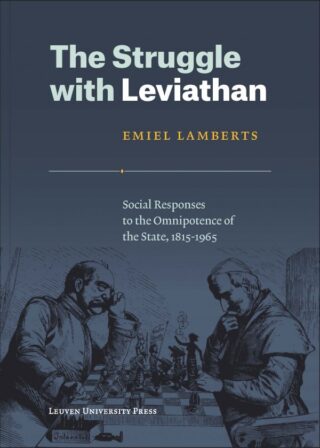
The opposition to the omnipotence of the State – as symbolised by Thomas Hobbes’ Leviathan (1651) – had a significant impact on the political organisation of European society. A liberal strategy intended to provide a protective legal status for individual citizens, whereas a social strategy aimed to strengthen the social fabric to counterbalance the power of the State. Gradually both strategies became interwoven.
The Struggle with Leviathan pays special attention to the social strategy, developed by conservative and ecclesiastical circles against the omnipotence of the State, and is structured around the fascinating biography of the Austrian diplomat Gustav von Blome, a grandson of Metternich and an important opponent of Bismarck. He proved to be a transitional figure between aristocratic conservatism and Christian democracy, which had a great influence on European integration after 1945.
Besides Blome, several other dramatis personae – statesmen, prelates, political and social activists – are featured. As a result the book reads like a compelling narrative. At the same time, it offers a broadly sketched historical fresco of international politics and the gradual formation of the modern State.
The original Dutch edition of this book, Het gevecht met Leviathan, has been highly praised in the Dutch and Flemish press, and was awarded the biennial international Arenberg Prize for European History and Culture.
Prologue
The Shadow of Metternich
‘A special friendship’
‘The perfect exemplar of French chivalry’
The feudal lords of Salzau
The apprentice statesman
The naked angel
The coachman of Europe
The last notes of the Concert
The white fairy
The long path to Rome
The resurgence of Italy
Bismarck’s Move
The struggle for Germany
The Schleswig-Holstein hotbed
The Convention of Gastein
‘The world is collapsing’
Leviathan redivivus
The Catholic Church as a counterpower
The Catholic Church in Battle Mode
The sweet fruits of freedom
The temptations of power
The Pope’s crusaders
The legitimists in the ranks
Flirting with capitalism
The canonization of the papacy
Catholic Defence
The Black International
The future of Europe
The Geneva Committee
Violette
The Black International
The nine muses
A failed restoration
In the Vatican’s grip
The innominato
The defence against Leviathan
‘The period of despair’
A new direction
Social Defence
The Fribourg Union
An Arcadian existence
The social aristocrats
An international network
The Fribourg Union
A society marked by solidarity
The first harvest
Rerum Novarum
The early stages of Christian Democracy
The hermit of Bellagio
Epilogue
Adenauer in Cadenabbia
Bibliopraphy
Acknowledgements
Index
Der Autor Emiel Lamberts, der das vorliegende Buch bereits 2011 in niederländischer Sprache herausgegeben hat, legt hier ein grossartiges Buch vor, das sich stellenweise wie ein Roman liest und grosse Sprachkraft besitzt. Der Leser wird förmlich in eine andere Welt hineingezogen. [...] Gerade darum ist dem Band eine weite Verbreitung zu wünschen, die sozialen Fragen sind aktueller denn je, und auch der religiöse Aspekt scheint darin wichtiger zu werden als auch schon mal.
David Neuhold, SZRKG, 110 (2016)
Pomimo kilku krytycznych uwag książkę Emiela Lambertsa czyta się znakomicie. To ważna publikacja, wyjaśniająca kulisy narodzenia się nowego ruchu w Kościele katolickim i równocześnie pokazująca nie tylko transformację tej instytucji, ale i zmianę, jaką przeszło życie polityczne w Europie, głównie w drugiej połowie XIX w. To też, a może przede wszystkim wydobycie z cienia postaci Gustava von Blomego, którego historia życia i różnorodne formy działalności politycznej stanowią doskonałą kanwę, by przyjrzeć się panoramie dziejów Europy w omawianym czasie. Tomasz Pudłocki, Kwartalnik Historyczny 125, 2018, no 4
The Struggle with Leviathan provides an intimate and learned history of ultramontanist Catholicism in the nineteenth century.
Giuliana Chamedes, Journal of Modern History, September 2020 vol. 92, no. 3
Frequently Asked Questions
What is "The Struggle with Leviathan" about?
A panoramic picture of international politics and the formation of the modern State
The opposition to the omnipotence of the State – as symbolised by Thomas Hobbes’ Leviathan (1651) – had a significant impact on the political organisation of European society. A liberal strategy intended to provide a protective legal status for individual citizens, whereas a social strategy aimed to strengthen the social fabric to counterbalance the power of the State. Gradually both strategies became interwoven.
The Struggle with Leviathan pays special attention to the social strategy, developed by conservative and ecclesiastical circles against the omnipotence of the State, and is structured around the fascinating biography of the Austrian diplomat Gustav von Blome, a grandson of Metternich and an important opponent of Bismarck. He proved to be a transitional figure between aristocratic conservatism and Christian democracy, which had a great influence on European integration after 1945.
Besides Blome, several other dramatis personae – statesmen, prelates, political and social activists – are featured. As a result the book reads like a compelling narrative. At the same time, it offers a broadly sketched historical fresco of international politics and the gradual formation of the modern State.
The original Dutch edition of this book, Het gevecht met Leviathan, has been highly praised in the Dutch and Flemish press, and was awarded the biennial international Arenberg Prize for European History and Culture.
Who wrote "The Struggle with Leviathan"?
"The Struggle with Leviathan" was written by E. Lamberts.
Emiel Lamberts (1941), professor emeritus at KU Leuven, has done extensive research in the field of modern political and religious European history. His most important publications include Christian Democracy in the European Union (1945–1995), The Black International (1870–1878) and the co-edited History of the Low Countries.
Is "The Struggle with Leviathan" part of a series?
Yes, "The Struggle with Leviathan" is part of the "KADOC-Studies on Religion, Culture and Society" series. It's book 18 in the series.


The longstanding peer-reviewed book series KADOC Studies in Religion, Culture and Society is devoted to a deeper understanding of the role of religion(s) in society in Europe and the world since 1750. By means of monographs and edited volumes, the series explores thematic frontiers and embraces innovative methodological approaches in historical, sociological and anthropological scholarship on religion, culture and society. The series particularly welcomes manuscripts adopting interreligious and transnational perspectives. Taken together, KADOC Studies in Religion, Culture and Society and its companion series KADOC Artes represent a diptych featuring the immaterial and material legacies of religions in Europe and the world from the 18th century onwards.
KADOC Studies in Religion, Culture and Society is managed by an independent Editorial Board. Books are published in English. Open Access publishing is encouraged. Financial support will be examined on a case-by-case basis and in consultation with the author.
KADOC, the Interfaculty Documentation and Research Centre on Religion, Culture and Society at KU Leuven, is an internationally oriented interdisciplinary research center as well as a heritage institution recognized by the Flemish Government with particularly rich and diverse documentary holdings.
Editorial board
Elena Arigita Maza (Universidad de Granada)
Florian Bock (Ruhr Universität Bochum)
Timothy Brittain‐Catlin (University of Cambridge)
James Chappel (Duke University)
Kim Christiaens (KADOC-KU Leuven)
Kathleen James-Chakraborty (University College Dublin)
James Kennedy (Utrecht University)
Franziska Metzger (PH Luzern)
Patrick Pasture (MoSa‐KU Leuven) - chairman
Isabelle Saint‐Martin (EPHE Paris)
Thijl Sunier (VU Amsterdam)
Árpád von Klimó (Catholic University of America)
Veerle De Laet (Leuven University Press)
Peter Heyrman (KADOC-KU Leuven) - secretary
Proposals
Proposals and enquiries can be sent to Peter Heyrman. The series welcomes monographs and edited volumes. Book proposals may relate to, for example, the political impact of religion, the dynamics between religion and welfare, and missionary history. All proposals and manuscripts are subject to double blind peer review involving at least one external reviewer (proposals) or at least two (manuscripts). The editors strive towards completing the review of proposals within two months and of complete manuscripts within five months after submission.
Please make use of the submission form to present your manuscript or proposal to our board.
Authors interested in Open Access can consult the available funding options.
Links & Resources
What is the Table of Contents for "The Struggle with Leviathan"?
Prologue
The Shadow of Metternich
'A special friendship'
'The perfect exemplar of French chivalry'
The feudal lords of Salzau
The apprentice statesman
The naked angel
The coachman of Europe
The last notes of the Concert
The white fairy
The long path to Rome
The resurgence of Italy
Bismarck's Move
The struggle for Germany
The Schleswig-Holstein hotbed
The Convention of Gastein
'The world is collapsing'
Leviathan redivivus
The Catholic Church as a counterpower
The Catholic Church in Battle Mode
The sweet fruits of freedom
The temptations of power
The Pope's crusaders
The legitimists in the ranks
Flirting with capitalism
The canonization of the papacy
Catholic Defence
The Black International
The future of Europe
The Geneva Committee
Violette
The Black International
The nine muses
A failed restoration
In the Vatican's grip
The innominato
The defence against Leviathan
'The period of despair'
A new direction
Social Defence
The Fribourg Union
An Arcadian existence
The social aristocrats
An international network
The Fribourg Union
A society marked by solidarity
The first harvest
Rerum Novarum
The early stages of Christian Democracy
The hermit of Bellagio
Epilogue
Adenauer in Cadenabbia
Bibliopraphy
Acknowledgements
Index
Related titles

 Margarete Schütte-Lihotzky and the Architecture of Collective Dissidence, 1918–1989
S.E. Eisterer (Author),
April 2027



 Toekomstdromen
Maarten Van Dijck (Editor), Gerrit Verhoeven (Editor), Hans Cools (Editor),
November 2026
 Feminists Resisting Gendered Violence
Hemangini Gupta (Editor), Fiona Mackay (Editor), Jan Breckenridge (Editor), Louise Chappell (Editor), Rachna Mehra (Editor), Rukmini Sen (Editor), Mailin Suchting (Editor),
October 2026
 German–Rapanui Entanglements
Cristián Moreno Pakarati (Editor), Diego Muñoz (Editor), Philipp Schorch (Editor),
August 2026

 Trend en toeval – vierde editie
Bruno Blondé (Author), Isabelle Devos (Author), Jord Hanus (Author), Wouter Ryckbosch (Author),
August 2026
 Cinema in Post-War Belgium
Gertjan Willems (Editor), Bjorn Gabriels (Editor), Bénédicte Rochet (Editor),
May 2026

 Performing Magnetism
Eleonora Paklons (Editor), Kristof Smeyers (Editor), Kurt Vanhoutte (Editor), Hannah Welslau (Editor),
May 2026
 Political Exile in the Global Twentieth Century
Wolfram Kaiser (Editor), Piotr H. Kosicki (Editor),
April 2026
 Christian Democracy and the Fall of Communism
Michael Gehler (Editor), Piotr H. Kosicki (Editor), Helmut Wohnout (Editor),
April 2026
 Brusselse plaatsnamen
Iadine Degryse (Editor), Benjamin Wayens (Editor), Chantal Kesteloot (Editor), Dennis De Vriese (Editor), Matthijs Degraeve (Editor),
April 2026


 Cartographies of Catastrophes
Laura Demeter (Editor), Carmen M. Enss (Editor), Piotr Kisiel (Editor), Carol Ludwig (Editor),
February 2026