The Maritain Factor
Taking Religion into Interwar Modernism
Jan De Maeyer (Editor), Rajesh Heynickx (Editor),
Series: KADOC-Studies on Religion, Culture and Society 7
Category: History, History 1800-present, Religion
Language: English
ISBN: 9789461661074
Publication date: April 1, 2010
€24.50 (including 6% VAT)
Buy Now
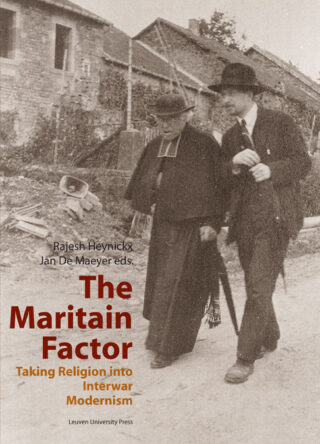
By studying the reception and perception of the French Catholic philosopher Jacques Maritain, this book argues that European modernist artists and intellectuals sought a primordial finality in Catholicism. The French poet, writer, and surrealist filmmaker Jean Cocteau converted under the influence of Maritain. For the painters Gino Severini, a pioneer of Futurism, and Otto Van Rees, one of the first Dadaists —both converts— Maritain played the role of spiritual counselor. And when the promoter of abstract art Michel Seuphor embraced Catholic faith in the 1930s, he, too, had extensive contact with Maritain. For all of them, the dictum of the Irish poet Brian Coffey, once a doctoral student under Maritain, applied: modern art needs a Thomist conceptual framework. However, the contributions in The Maritain Factor also show that, besides admiration, Maritain provoked irritation with his theories. Walter Benjamin for example, could only look at Maritain as a charlatan who was out to place modern art under the glass bell jar of Catholicism. The authors demonstrate that Catholic thought was not just one aspect of the manifold varieties of modernist discourses and practices, but in fact offered a basis to organize and structure this multiplicity in the 1920s and 1930s.
This publication is GPRC-labeled (Guaranteed Peer-Reviewed Content)
With contributions by: Philippe Chenaux, Jan De Maeyer, Michael Einfalt, Jason Harding, Rajesh Heynickx, Zoë Marie Jones, Ewoud Kieft, Mathijs Sanders, Stephen Schloesser, Stéphane Symons, Cécile Vanderpelen-Diagre, James Matthew Wilson.
On the Road with Maritain
European Modernist Art Circles and Neo-Thomism during the Interwar
Rajesh Heynickx
Profiling Maritain
The Rise of a Mystic Modernism
Maritain and the Sacrificed Generation of the Twenties
Stephen Schloesser
Circles and Institutions. The Neo-Thomistic Infrastructure
Philippe Chenaux
Grandes Amitiés
Similarity and Incompatibility
The Aesthetics of Michel Seuphor and Jacques Maritain
Rajesh Heynickx
Towards a Modern Religious Art. The Case of Albert Servaes
Jan De Maeyer
Maritain in the Netherlands
Pieter van der Meer de Walcheren and the Cult of Youth
Mathijs Sanders
Codifying Literature?
Maritain and the Catholic Writers of Francophone Belgium
Cécile Vanderpelen-Diagre
Gino Severini, a Classicist Futurist
Zoë Marie Jones
Confrontations
Same City, Another Universe. On Jacques Maritain and Walter Benjamin
Stéphane Symons
Brian Coffey, Jacques Maritain and the Recovery of the ‘Thing’
James Matthew Wilson
Debating Literary Autonomy. Jacques Maritain versus André Gide
Michael Einfalt
Mystic Modernism and Politics
Jacques Maritain, Joseph Roth and Anton van Duinkerken
Ewoud Kieft
‘The Just Impartiality of a Christian Philosopher’.
Jacques Maritain and T.S. Eliot
Jason Harding
Bibliography
Index
Contributors
Colophon
Het is een boeiende bundel die tot verder onderzoek uitdaagt, ook naar Maritains invloed binnen Nederlandse katholieke kringen na de Tweede Wereldoorlog. Dit onderzoek kan zeker geholpen worden door een goede Nederlandstalige inleiding op het denken van deze belangrijke katholieke filosoof.
Hans de Jong, RKKERK.nl jaargang 9, nr 11, 24 juni 2011
In elk geval blijft deze bundel een opvallend coherente verkenning van een hoogst relevante problematiek, die de grenzen van de figuur van Maritain overstijgt en cruciale vragen oproept over de relatie tussen kunst en literatuur in een turbulente periode.
Pieter Verstraeten, Spiegel der Letteren, Volume 56, Issue 1, 2014
Frequently Asked Questions
What is "The Maritain Factor" about?
By studying the reception and perception of the French Catholic philosopher Jacques Maritain, this book argues that European modernist artists and intellectuals sought a primordial finality in Catholicism. The French poet, writer, and surrealist filmmaker Jean Cocteau converted under the influence of Maritain. For the painters Gino Severini, a pioneer of Futurism, and Otto Van Rees, one of the first Dadaists —both converts— Maritain played the role of spiritual counselor. And when the promoter of abstract art Michel Seuphor embraced Catholic faith in the 1930s, he, too, had extensive contact with Maritain. For all of them, the dictum of the Irish poet Brian Coffey, once a doctoral student under Maritain, applied: modern art needs a Thomist conceptual framework. However, the contributions in The Maritain Factor also show that, besides admiration, Maritain provoked irritation with his theories. Walter Benjamin for example, could only look at Maritain as a charlatan who was out to place modern art under the glass bell jar of Catholicism. The authors demonstrate that Catholic thought was not just one aspect of the manifold varieties of modernist discourses and practices, but in fact offered a basis to organize and structure this multiplicity in the 1920s and 1930s.
This publication is GPRC-labeled (Guaranteed Peer-Reviewed Content)
With contributions by: Philippe Chenaux, Jan De Maeyer, Michael Einfalt, Jason Harding, Rajesh Heynickx, Zoë Marie Jones, Ewoud Kieft, Mathijs Sanders, Stephen Schloesser, Stéphane Symons, Cécile Vanderpelen-Diagre, James Matthew Wilson.
Who edited "The Maritain Factor"?
"The Maritain Factor" was edited by Jan De Maeyer and Rajesh Heynickx.
Jan De Maeyer is professor emeritus of contemporary church history at KU Leuven and honorary director of KADOC-KU Leuven. His research focuses on political and social Catholicism, material Christianity, and the development of religious institutions and congregations.
Rajesh Heynickx is gewoon hoogleraar aan de Faculteit Architectuur en voorzitter van het Departement Architectuur van de KU Leuven.
Rajesh Heynickx is intellectual historian at KU Leuven, Faculty of Architecture.
Is "The Maritain Factor" part of a series?
Yes, "The Maritain Factor" is part of the "KADOC-Studies on Religion, Culture and Society" series. It's book 7 in the series.


The longstanding peer-reviewed book series KADOC Studies in Religion, Culture and Society is devoted to a deeper understanding of the role of religion(s) in society in Europe and the world since 1750. By means of monographs and edited volumes, the series explores thematic frontiers and embraces innovative methodological approaches in historical, sociological and anthropological scholarship on religion, culture and society. The series particularly welcomes manuscripts adopting interreligious and transnational perspectives. Taken together, KADOC Studies in Religion, Culture and Society and its companion series KADOC Artes represent a diptych featuring the immaterial and material legacies of religions in Europe and the world from the 18th century onwards.
KADOC Studies in Religion, Culture and Society is managed by an independent Editorial Board. Books are published in English. Open Access publishing is encouraged. Financial support will be examined on a case-by-case basis and in consultation with the author.
KADOC, the Interfaculty Documentation and Research Centre on Religion, Culture and Society at KU Leuven, is an internationally oriented interdisciplinary research center as well as a heritage institution recognized by the Flemish Government with particularly rich and diverse documentary holdings.
Editorial board
Elena Arigita Maza (Universidad de Granada)
Florian Bock (Ruhr Universität Bochum)
Timothy Brittain‐Catlin (University of Cambridge)
James Chappel (Duke University)
Kim Christiaens (KADOC-KU Leuven)
Kathleen James-Chakraborty (University College Dublin)
James Kennedy (Utrecht University)
Franziska Metzger (PH Luzern)
Patrick Pasture (MoSa‐KU Leuven) - chairman
Isabelle Saint‐Martin (EPHE Paris)
Thijl Sunier (VU Amsterdam)
Árpád von Klimó (Catholic University of America)
Veerle De Laet (Leuven University Press)
Peter Heyrman (KADOC-KU Leuven) - secretary
Proposals
Proposals and enquiries can be sent to Peter Heyrman. The series welcomes monographs and edited volumes. Book proposals may relate to, for example, the political impact of religion, the dynamics between religion and welfare, and missionary history. All proposals and manuscripts are subject to double blind peer review involving at least one external reviewer (proposals) or at least two (manuscripts). The editors strive towards completing the review of proposals within two months and of complete manuscripts within five months after submission.
Please make use of the submission form to present your manuscript or proposal to our board.
Authors interested in Open Access can consult the available funding options.
Links & Resources
What is the Table of Contents for "The Maritain Factor"?
On the Road with Maritain
European Modernist Art Circles and Neo-Thomism during the Interwar
Rajesh Heynickx
Profiling Maritain
The Rise of a Mystic Modernism
Maritain and the Sacrificed Generation of the Twenties
Stephen Schloesser
Circles and Institutions. The Neo-Thomistic Infrastructure
Philippe Chenaux
Grandes Amitiés
Similarity and Incompatibility
The Aesthetics of Michel Seuphor and Jacques Maritain
Rajesh Heynickx
Towards a Modern Religious Art. The Case of Albert Servaes
Jan De Maeyer
Maritain in the Netherlands
Pieter van der Meer de Walcheren and the Cult of Youth
Mathijs Sanders
Codifying Literature?
Maritain and the Catholic Writers of Francophone Belgium
Cécile Vanderpelen-Diagre
Gino Severini, a Classicist Futurist
Zoë Marie Jones
Confrontations
Same City, Another Universe. On Jacques Maritain and Walter Benjamin
Stéphane Symons
Brian Coffey, Jacques Maritain and the Recovery of the 'Thing'
James Matthew Wilson
Debating Literary Autonomy. Jacques Maritain versus André Gide
Michael Einfalt
Mystic Modernism and Politics
Jacques Maritain, Joseph Roth and Anton van Duinkerken
Ewoud Kieft
'The Just Impartiality of a Christian Philosopher'.
Jacques Maritain and T.S. Eliot
Jason Harding
Bibliography
Index
Contributors
Colophon
What is the DOI for "The Maritain Factor"?
The Digital Object Identifier (DOI) for "The Maritain Factor" is 10.11116/9789461661074.
Related titles
 Margarete Schütte-Lihotzky and the Architecture of Collective Dissidence, 1918–1989
S.E. Eisterer (Author),
April 2027
 The Romero Memory
Judith Gruber (Editor), Jonas Van Mulder (Editor), Kim Christiaens (Editor), Veerle Draulans (Editor), Jacques Haers (Editor), Joren Janssens (Editor), Stephan Parmentier (Editor),
December 2026

 Toekomstdromen
Maarten Van Dijck (Editor), Gerrit Verhoeven (Editor), Hans Cools (Editor),
November 2026
 German–Rapanui Entanglements
Cristián Moreno Pakarati (Editor), Diego Muñoz (Editor), Philipp Schorch (Editor),
August 2026
 Trend en toeval – vierde editie
Bruno Blondé (Author), Isabelle Devos (Author), Jord Hanus (Author), Wouter Ryckbosch (Author),
August 2026
 Cinema in Post-War Belgium
Gertjan Willems (Editor), Bjorn Gabriels (Editor), Bénédicte Rochet (Editor),
May 2026

 Performing Magnetism
Eleonora Paklons (Editor), Kristof Smeyers (Editor), Kurt Vanhoutte (Editor), Hannah Welslau (Editor),
May 2026
 Political Exile in the Global Twentieth Century
Wolfram Kaiser (Editor), Piotr H. Kosicki (Editor),
April 2026
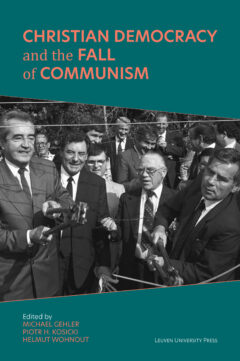 Christian Democracy and the Fall of Communism
Michael Gehler (Editor), Piotr H. Kosicki (Editor), Helmut Wohnout (Editor),
April 2026
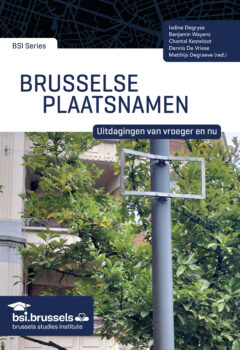 Brusselse plaatsnamen
Iadine Degryse (Editor), Benjamin Wayens (Editor), Chantal Kesteloot (Editor), Dennis De Vriese (Editor), Matthijs Degraeve (Editor),
April 2026


 Cartographies of Catastrophes
Laura Demeter (Editor), Carmen M. Enss (Editor), Piotr Kisiel (Editor), Carol Ludwig (Editor),
February 2026