Renaissance
Scenes of Industrial Reconversion in the Nord-Pas-de-Calais Coalfield
Jorge Ribalta (Author),
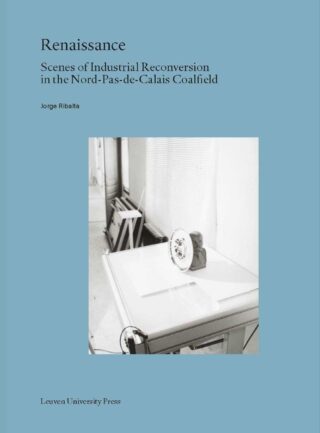
Photographic analysis of the mining region’s transition to culture and leisure economies The Nord-Pas-de-Calais mining region, bordering on Belgium, is part of northern Europe’s historical centre of heavy industry, which extends as far as the Ruhr area in Germany. With the end of coal mining in the 1980s, the Lille region transitioned to new economic activities, particularly within the cultural and creative industries, taking advantage of its strategic location midway between Paris, London and Brussels. After de-industrialisation and the 1984 opening of the Lewarde Mining Museum—the first institution of its kind in France—the region took part in industrial heritage campaigns modelled on the Ruhr industrial region. Various historical sites in coal-mining areas in this region and in Belgium were classified as World Heritage Sites by UNESCO in 2012. Renaissance (2014) presents a photographic analysis of the epochal transition from industry to culture and leisure economies and is organised around eight groups of a varying numbers of photographs. It sheds a light on the Nord-Pas-de-Calais mining region’s place in the European history of the capitalist nation-state.
The artist Jorge Ribalta offers a contribution to the critique on the myths and utopian promises of cultural economies. His photographic work interrogates the correspondence between the decline of industrial economies in Europe and the crisis of the middle class.
“For ten years, my work has been based on a desire to reinvent the documentary idea, by bringing historical density to that very idea, which is inseparable from the representation of work and the working classes. Documentary discourse can also contribute to an institutional critique right inside the art system through self-reflexivity that is to say through the documentary observation of artistic working conditions.” Jorge Ribalta on his project “Renaissance”.
Acknowledgements
Renaissance From Charles V to Louis XIV Small History of Photography Borinage Monuments Mining Museum, Lewarde Becoming Heritage New/Old Economy Leisure
Renaissance? Documentary Methods, Post-industrial Economiesand Ideologies on Cultural Heritage Panel discussion with Muriel Enjalran, Jacques Lemière, Jorge Ribalta and Hilde Van Gelder
Renaissance ? Méthodes documentaires, économies postindustrielleset idéologies du patrimoine culturel Débat avec Muriel Enjalran, Jacques Lemière, Jorge Ribalta and Hilde Van Gelder
Author and Contributors
Frequently Asked Questions
What is "Renaissance" about?
Photographic analysis of the mining region’s transition to culture and leisure economies The Nord-Pas-de-Calais mining region, bordering on Belgium, is part of northern Europe’s historical centre of heavy industry, which extends as far as the Ruhr area in Germany. With the end of coal mining in the 1980s, the Lille region transitioned to new economic activities, particularly within the cultural and creative industries, taking advantage of its strategic location midway between Paris, London and Brussels. After de-industrialisation and the 1984 opening of the Lewarde Mining Museum—the first institution of its kind in France—the region took part in industrial heritage campaigns modelled on the Ruhr industrial region. Various historical sites in coal-mining areas in this region and in Belgium were classified as World Heritage Sites by UNESCO in 2012. Renaissance (2014) presents a photographic analysis of the epochal transition from industry to culture and leisure economies and is organised around eight groups of a varying numbers of photographs. It sheds a light on the Nord-Pas-de-Calais mining region’s place in the European history of the capitalist nation-state.
The artist Jorge Ribalta offers a contribution to the critique on the myths and utopian promises of cultural economies. His photographic work interrogates the correspondence between the decline of industrial economies in Europe and the crisis of the middle class.
“For ten years, my work has been based on a desire to reinvent the documentary idea, by bringing historical density to that very idea, which is inseparable from the representation of work and the working classes. Documentary discourse can also contribute to an institutional critique right inside the art system through self-reflexivity that is to say through the documentary observation of artistic working conditions.” Jorge Ribalta on his project “Renaissance”.
Who wrote "Renaissance"?
"Renaissance" was written by Jorge Ribalta.
Jorge Ribalta is an artist, researcher, editor and independent curator. He lives and works in Barcelona.
Is "Renaissance" part of a series?
Yes, "Renaissance" is part of the "Lieven Gevaert Series" series. It's book 25 in the series.

The series covers four types of publications:
- outstanding monographic studies
- multi-authored volumes on a specific topic
- book length projects with artists
- translations and/or reprints of classic texts.
All books are published in English and are written for an international audience of scholars.
Format
All books in the series are published in 17*23 cm paperback with French flaps, printed in black and white on white maco paper and with a maximum page extent of 300 pages (120.000 words) including images (unless agreed otherwise).
Authors interested in publishing their book in Open Access can check out the funding options here. Open access books are published under a creative commons license.
Series editors
Hilde Van Gelder, KU Leuven
Alexander Streitberger, UCLouvain
Proposals
Proposals and enquiries can be sent to the series editors.
Please make use of the submission form to present the full manuscript to our board.
Authors interested in Open Access can consult the available funding options.
Links & Resources
What is the Table of Contents for "Renaissance"?
Acknowledgements
Renaissance From Charles V to Louis XIV Small History of Photography Borinage Monuments Mining Museum, Lewarde Becoming Heritage New/Old Economy Leisure
Renaissance? Documentary Methods, Post-industrial Economiesand Ideologies on Cultural Heritage Panel discussion with Muriel Enjalran, Jacques Lemière, Jorge Ribalta and Hilde Van Gelder
Renaissance ? Méthodes documentaires, économies postindustrielleset idéologies du patrimoine culturel Débat avec Muriel Enjalran, Jacques Lemière, Jorge Ribalta and Hilde Van Gelder
Author and Contributors
Related titles
 Collective Trauma and Future Fantasies
Raika Khorshidian (Editor), Birgit Mersmann (Editor), Cathrine Bublatzky (Editor), Julia Stenzel (Editor),
November 2026

 Feminists Resisting Gendered Violence
Hemangini Gupta (Editor), Fiona Mackay (Editor), Jan Breckenridge (Editor), Louise Chappell (Editor), Rachna Mehra (Editor), Rukmini Sen (Editor), Mailin Suchting (Editor),
October 2026
 A City in Practice
Aude Tournaye (Editor), Filip De Boeck (Editor), Picha Collective (Editor),
September 2026
 Ecologies of Photography in the American West
Monica Bravo (Editor), Carolin Görgen (Editor),
September 2026
 Cinema in Post-War Belgium
Gertjan Willems (Editor), Bjorn Gabriels (Editor), Bénédicte Rochet (Editor),
May 2026
 Performing Magnetism
Eleonora Paklons (Editor), Kristof Smeyers (Editor), Kurt Vanhoutte (Editor), Hannah Welslau (Editor),
May 2026
 Jean Katambayi Mukendi
Johannes Muselaers (Editor), Stéphane Symons (Editor), Anne-Claire Schmitz (Editor), Emma Enderby (Editor),
April 2026
 Nomadic Camera
Burcu Dogramaci (Editor), Winfried Gerling (Editor), Jens Jäger (Editor), Birgit Mersmann (Editor),
March 2026
 Comics and the Global South
Andrea Aramburú (Editor), Dibyadyuti Roy (Editor), Joe Sutliff Sanders (Editor),
February 2026
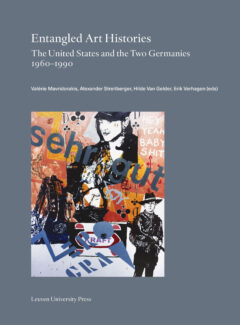 Entangled Art Histories
Valérie Mavridorakis (Editor), Alexander Streitberger (Editor), Hilde Van Gelder (Editor), Erik Verhagen (Editor),
October 2025
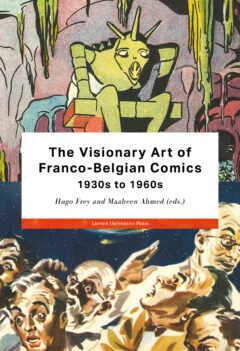 The Visionary Art of Franco-Belgian Comics, 1930s to 1960s
Hugo Frey (Editor), Maaheen Ahmed (Editor),
September 2025
 Violence and Trauma in Contemporary Performance
Sofie de Smet (Editor), Marieke Breyne (Editor), Pedzisai Maedza (Editor), Christel Stalpaert (Editor),
May 2025