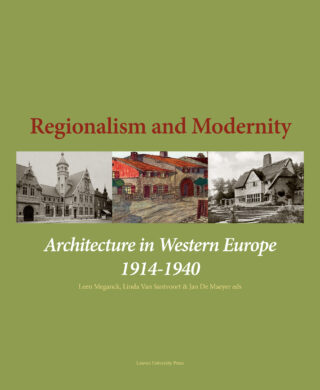
Regionalism and Modernity
Architecture in Western Europe 1914-1940
Leen Meganck (Editor), Linda Santvoort (Editor), Jan De Maeyer (Editor),
Series: KADOC-Artes 14
Category: Architecture and Urban Planning, History, History 1800-present
Language: English
ISBN: 9789058679185
Publication date: January 28, 2013
€59.50 (including 6% VAT)
Buy NowNumber of pages: 240
Size: 280 x 225 x 20 mm

Stock item: 68273
Standard delivery time for print books:
For Belgium: 5 to 8 working days
For EU: 2 to 3 weeks
For other countries: 4 to 5 weeks
Previously published: Sources of Regionalism in the Nineteenth-Century. Architecture, Art and LiteratureThe complex and shifting relation between regionalism and modernity
With its search for purity, honesty, modesty, and ‘fitness of purpose’, the late 19th and early 20th century concept of architectural regionalism is seminal to the modern movement. In later historiography, however, regionalism in Europe was neglected and even labeled ‘backward’. The origins of this drastic change of perception can be traced to the 1930s, when regionalism as a positive form gradually turned into a ‘closed’ form of regionalism, a folding back on one’s own region as a defence mechanism in an economically and politically turbulent decade.
In this book internationally renowned researchers investigate the complex and shifting relation between regionalism and modernity in the architecture of Western Europe between the two World Wars, with a focus on Belgium, France, Germany, Italy, and Great Britain. They demonstrate that regionalism cannot be separated from modernity, but is in fact a way of dealing with modernity and its contradictions. Applied to architecture, regionalism is a means to moderate modernism, to embed the design in its local surroundings. It is seen as a result of the search for identity in a modernizing and globalizing world where tensions arise between diversity and superiority and among science, aesthetics, and ideology. The employment of regional forms and concepts is then used as an adaptation strategy, a way to facilitate modernity. Rather than rejecting regionalism as an anti-modern phenomenon, this book’s contributors show that we should interpret regionalism as a striving for continuity within modernity.
This publication is GPRC-labeled (Guaranteed Peer-Reviewed Content)
Contributors
Hervé Doucet (University of Strasbourg); Kai Krauskopf (Technische Universität Dresden), Leen Meganck (Flanders Heritage Agency), Benoît Mihaïl (Police Museum Brussels), Lut Missinne (Westfälische Wilhelms-Universität Münster), Björn Rzoska (Groen), Michelangelo Sabatino (University of Houston), Vanessa Vanden Berghe (University of East London), Johan Van den Mooter (Kempens Landschap), Evert Vandeweghe (Ghent University), Jean-Claude Vigato (École nationale supérieure d’architecture de Nancy)
Introduction
FRANCE
Jean-Claude Vigato
Between Progress and Tradition. The Regionalist Debate in France
Hervé Doucet
Searching for a New Image. An Idealized Regionalism in Lorraine
BELGIUM
Johan Van den Mooter
German Reconstruction in Belgium during World War I. A Regional Experiment
Leen Meganck
Patriotism, Genius Loci, Authentic Buildings and Imitation Farmsteads.
Regionalism in Interwar Belgium
Benoît Mihaïl
Traditionalist Architecture in Belgium between the Wars.
The Obsession with National Culture and the French Influence
Evert Vandeweghe
Municipal Imagery and Regionalist Architecture in the Aftermath of the First World War. Branches of the National Bank of Belgium in Flanders
Björn Rzoska
Farmstead, Tribe, Soil and National Character.
Clemens Victor Trefois, a Self-Made Farmhouse Expert from Flanders
Lut Missinne
Regionalism and a European View? Gerard Walschap on the ‘Heimatroman’
GERMANY
Kai Krauskopf
Standardization and the Landscape. Traditionalism and the Planning of Housing Estates in Germany between the Two World Wars
ENGLAND
Vanessa Vanden Berghe
Oliver Hill. A Window on Regionalism in Britain during the Interwar Period
ITALY
Michelangelo Sabatino
Toward a Regionalist Modernism. Italian Architecture and the Vernacular
Abbreviations
Bibliography
Index
Authors
Colophon
Lost and Found: Regional Modernism in Europe
With 'Regionalism and Modernity', we get a more full and European perspective that suggests that in Europe maturation was dominant, but also more complex. European regionalism, assert the editors, was a “strategy for
ensuring continuity within a modernizing society which compensates for the increasing loss of landscape and tradition.” [...]
So considered altogether, 'Regionalism and Modernity' is a valuable contribution to the discourse that benefits a US audience by its ability to situate regionalism, modernism, historicism, and eclecticism within a social and political framework, while also demonstrating architectureʼs cultural and artistic relevance. Rather than simply a debate about style (regionalism, modernism, or neo-Tuscan?) as has been so often the case in the US, the European context demonstrates a closer and deeper relationship between culture, meaning and architecture.
Vincent B. Canizaro, University of Texas San Antonio
Frequently Asked Questions
What is "Regionalism and Modernity" about?
Previously published: Sources of Regionalism in the Nineteenth-Century. Architecture, Art and LiteratureThe complex and shifting relation between regionalism and modernity
With its search for purity, honesty, modesty, and ‘fitness of purpose', the late 19th and early 20th century concept of architectural regionalism is seminal to the modern movement. In later historiography, however, regionalism in Europe was neglected and even labeled ‘backward'. The origins of this drastic change of perception can be traced to the 1930s, when regionalism as a positive form gradually turned into a ‘closed' form of regionalism, a folding back on one's own region as a defence mechanism in an economically and politically turbulent decade.
In this book internationally renowned researchers investigate the complex and shifting relation between regionalism and modernity in the architecture of Western Europe between the two World Wars, with a focus on Belgium, France, Germany, Italy, and Great Britain. They demonstrate that regionalism cannot be separated from modernity, but is in fact a way of dealing with modernity and its contradictions. Applied to architecture, regionalism is a means to moderate modernism, to embed the design in its local surroundings. It is seen as a result of the search for identity in a modernizing and globalizing world where tensions arise between diversity and superiority and among science, aesthetics, and ideology. The employment of regional forms and concepts is then used as an adaptation strategy, a way to facilitate modernity. Rather than rejecting regionalism as an anti-modern phenomenon, this book's contributors show that we should interpret regionalism as a striving for continuity within modernity.
This publication is GPRC-labeled (Guaranteed Peer-Reviewed Content)
Contributors
Hervé Doucet (University of Strasbourg); Kai Krauskopf (Technische Universität Dresden), Leen Meganck (Flanders Heritage Agency), Benoît Mihaïl (Police Museum Brussels), Lut Missinne (Westfälische Wilhelms-Universität Münster), Björn Rzoska (Groen), Michelangelo Sabatino (University of Houston), Vanessa Vanden Berghe (University of East London), Johan Van den Mooter (Kempens Landschap), Evert Vandeweghe (Ghent University), Jean-Claude Vigato (École nationale supérieure d'architecture de Nancy)
Who edited "Regionalism and Modernity"?
"Regionalism and Modernity" was edited by Leen Meganck, Linda Santvoort and Jan De Maeyer.
Leen Meganck is Senior Researcher on Architectural History at the Flanders Heritage Agency.
Linda Van Santvoort is PhD in Art History and Professor at the U.Gent. Her research focuses on architecture and conservation in the 19th and 20th centuries.
Linda Van Santvoort is Professor of Architectural History and Heritage at Ghent University.
Jan De Maeyer is professor emeritus of contemporary church history at KU Leuven and honorary director of KADOC-KU Leuven. His research focuses on political and social Catholicism, material Christianity, and the development of religious institutions and congregations.
Is "Regionalism and Modernity" part of a series?
Yes, "Regionalism and Modernity" is part of the "KADOC-Artes" series. It's book 14 in the series.
The richly illustrated peer-reviewed book series KADOC Artes offers new insights into the material cultures and legacies of religions in Europe and the world since 1750 from interreligious and transnational perspectives. By means of monographs and edited volumes, the series explores thematic frontiers and embraces innovative methodological approaches in heritage studies. Taken together, KADOC Artes and its companion series KADOC Studies in Religion, Culture and Society represent a diptych featuring the material and immaterial cultures and legacies of religions in Europe and the world from the 18th century onwards.
KADOC ARTES reflects the particular expertise of KADOC – the Interfaculty Documentation and Research Centre on Religion, Culture and Society at KU Leuven – as a heritage institution with particularly rich and diverse documentary holdings, and as an interdisciplinary research center.
KADOC Artes managed by an independent Editorial Board. Books are published in English. The series welcomes monographs and edited volumes.
To submit a book proposal please go to the website of KADOC or consult LUP’s guidelines about submission. The series welcomes monographs and edited volumes. Book proposals may relate to, for example, the representation of religious diversity and the politicization of religious heritage.
All book proposals and manuscripts are subject to double blind peer review involving at least one external reviewer (proposals) or at least two (manuscripts). The editors strive towards completing the review of proposals within two months and of complete manuscripts within five months after submission.


Editorial board
Elena Arigita Maza (Universidad de Granada)
Florian Bock (Ruhr Universität Bochum)
Timothy Brittain‐Catlin (University of Cambridge)
James Chappel (Duke University)
Kim Christiaens (KADOC-KU Leuven)
Kathleen James-Chakraborty (University College Dublin)
James Kennedy (Utrecht University)
Franziska Metzger (PH Luzern)
Patrick Pasture (MoSa‐KU Leuven) - chairman
Isabelle Saint‐Martin (EPHE Paris)
Thijl Sunier (VU Amsterdam)
Árpád von Klimó (Catholic University of America)
Veerle De Laet (Leuven University Press)
Peter Heyrman (KADOC-KU Leuven) - secretary
Proposals
Proposals and enquiries can be sent to Peter Heyrman.
Please make use of the submission form to present your manuscript or proposal to our board.
Authors interested in Open Access can consult the available funding options.
Links & Resources
What is the Table of Contents for "Regionalism and Modernity"?
Introduction
FRANCE
Jean-Claude Vigato
Between Progress and Tradition. The Regionalist Debate in France
Hervé Doucet
Searching for a New Image. An Idealized Regionalism in Lorraine
BELGIUM
Johan Van den Mooter
German Reconstruction in Belgium during World War I. A Regional Experiment
Leen Meganck
Patriotism, Genius Loci, Authentic Buildings and Imitation Farmsteads.
Regionalism in Interwar Belgium
Benoît Mihaïl
Traditionalist Architecture in Belgium between the Wars.
The Obsession with National Culture and the French Influence
Evert Vandeweghe
Municipal Imagery and Regionalist Architecture in the Aftermath of the First World War. Branches of the National Bank of Belgium in Flanders
Björn Rzoska
Farmstead, Tribe, Soil and National Character.
Clemens Victor Trefois, a Self-Made Farmhouse Expert from Flanders
Lut Missinne
Regionalism and a European View? Gerard Walschap on the 'Heimatroman'
GERMANY
Kai Krauskopf
Standardization and the Landscape. Traditionalism and the Planning of Housing Estates in Germany between the Two World Wars
ENGLAND
Vanessa Vanden Berghe
Oliver Hill. A Window on Regionalism in Britain during the Interwar Period
ITALY
Michelangelo Sabatino
Toward a Regionalist Modernism. Italian Architecture and the Vernacular
Abbreviations
Bibliography
Index
Authors
Colophon
Related titles
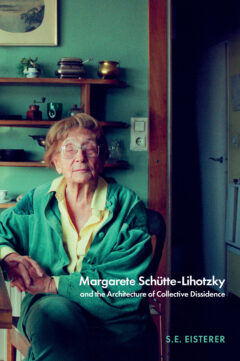 Margarete Schütte-Lihotzky and the Architecture of Collective Dissidence, 1918–1989
S.E. Eisterer (Author),
April 2027
 Infrastructuring Arrival
Karel Arnaut (Editor), Luce Beeckmans (Editor), Bruno Meeus (Editor),
November 2026

 Toekomstdromen
Maarten Van Dijck (Editor), Gerrit Verhoeven (Editor), Hans Cools (Editor),
November 2026
 German–Rapanui Entanglements
Cristián Moreno Pakarati (Editor), Diego Muñoz (Editor), Philipp Schorch (Editor),
August 2026
 Trend en toeval – vierde editie
Bruno Blondé (Author), Isabelle Devos (Author), Jord Hanus (Author), Wouter Ryckbosch (Author),
August 2026
 Cinema in Post-War Belgium
Gertjan Willems (Editor), Bjorn Gabriels (Editor), Bénédicte Rochet (Editor),
May 2026
 Performing Magnetism
Eleonora Paklons (Editor), Kristof Smeyers (Editor), Kurt Vanhoutte (Editor), Hannah Welslau (Editor),
May 2026
 Political Exile in the Global Twentieth Century
Wolfram Kaiser (Editor), Piotr H. Kosicki (Editor),
April 2026
 Christian Democracy and the Fall of Communism
Michael Gehler (Editor), Piotr H. Kosicki (Editor), Helmut Wohnout (Editor),
April 2026
 Brusselse plaatsnamen
Iadine Degryse (Editor), Benjamin Wayens (Editor), Chantal Kesteloot (Editor), Dennis De Vriese (Editor), Matthijs Degraeve (Editor),
April 2026
 Cartographies of Catastrophes
Laura Demeter (Editor), Carmen M. Enss (Editor), Piotr Kisiel (Editor), Carol Ludwig (Editor),
February 2026