Philosophy of Photography
Henri Van Lier (Author),
Reduced Price!
Now only € 10,00 instead of € 27,50
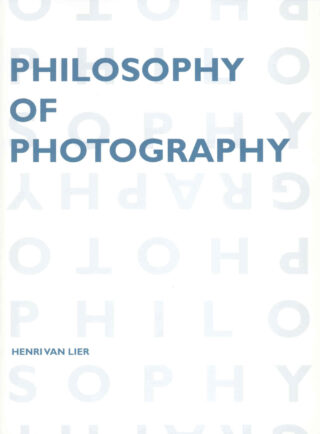
Henri Van Lier’s contribution to the field of photography is comparable, in its scope as well as in its achievements, to the work of all those we now consider being the great modern classics: Walter Benjamin, André Bazin, André Malraux, John Berger, Susan Sontag, or Roland Barthes. Less well known, probably for having worked and published in Belgium, Henri Van Lier had written with Philosophy of Photography a profoundly original and innovative reflection on the medium, both on its formal peculiarities and on its social, cultural, and anthropological functions. Much more than other theoreticians, Van Lier succeeds in combining an astute sense of the detail with an extremely broad interest in the meaning of the medium for mankind (for Van Lier, photography is always analyzed in the light of a new discipline he coined as ‘anthropogeny’ and which studies the gradual emergence of what makes us human through the history of the species). Moreover, having no particular institutional agenda to defend, Henri Van Lier is able to gather a wide range of disciplinary insights and questions –semiotics, history, aesthetics, and, why not, also philosophy. The present translation is the very first to appear in English, yet it is also much more. The book has received a completely new set of illustrations, meant to be more than merely ‘illustrative’. Made by sixteen young photographers all trained by the Belgian photographer Geert Goiris, who devoted an open master class to Henri Van Lier’s work, all these images represent both an homage to the author of Philosophy of Photography and a timely exemplification of the use-value of the ideas defended in the book. Each of the photographers has indeed attempted to suggest in his or her own image(s) the echoes which specific points of Van Lier’s work are able to create in the mind, the eyes, but also the hands of contemporary readers and viewers. In this sense, this book is not just a scholarly work; it has become a work of art.
WHAT WE CAN LEARN FROM HENRI VAN LIER
Jan Baetens & Geert Goiris
TOWARDS A PHILOSOPHY INSTIGATED BY PHOTOGRAPHY
PART ONE: THE TEXTURE AND STRUCTURE OF THE PHOTOGRAPH
1. The abstractive imprint
2. Indices and indexes
3. Field effects before denotations and connotations
4.. The non-scene: on the obscene in stimuli-signs and figures
5. Reproduction and transmutability: process and relay
6. Reality and the real
The cosmos-mundus and the universe
The possible and the black box
7. The triggering of the mental schemas
8. Types differing from black and white
PART TWO: PHOTOGRAPHIC INITIATIVES
1. The initiative of industrial technology
2. The initiative of nature
3. The initiative of the spectacle: photogenicity
4. The initiative of the photographer: trap and switch mediumism
PART THREE: PHOTOGRAPHIC BEHAVIORS
1. Pragmatic behaviors
2. Artistic behaviors
3. Scientific, documentary and testimonial behaviors
POSTSCRIPT: NEW THEORETICAL PERSPECTIVES
APPENDIX: PEIRCE AND PHOTOGRAPHY
PHOTOGRAPHERS
Frequently Asked Questions
What is "Philosophy of Photography" about?
Reduced Price!
Now only € 10,00 instead of € 27,50
Henri Van Lier’s contribution to the field of photography is comparable, in its scope as well as in its achievements, to the work of all those we now consider being the great modern classics: Walter Benjamin, André Bazin, André Malraux, John Berger, Susan Sontag, or Roland Barthes. Less well known, probably for having worked and published in Belgium, Henri Van Lier had written with Philosophy of Photography a profoundly original and innovative reflection on the medium, both on its formal peculiarities and on its social, cultural, and anthropological functions. Much more than other theoreticians, Van Lier succeeds in combining an astute sense of the detail with an extremely broad interest in the meaning of the medium for mankind (for Van Lier, photography is always analyzed in the light of a new discipline he coined as ‘anthropogeny’ and which studies the gradual emergence of what makes us human through the history of the species). Moreover, having no particular institutional agenda to defend, Henri Van Lier is able to gather a wide range of disciplinary insights and questions –semiotics, history, aesthetics, and, why not, also philosophy. The present translation is the very first to appear in English, yet it is also much more. The book has received a completely new set of illustrations, meant to be more than merely ‘illustrative’. Made by sixteen young photographers all trained by the Belgian photographer Geert Goiris, who devoted an open master class to Henri Van Lier’s work, all these images represent both an homage to the author of Philosophy of Photography and a timely exemplification of the use-value of the ideas defended in the book. Each of the photographers has indeed attempted to suggest in his or her own image(s) the echoes which specific points of Van Lier’s work are able to create in the mind, the eyes, but also the hands of contemporary readers and viewers. In this sense, this book is not just a scholarly work; it has become a work of art.
Who wrote "Philosophy of Photography"?
"Philosophy of Photography" was written by Henri Van Lier.
Is "Philosophy of Photography" part of a series?
Yes, "Philosophy of Photography" is part of the "Lieven Gevaert Series" series. It's book 6 in the series.

The series covers four types of publications:
- outstanding monographic studies
- multi-authored volumes on a specific topic
- book length projects with artists
- translations and/or reprints of classic texts.
All books are published in English and are written for an international audience of scholars.
Format
All books in the series are published in 17*23 cm paperback with French flaps, printed in black and white on white maco paper and with a maximum page extent of 300 pages (120.000 words) including images (unless agreed otherwise).
Authors interested in publishing their book in Open Access can check out the funding options here. Open access books are published under a creative commons license.
Series editors
Hilde Van Gelder, KU Leuven
Alexander Streitberger, UCLouvain
Proposals
Proposals and enquiries can be sent to the series editors.
Please make use of the submission form to present the full manuscript to our board.
Authors interested in Open Access can consult the available funding options.
Links & Resources
What is the Table of Contents for "Philosophy of Photography"?
WHAT WE CAN LEARN FROM HENRI VAN LIER
Jan Baetens & Geert Goiris
TOWARDS A PHILOSOPHY INSTIGATED BY PHOTOGRAPHY
PART ONE: THE TEXTURE AND STRUCTURE OF THE PHOTOGRAPH
1. The abstractive imprint
2. Indices and indexes
3. Field effects before denotations and connotations
4.. The non-scene: on the obscene in stimuli-signs and figures
5. Reproduction and transmutability: process and relay
6. Reality and the real
The cosmos-mundus and the universe
The possible and the black box
7. The triggering of the mental schemas
8. Types differing from black and white
PART TWO: PHOTOGRAPHIC INITIATIVES
1. The initiative of industrial technology
2. The initiative of nature
3. The initiative of the spectacle: photogenicity
4. The initiative of the photographer: trap and switch mediumism
PART THREE: PHOTOGRAPHIC BEHAVIORS
1. Pragmatic behaviors
2. Artistic behaviors
3. Scientific, documentary and testimonial behaviors
POSTSCRIPT: NEW THEORETICAL PERSPECTIVES
APPENDIX: PEIRCE AND PHOTOGRAPHY
PHOTOGRAPHERS
Related titles


 Feminists Resisting Gendered Violence
Hemangini Gupta (Editor), Fiona Mackay (Editor), Jan Breckenridge (Editor), Louise Chappell (Editor), Rachna Mehra (Editor), Rukmini Sen (Editor), Mailin Suchting (Editor),
October 2026
 Ecologies of Photography in the American West
Monica Bravo (Editor), Carolin Görgen (Editor),
September 2026
 Cinema in Post-War Belgium
Gertjan Willems (Editor), Bjorn Gabriels (Editor), Bénédicte Rochet (Editor),
May 2026

 Performing Magnetism
Eleonora Paklons (Editor), Kristof Smeyers (Editor), Kurt Vanhoutte (Editor), Hannah Welslau (Editor),
May 2026
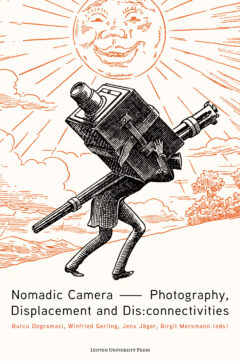 Nomadic Camera
Burcu Dogramaci (Editor), Winfried Gerling (Editor), Jens Jäger (Editor), Birgit Mersmann (Editor),
March 2026
 Comics and the Global South
Andrea Aramburú (Editor), Dibyadyuti Roy (Editor), Joe Sutliff Sanders (Editor),
February 2026
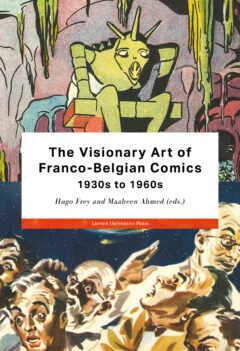 The Visionary Art of Franco-Belgian Comics, 1930s to 1960s
Hugo Frey (Editor), Maaheen Ahmed (Editor),
September 2025
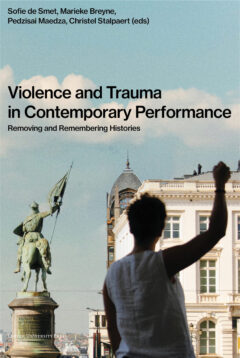 Violence and Trauma in Contemporary Performance
Sofie de Smet (Editor), Marieke Breyne (Editor), Pedzisai Maedza (Editor), Christel Stalpaert (Editor),
May 2025

 Architectures of Resistance
Angeliki Sioli (Editor), Nishat Awan (Editor), Kristopher Palagi (Editor),
August 2024