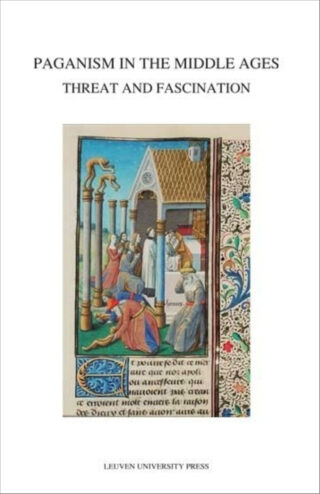
Interdisciplinary study of pagan culture from late antiquity to the emergent Renaissance In this volume the persistence, resurgence, threat, fascination, and repression of various forms of pagan culture are studied in an interdisciplinary perspective from late antiquity to the emergent Renaissance. Contributions deal with the survival of pagan beliefs and practices, as well as with the Christianization of pagan rural populations or with the different strategies of oppression of pagan beliefs. The authors examine problems raised by the encounter with pagan cultures outside the Muslim world and show how philosophers contrived to ‘save’ the great philosophers and poets from ancient culture notwithstanding their paganism. The contributors also study the fascination of classic ‘pagan’ culture among friars during the fourteenth and fifteenth centuries and the imitation of pagan models of virtue and mythology in Renaissance poetry. Contributors Carlos Steel (University of Leuven), John Marenbon (Trinity College, Cambridge), Ludo Milis (University of Ghent), Marc-André Wagner † (Paris, Ministère de la Culture), Brigitte Meijns (University of Leuven), Rob Meens (University of Utrecht), Edina Bozoky (Université de Poitiers), Henryk Anzulewicz (Albertus-Magnus Institut, Bonn), Robrecht Lievens (University of Leuven), Stefano Pittaluga (Università di Genova), Anna Akasoy (Ruhr-Universität Bochum)
CONTENTS
Introduction
Ludo MILIS
The Spooky Heritage of Ancient Paganisms
Carlos STEEL
De-paganizing Philosophy
John MARENBON
A Problem of Paganism
Henryk ANZULEWICZ
Albertus Magnus über die philosophi theologizantes und die natürlichen Voraussetzungen postmortaler Glückseligkeit: Versuch einer Bestandsaufname
Marc-André WAGNER
Le cheval dans les croyances germaniques entre paganisme et christianisme
Brigitte MEIJNS
Martyrs, Relics and Holy Places: The Christianization of the Countryside in the Archdiocese of Rheims during the Merovingian Period
Edina BOZOKY
Paganisme et culte des reliques: le topos du sang vivifiant la végétation
Rob MEENS
Thunder over Lyon: Agobard, the tempestarii and Christianity
Robrecht LIEVENS
The ‘pagan’ Dirc van Delf
Stefano PITTALUGA
Callimaco Esperiente e il paganesimo
Anna AKASOY
Paganism and Islam: Medieval Arabic Literature on Religions in West Africa
Index
De verschillende bijdragen geven ook perfect weer hoe divers het fenomeen was, maar ook welke bekeringsstrategie de kerk er tegen in bracht. De meerderheid van de bijdragen zijn in het Engels. Laat dat vooral niet afschrikken, want de bijdragen zijn bijzonder verhelderend en onderhoudend.
Christusrex.be
Comment expliquer les vertus évidentes qu'on lisait sous la plume d'auteurs antiques, et si ceux-ci étaient justes, pouvaient-ils espérer être sauvés ? La question dut tarauder plus d'un clerc médiéval. Pour étudier cette problématique, A. MAREN-BON, A Problem of Paganism, considère l'exemple atypique de l'empereur Trajan qui, dans plusieurs oeuvres (entre autres la Legenda aurea), fut jugé digne d'accéder
au Paradis. H. ANZULEWICZ, analyse quant à lui les conceptions positives d'Al-bertus Magnus über die philosophi theologizantes und die natürlichen Voraus-setzungen postmortaler Glückseligkeit: Versuch einer Bestandsaufname. Pour le grand théologien dominicain, les trois rois mages incarnaient particulièrement bien la convergence possible entre la sagesse et la science antiques et le christianisme. à€ n'en pas douter, ce recueil, par ailleurs doté d'un index, ouvre des perspectives instructives sur la religion de l'époque médiévale. Fr. DE VRIENDT, Analecta Bollandiana (131 / II [2013])
Die Beiträge behandeln jeweils eigene, oft auch 'randständige', aber durchweg interessante Aspekte des Fortlebens, Nachwirkens und der Rezeption heidnischer Motive, ohne sich zu einem Ganzen zusammenzufügen, da sie insgesamt verschiedenen Perspektiven nachgehen. Fast alle Beiträge haben den Rezensenten zum Nachdenken, manche auch zum Widerspruch vor allem dort provoziert, wo manches zu sehr "von auàŸen" betrachtet erscheint, dadurch aber in beiden Fällen bewiesen, wie anregend sie sind. àœber das - zuletzt mehrfach vernachlässigte - Heidentum im Mittelalter und sein Fortleben im Christentum wird man noch weiter nachdenken und dabei sorgsam zwischen unbewusst Rezipiertem, bewusst Eingesetztem und als heidnisch Zurückgewiesenem differenzieren müssen.
Hans-Werner Goetz, Sehepunkte, Ausgabe 14 (2014), Nr. 11
Der Band erbringt einen facettenreichen Rundblick über die intellektuellen Auseinandersetzungenmit dem Paganen in unterschiedlichen Phasen des Mittelalters einerseits, beispielsweise durch Albertus Magnus (Henryk Anzulewicz) oder den Bettelmönch Dirk von Delft (Robrecht Lievens), andererseits über die Koexistenz, Vermischung und Abgrenzung von Paganem und Christlichem (etwa im Artikel von Rob Meens) im Alltäglichen. In nahezu allen Beiträgen wird deutlich, dass das Pagane zwischen Abschreckung und Anziehungkraft changierte.
Jenny Rahel Oesterle, Heidelberg, Historischen Zeitschrift Heft 299/3
It contains altogether eleven articles dealing with a variety of aspects of the relationship between Christianity and paganism, from theology and philosophy to popular cult and religion. [...] it does have the advantage of addressing the issue in a great number of fields and of presenting a nuanced and varied discussion of the relationship.
Sverre Bagge, Speculum 90/4 (October 2015)
Frequently Asked Questions
What is "Paganism in the Middle Ages" about?
Interdisciplinary study of pagan culture from late antiquity to the emergent Renaissance In this volume the persistence, resurgence, threat, fascination, and repression of various forms of pagan culture are studied in an interdisciplinary perspective from late antiquity to the emergent Renaissance. Contributions deal with the survival of pagan beliefs and practices, as well as with the Christianization of pagan rural populations or with the different strategies of oppression of pagan beliefs. The authors examine problems raised by the encounter with pagan cultures outside the Muslim world and show how philosophers contrived to ‘save' the great philosophers and poets from ancient culture notwithstanding their paganism. The contributors also study the fascination of classic ‘pagan' culture among friars during the fourteenth and fifteenth centuries and the imitation of pagan models of virtue and mythology in Renaissance poetry. Contributors Carlos Steel (University of Leuven), John Marenbon (Trinity College, Cambridge), Ludo Milis (University of Ghent), Marc-André Wagner † (Paris, Ministère de la Culture), Brigitte Meijns (University of Leuven), Rob Meens (University of Utrecht), Edina Bozoky (Université de Poitiers), Henryk Anzulewicz (Albertus-Magnus Institut, Bonn), Robrecht Lievens (University of Leuven), Stefano Pittaluga (Università di Genova), Anna Akasoy (Ruhr-Universität Bochum)
Who edited "Paganism in the Middle Ages"?
"Paganism in the Middle Ages" was edited by Carlos Steel, John Marenbon and Werner Verbeke.
Carlos Steel is emeritus professor of ancient and medieval philosophy at KU Leuven and director of the “Aristoteles Latinus” project.
John Marenbon is Senior Research Fellow, Trinity College, Cambridge and Honorary Professor of Medieval Philosophy at the University of Cambridge.
Werner Verbeke is Professor Emeritus of Medieval History at KU Leuven.
Is "Paganism in the Middle Ages" part of a series?
Yes, "Paganism in the Middle Ages" is part of the "Mediaevalia Lovaniensia" series. It's book 43 in the series.

The longstanding, peer-reviewed book series Mediaevalia Lovaniensia. Studies in Medieval History, Society, and Culture publishes high-quality scholarship on the history and culture of the Middle Ages (c. 500–1550). Topics of particular interest to the series include, but are not limited to, social behaviour and power relations in medieval society, processes of identity formation, religious and urban culture, medieval thought and literature, and gender history. The series focuses on Europe and the wider Mediterranean world and is particularly rich in interdisciplinary approaches. By means of monographs and edited volumes, the series explores thematic frontiers and embraces innovative methodological approaches in historical and philological scholarship that is based on an in-depth source-based study.
Mediaevalia Lovaniensia accepts monographs as well as thematically coherent volumes in English. Moreover, it offers scholars the possibility to publish critical editions of primary texts with broader relevance to the understanding of medieval culture and society. The series aspires to publish books that have the potential to become reference works in the field of Medieval Studies.
We encourage early career (postdoctoral) researchers to submit a reworked version of their PhD thesis to this series. Leuven University Press provides authors with two publishing scenarios: traditional (non-Open Access) and the option to publish in Open Access (including language editing).
Editorial Board
Jelle Haemers (KU Leuven)
Jeroen Deploige (Ghent University)
Brigitte Meijns (KU Leuven)
Chanelle Delameillieure (KU Leuven - KULAK)
Baudouin Van den Abeele (UCLouvain)
Proposals
Proposals and enquiries can be sent to one of the editorial board members. Please send a short abstract. Upon approval of the proposal, the full manuscript will be submitted to international blind peer review by two (external) experts. The editors strive towards completing the review of proposals within one month and of complete manuscripts within five months after submission. Manuscripts should preferably be (+/-) 80.000 to 120.000 words in length.
Please make use of the submission form to present your manuscript or proposal to our board.
Authors interested in Open Access can consult the available funding options.
Links & Resources
What is the Table of Contents for "Paganism in the Middle Ages"?
CONTENTS
Introduction
Ludo MILIS
The Spooky Heritage of Ancient Paganisms
Carlos STEEL
De-paganizing Philosophy
John MARENBON
A Problem of Paganism
Henryk ANZULEWICZ
Albertus Magnus über die philosophi theologizantes und die natürlichen Voraussetzungen postmortaler Glückseligkeit: Versuch einer Bestandsaufname
Marc-André WAGNER
Le cheval dans les croyances germaniques entre paganisme et christianisme
Brigitte MEIJNS
Martyrs, Relics and Holy Places: The Christianization of the Countryside in the Archdiocese of Rheims during the Merovingian Period
Edina BOZOKY
Paganisme et culte des reliques: le topos du sang vivifiant la végétation
Rob MEENS
Thunder over Lyon: Agobard, the tempestarii and Christianity
Robrecht LIEVENS
The 'pagan' Dirc van Delf
Stefano PITTALUGA
Callimaco Esperiente e il paganesimo
Anna AKASOY
Paganism and Islam: Medieval Arabic Literature on Religions in West Africa
Index
Related titles
 Orality and Scribal Culture in the High Middle Ages
Timothy B. Noone (Author), Mark J. Clark (Author),
November 2026
 Toekomstdromen
Maarten Van Dijck (Editor), Gerrit Verhoeven (Editor), Hans Cools (Editor),
November 2026
 The Medieval Aristotle
Nena Bobovnik (Editor), Clelia V. Crialesi (Editor), Lisa Devriese (Editor),
August 2026

 Trend en toeval – vierde editie
Bruno Blondé (Author), Isabelle Devos (Author), Jord Hanus (Author), Wouter Ryckbosch (Author),
August 2026
 Political Exile in the Global Twentieth Century
Wolfram Kaiser (Editor), Piotr H. Kosicki (Editor),
April 2026
 Christian Democracy and the Fall of Communism
Michael Gehler (Editor), Piotr H. Kosicki (Editor), Helmut Wohnout (Editor),
April 2026
 Brusselse plaatsnamen
Iadine Degryse (Editor), Benjamin Wayens (Editor), Chantal Kesteloot (Editor), Dennis De Vriese (Editor), Matthijs Degraeve (Editor),
April 2026

 Cartographies of Catastrophes
Laura Demeter (Editor), Carmen M. Enss (Editor), Piotr Kisiel (Editor), Carol Ludwig (Editor),
February 2026
 Thomas Aquinas and Hervaeus Natalis on Concepts and Intentional Objects
Fabrizio Amerini (Author),
February 2026