Life Inside the Cloister
Understanding Monastic Architecture: Tradition, Reformation, Adaptive Reuse
Thomas Coomans (Author),
Series: KADOC-Studies on Religion, Culture and Society 21
Category: Architecture and Urban Planning, History, History 1500-1800, History 1800-present, History 500-1500
Language: English
ISBN: 9789462701434
Publication date: May 17, 2018
€22.50 (including 6% VAT)
Buy NowNumber of pages: 176
Size: 238 x 170 x 10 mm
Number of illustrations: 99
Illustrations and other content description:
full colour

Stock item: 142196
Standard delivery time for print books:
For Belgium: 5 to 8 working days
For EU: 2 to 3 weeks
For other countries: 4 to 5 weeks
Series: KADOC-Studies on Religion, Culture and Society 21
Category: Architecture and Urban Planning, History, History 1500-1800, History 1800-present, History 500-1500
Language: English
ISBN: 9789461662606
Publication date: May 17, 2018
€34.00 (including 6% VAT)
Buy NowNumber of pages: 176
Number of illustrations: 99
Illustrations and other content description:
full colour
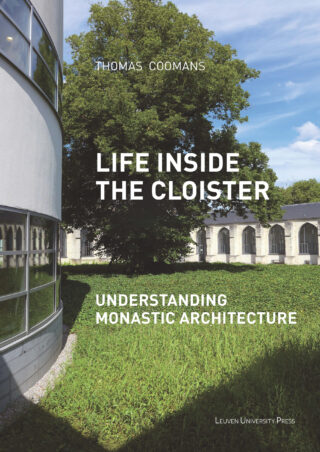
The cloister is the focal point of this book because it is both architecture, a physically built reality, and a metaphor for the religious life that takes place within it. Life Inside the Cloister also addresses the afterlife and heritagisation of monastic architecture in secularised Western society.
Sacred architecture as reality and metaphor in secularised Western society
Christian monasteries and convents, built throughout Europe for the best part of 1,500 years, are now at a crossroads. This study attempts to understand the sacred architecture of monasteries as a process of the tangible and symbolic organisation of space and time for religious communities. Despite the weight of seemingly immutable monastic tradition, architecture has contributed to developing specific religious identities and played a fundamental part in the reformation of different forms of religious life according to the changing needs of society. The cloister is the focal point of this book because it is both architecture, a physically built reality, and a metaphor for the religious life that takes place within it. Life Inside the Cloister also addresses the afterlife and heritagisation of monastic architecture in secularised Western society.
This publication is GPRC-labeled (Guaranteed Peer-Reviewed Content)
Introduction. Understanding Monastic Architecture
Origins. Organising Sacred Space and Time
1. The Cell 2. The Rule 3. The Community 4. The Church 5. The Cloister
Building Types. Identities and Reformations
6. The Abbey 7. The Charterhouse 8. The Castle 9. The Friary 10. The Beguinage 11. The Hôtel-Dieu 12. The College 13. The Palace 14. The House
Characters. Embodying the Sacred
15. Place and Stability 16. Enclosure and Gender 17. Liturgy and Identity 18. Death and Memory 19. Scale and Growth 20. Style
Afterlife. Adaptive Reuse and Heritagisation
21. Destruction and Ruins 22. Manors, Farms and Factories 23. Residential Use 24. Barracks, Arsenals, Prisons and Courthouses 25. University Colleges and Lyceums 26. The Sacredness of Culture
Conclusion. Tradition, Heritage and the Spirit of the Place
Bibliography Index of Places Index of Names Colophon
Thomas Coomans
Thomas Coomans is a full professor of architectural history and built heritage conservation at KU Leuven and director of the Advanced Master in Conservation of Monuments and Sites (RLICC), at the Faculty of Engineering Science.
This is an authoritative historical review of monastic architecture which could be recommended for use in undergraduate and taught postgraduate teaching. The text is written to a high scholarly standard, and adopts a clear and logical line throughout. It is up to date both in terms of current questions about the future of these buildings and also in terms of its consideration of published scholarship about them. From the point of view of a basic textbook, it is clear, thorough, and comprehensive. Dr. Timothy Brittain-Catlin - University of Kent
Thomas Coomans is een expert op het vlak van de religieuze architectuur. Heel zijn kennen en kunnen lijkt me als een soort synthese vervat te liggen in deze prachtige studie.Christusrex.be,
december 2018
Dit neemt niet weg dat 'Life inside the Cloister' een rijk boek is. Ondanks het feit dat het met 176 pagina’s bescheiden van omvang is, biedt het boek een uiterst helder overzicht in de zeer diverse materie die het behandelt,in het licht van een actueel onderwerp. Het boek is met 104 afbeeldingen voorbeeldig geïllustreerd, beschikt over een namen- en plaatsnamenregister en de zeer uitgebreide bibliografie biedt vele aanknopingspuntenvoor nader onderzoek.
Gabri van Tussenbroek, Bulletin KNOB 118 (2019) 2, https://doi.org/10.7480/knob.118.2019.2.3854
The book is an attractive and useful addition to the introductory literature on western monasticism and its architectures, and is likely to be particularly welcomed by undergraduate students who are as yet largely unfamiliar with the field. It will provide a helpful grounding for those about to tackle such as Wolfgang Braunfels' Monasteries of Western Europe, and who are preparing to launch themselves into developing some understanding of the principles of architectural conservation and adaptation.Richard Fawcett, The
Medieval Review 19.04.08
Academicamente oportuno e conceptual e metodologicamente atual, cientificamente autorizado, pragmático no propósito e na forma, rico de conteúdo, e, por tudo, eminentemente útil, ao novo livro de Coomans parece apenas faltar a tradução para outras línguas, nomeadamente latinas, para se impor como recurso pedagógico de referência ao nível dos estudos avançados em Arquitetura, Artes e Património. Maria Luísa Jacquinet
https://doi.org/doi
Frequently Asked Questions
What is "Life Inside the Cloister" about?
Sacred architecture as reality and metaphor in secularised Western society
Christian monasteries and convents, built throughout Europe for the best part of 1,500 years, are now at a crossroads. This study attempts to understand the sacred architecture of monasteries as a process of the tangible and symbolic organisation of space and time for religious communities. Despite the weight of seemingly immutable monastic tradition, architecture has contributed to developing specific religious identities and played a fundamental part in the reformation of different forms of religious life according to the changing needs of society. The cloister is the focal point of this book because it is both architecture, a physically built reality, and a metaphor for the religious life that takes place within it. Life Inside the Cloister also addresses the afterlife and heritagisation of monastic architecture in secularised Western society.
This publication is GPRC-labeled (Guaranteed Peer-Reviewed Content)
Who wrote "Life Inside the Cloister"?
"Life Inside the Cloister" was written by Thomas Coomans.
Thomas Coomans is a full professor of architectural history and built heritage conservation at KU Leuven and director of the Advanced Master in Conservation of Monuments and Sites (RLICC), at the Faculty of Engineering Science.
Is "Life Inside the Cloister" part of a series?
Yes, "Life Inside the Cloister" is part of the "KADOC-Studies on Religion, Culture and Society" series. It's book 21 in the series.


The longstanding peer-reviewed book series KADOC Studies in Religion, Culture and Society is devoted to a deeper understanding of the role of religion(s) in society in Europe and the world since 1750. By means of monographs and edited volumes, the series explores thematic frontiers and embraces innovative methodological approaches in historical, sociological and anthropological scholarship on religion, culture and society. The series particularly welcomes manuscripts adopting interreligious and transnational perspectives. Taken together, KADOC Studies in Religion, Culture and Society and its companion series KADOC Artes represent a diptych featuring the immaterial and material legacies of religions in Europe and the world from the 18th century onwards.
KADOC Studies in Religion, Culture and Society is managed by an independent Editorial Board. Books are published in English. Open Access publishing is encouraged. Financial support will be examined on a case-by-case basis and in consultation with the author.
KADOC, the Interfaculty Documentation and Research Centre on Religion, Culture and Society at KU Leuven, is an internationally oriented interdisciplinary research center as well as a heritage institution recognized by the Flemish Government with particularly rich and diverse documentary holdings.
Editorial board
Elena Arigita Maza (Universidad de Granada)
Florian Bock (Ruhr Universität Bochum)
Timothy Brittain‐Catlin (University of Cambridge)
James Chappel (Duke University)
Kim Christiaens (KADOC-KU Leuven)
Kathleen James-Chakraborty (University College Dublin)
James Kennedy (Utrecht University)
Franziska Metzger (PH Luzern)
Patrick Pasture (MoSa‐KU Leuven) - chairman
Isabelle Saint‐Martin (EPHE Paris)
Thijl Sunier (VU Amsterdam)
Árpád von Klimó (Catholic University of America)
Veerle De Laet (Leuven University Press)
Peter Heyrman (KADOC-KU Leuven) - secretary
Proposals
Proposals and enquiries can be sent to Peter Heyrman. The series welcomes monographs and edited volumes. Book proposals may relate to, for example, the political impact of religion, the dynamics between religion and welfare, and missionary history. All proposals and manuscripts are subject to double blind peer review involving at least one external reviewer (proposals) or at least two (manuscripts). The editors strive towards completing the review of proposals within two months and of complete manuscripts within five months after submission.
Please make use of the submission form to present your manuscript or proposal to our board.
Authors interested in Open Access can consult the available funding options.
Links & Resources
What is the Table of Contents for "Life Inside the Cloister"?
Introduction. Understanding Monastic Architecture
Origins. Organising Sacred Space and Time
1. The Cell 2. The Rule 3. The Community 4. The Church 5. The Cloister
Building Types. Identities and Reformations
6. The Abbey 7. The Charterhouse 8. The Castle 9. The Friary 10. The Beguinage 11. The Hôtel-Dieu 12. The College 13. The Palace 14. The House
Characters. Embodying the Sacred
15. Place and Stability 16. Enclosure and Gender 17. Liturgy and Identity 18. Death and Memory 19. Scale and Growth 20. Style
Afterlife. Adaptive Reuse and Heritagisation
21. Destruction and Ruins 22. Manors, Farms and Factories 23. Residential Use 24. Barracks, Arsenals, Prisons and Courthouses 25. University Colleges and Lyceums 26. The Sacredness of Culture
Conclusion. Tradition, Heritage and the Spirit of the Place
Bibliography Index of Places Index of Names Colophon
Related titles
 Margarete Schütte-Lihotzky and the Architecture of Collective Dissidence, 1918–1989
S.E. Eisterer (Author),
April 2027
 Orality and Scribal Culture in the High Middle Ages
Timothy B. Noone (Author), Mark J. Clark (Author),
November 2026
 Infrastructuring Arrival
Karel Arnaut (Editor), Luce Beeckmans (Editor), Bruno Meeus (Editor),
November 2026

 Toekomstdromen
Maarten Van Dijck (Editor), Gerrit Verhoeven (Editor), Hans Cools (Editor),
November 2026
 German–Rapanui Entanglements
Cristián Moreno Pakarati (Editor), Diego Muñoz (Editor), Philipp Schorch (Editor),
August 2026
 The Medieval Aristotle
Nena Bobovnik (Editor), Clelia V. Crialesi (Editor), Lisa Devriese (Editor),
August 2026
 Trend en toeval – vierde editie
Bruno Blondé (Author), Isabelle Devos (Author), Jord Hanus (Author), Wouter Ryckbosch (Author),
August 2026
 Cinema in Post-War Belgium
Gertjan Willems (Editor), Bjorn Gabriels (Editor), Bénédicte Rochet (Editor),
May 2026
 Performing Magnetism
Eleonora Paklons (Editor), Kristof Smeyers (Editor), Kurt Vanhoutte (Editor), Hannah Welslau (Editor),
May 2026
 Political Exile in the Global Twentieth Century
Wolfram Kaiser (Editor), Piotr H. Kosicki (Editor),
April 2026
 Christian Democracy and the Fall of Communism
Michael Gehler (Editor), Piotr H. Kosicki (Editor), Helmut Wohnout (Editor),
April 2026
 Brusselse plaatsnamen
Iadine Degryse (Editor), Benjamin Wayens (Editor), Chantal Kesteloot (Editor), Dennis De Vriese (Editor), Matthijs Degraeve (Editor),
April 2026