

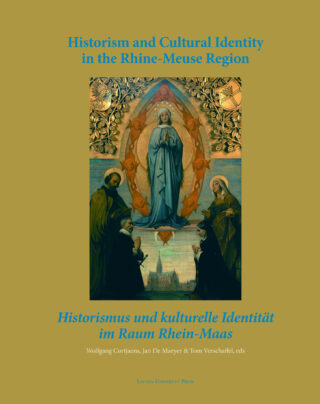
Historism and Cultural Identity in the Rhine-Meuse Region
Tensions between Nationalism and Regionalism in the Nineteenth Century
Wolfgang Cortjaens (Editor), Jan De Maeyer (Editor), Tom Verschaffel (Editor),
Based on the cultural insight that ‘historism’ – understood as the projection of the past into the present by artistic means, or the ‘invention of tradition’ – always occurs in close connection with the emergence of nation states, this volume describes for the first time the cultural and denominational character and development of the Maas-Rhine region during the period between the French Revolution and the First World War. Seventeen contributions shed new and revealing light on the cultural identity of this Catholic-dominated core region of Europe, using the defining term ‘historism’ as the historiographical element that unifies the book’s four sections (Social and Church Historical Context, The Organisational Structure of Ecclesiastical Art, Centres of Art, ‘Grenzgänger’: between Theory and Praxis).
An Upside-down World. Regional Identity as a Catalyst for the Development of the Modern Nation-States. An Introduction
Verkehrte Welt. Regionale Identität als Katalysator moderner Nationenbildung. Eine Einführung
Wolfgang Cortjaens, Jan De Maeyer & Tom Verschaffel
1. SOCIAL AND CHURCH HISTORICAL CONTEXT/GESELLSCHAFTLICHER UND KIRCHENHISTORISCHER KONTEXT
Nationale Katholizismen, die (kirchen-)politische Situation und die grenzüber-schreitende Kommunikation im Raum Rhein-Mosel-Maas zwischen 1815 und dem Ende der Kulturkampfzeit
Bernhard Schneider
In Search of the Greatest Specificity. Some Observations on Regionalism
Tom Verschaffel
Modelllandschaft Rhein-Maas? Topographische und kulturpolitische Ordnungskrite-rien in der preußischen Kunstgeschichte des Vormärz: Karl Schnaase, Franz Kugler und Franz Mertens und die Konstruktion nationaler und regionaler ‘Schulen’
Wolfgang Cortjaens
Die Sprachverhältnisse in Niederländisch-Limburg, unter besonderer Berück-sichtigung der kirchlichen Amtssprache
Antoine Jacobs
2. THE ORGANISATIONAL STRUCTURE OF ECCLESIASTICAL ART /ORGANISATIONSSTRUKTUREN KIRCHLICHER KUNST
The Aid Societies of the Cologne Cathedral Construction Society in the Area of Today’ s Euregion Meuse-Rhine
Wolfgang Cortjaens & Klaus Hardering
Pro Arte Christiana. Catholic Art Guilds, Gothic Revival and the Cultural Identity of the Rhine-Meuse Region
Jan De Maeyer
Kirchenschätze des Rhein-Maas-Gebietes im 19. Jahrhundert. Historisierung und Präsentation mittelalterlicher Goldschmiedekunst im Kontext medialer Aneignung
Wolfgang Cortjaens
3. CENTRES OF ART / KUNSTZENTREN
The Workshop Cuypers/Stoltzenberg. Its Beginnings (°1852) and its Consequences for the Development of Roermond as a Centre of Arts
Lidwien Schiphorst
Roermond as Centre for Religious Art
Antoine Jacobs & Wies van Leeuwen
Die Utrechter neugotische Schule. Nationale Bestrebungen, grenzüberschreitende Wirkung
Arjen Looyenga
Sprache des Materials, Politik der Form. Der katholische Kirchenbau in den linksrheinischen Teilen der preußischen Rheinprovinz und im Rhein-Maas-Gebiet 1815-1914
Wolfgang Cortjaens
Die Entwicklung Kevelaers zum katholischen Kunstzentrum im 19. Jahrhundert. Kulturkampf und Kunst, Wallfahrt und Wirtschaft
Peter Lingens
Dismantlement or Reformulation? The Dialectic of Identity in Nineteenth-Century Liège
Jean-Patrick Duchesne & Isabelle Graulich
4. ‘GRENZGÄNGER’: PROTAGONISTS OF INTERREGIONAL EXCHANGE /GRENZGÄNGER: INTERREGIONALER AUSTAUSCH IN THEORIE UND PRAXIS
Der Architekt und Bauhistoriker Lambert von Fisenne (1852-1903). Grenzenloser Historismus
Antoine Jacobs
Reinhold Vasters (1827-1909), an Aachen Catholic and Forger. Ecclesiastical and Sacral Goldsmiths’ Art for Church and Commerce
Miriam Krautwurst August Reichensperger (1808-1895), the Journeys abroad of an Art Theorist and Politician
Udo Liessem
Der Maler Jules Helbig (1821-1906), ein Grenzgänger zwischen Rhein und Maas
Anna Bergmans
Bibliography /Bibliographie
Index
'... een buitengewoon informatieve en fraai geïllustreerde bundel...'
Lodewijk Winkeler (Nijmegen), Trajecta Jrg. 18, 2009, aflevering 2
Frequently Asked Questions
What is "Historism and Cultural Identity in the Rhine-Meuse Region" about?
Based on the cultural insight that ‘historism’ – understood as the projection of the past into the present by artistic means, or the ‘invention of tradition’ – always occurs in close connection with the emergence of nation states, this volume describes for the first time the cultural and denominational character and development of the Maas-Rhine region during the period between the French Revolution and the First World War. Seventeen contributions shed new and revealing light on the cultural identity of this Catholic-dominated core region of Europe, using the defining term ‘historism’ as the historiographical element that unifies the book’s four sections (Social and Church Historical Context, The Organisational Structure of Ecclesiastical Art, Centres of Art, ‘Grenzgänger’: between Theory and Praxis).
Who edited "Historism and Cultural Identity in the Rhine-Meuse Region"?
"Historism and Cultural Identity in the Rhine-Meuse Region" was edited by Wolfgang Cortjaens, Jan De Maeyer and Tom Verschaffel.
Wolfgang Cortjaens is PhD in Art History (Universität Aachen). His research focuses on 19th-century art and architecture.
Jan De Maeyer is professor emeritus of contemporary church history at KU Leuven and honorary director of KADOC-KU Leuven. His research focuses on political and social Catholicism, material Christianity, and the development of religious institutions and congregations.
Tom Verschaffel is professor of cultural history at KU Leuven.
Is "Historism and Cultural Identity in the Rhine-Meuse Region" part of a series?
Yes, "Historism and Cultural Identity in the Rhine-Meuse Region" is part of the "KADOC-Artes" series. It's book 10 in the series.
The richly illustrated peer-reviewed book series KADOC Artes offers new insights into the material cultures and legacies of religions in Europe and the world since 1750 from interreligious and transnational perspectives. By means of monographs and edited volumes, the series explores thematic frontiers and embraces innovative methodological approaches in heritage studies. Taken together, KADOC Artes and its companion series KADOC Studies in Religion, Culture and Society represent a diptych featuring the material and immaterial cultures and legacies of religions in Europe and the world from the 18th century onwards.
KADOC ARTES reflects the particular expertise of KADOC – the Interfaculty Documentation and Research Centre on Religion, Culture and Society at KU Leuven – as a heritage institution with particularly rich and diverse documentary holdings, and as an interdisciplinary research center.
KADOC Artes managed by an independent Editorial Board. Books are published in English. The series welcomes monographs and edited volumes.
To submit a book proposal please go to the website of KADOC or consult LUP’s guidelines about submission. The series welcomes monographs and edited volumes. Book proposals may relate to, for example, the representation of religious diversity and the politicization of religious heritage.
All book proposals and manuscripts are subject to double blind peer review involving at least one external reviewer (proposals) or at least two (manuscripts). The editors strive towards completing the review of proposals within two months and of complete manuscripts within five months after submission.


Editorial board
Elena Arigita Maza (Universidad de Granada)
Florian Bock (Ruhr Universität Bochum)
Timothy Brittain‐Catlin (University of Cambridge)
James Chappel (Duke University)
Kim Christiaens (KADOC-KU Leuven)
Kathleen James-Chakraborty (University College Dublin)
James Kennedy (Utrecht University)
Franziska Metzger (PH Luzern)
Patrick Pasture (MoSa‐KU Leuven) - chairman
Isabelle Saint‐Martin (EPHE Paris)
Thijl Sunier (VU Amsterdam)
Árpád von Klimó (Catholic University of America)
Veerle De Laet (Leuven University Press)
Peter Heyrman (KADOC-KU Leuven) - secretary
Proposals
Proposals and enquiries can be sent to Peter Heyrman.
Please make use of the submission form to present your manuscript or proposal to our board.
Authors interested in Open Access can consult the available funding options.
Links & Resources
What is the Table of Contents for "Historism and Cultural Identity in the Rhine-Meuse Region"?
An Upside-down World. Regional Identity as a Catalyst for the Development of the Modern Nation-States. An Introduction
Verkehrte Welt. Regionale Identität als Katalysator moderner Nationenbildung. Eine Einführung
Wolfgang Cortjaens, Jan De Maeyer & Tom Verschaffel
1. SOCIAL AND CHURCH HISTORICAL CONTEXT/GESELLSCHAFTLICHER UND KIRCHENHISTORISCHER KONTEXT
Nationale Katholizismen, die (kirchen-)politische Situation und die grenzüber-schreitende Kommunikation im Raum Rhein-Mosel-Maas zwischen 1815 und dem Ende der Kulturkampfzeit
Bernhard Schneider
In Search of the Greatest Specificity. Some Observations on Regionalism
Tom Verschaffel
Modelllandschaft Rhein-Maas? Topographische und kulturpolitische Ordnungskrite-rien in der preußischen Kunstgeschichte des Vormärz: Karl Schnaase, Franz Kugler und Franz Mertens und die Konstruktion nationaler und regionaler ‘Schulen’
Wolfgang Cortjaens
Die Sprachverhältnisse in Niederländisch-Limburg, unter besonderer Berück-sichtigung der kirchlichen Amtssprache
Antoine Jacobs
2. THE ORGANISATIONAL STRUCTURE OF ECCLESIASTICAL ART /ORGANISATIONSSTRUKTUREN KIRCHLICHER KUNST
The Aid Societies of the Cologne Cathedral Construction Society in the Area of Today’ s Euregion Meuse-Rhine
Wolfgang Cortjaens & Klaus Hardering
Pro Arte Christiana. Catholic Art Guilds, Gothic Revival and the Cultural Identity of the Rhine-Meuse Region
Jan De Maeyer
Kirchenschätze des Rhein-Maas-Gebietes im 19. Jahrhundert. Historisierung und Präsentation mittelalterlicher Goldschmiedekunst im Kontext medialer Aneignung
Wolfgang Cortjaens
3. CENTRES OF ART / KUNSTZENTREN
The Workshop Cuypers/Stoltzenberg. Its Beginnings (°1852) and its Consequences for the Development of Roermond as a Centre of Arts
Lidwien Schiphorst
Roermond as Centre for Religious Art
Antoine Jacobs & Wies van Leeuwen
Die Utrechter neugotische Schule. Nationale Bestrebungen, grenzüberschreitende Wirkung
Arjen Looyenga
Sprache des Materials, Politik der Form. Der katholische Kirchenbau in den linksrheinischen Teilen der preußischen Rheinprovinz und im Rhein-Maas-Gebiet 1815-1914
Wolfgang Cortjaens
Die Entwicklung Kevelaers zum katholischen Kunstzentrum im 19. Jahrhundert. Kulturkampf und Kunst, Wallfahrt und Wirtschaft
Peter Lingens
Dismantlement or Reformulation? The Dialectic of Identity in Nineteenth-Century Liège
Jean-Patrick Duchesne & Isabelle Graulich
4. ‘GRENZGÄNGER’: PROTAGONISTS OF INTERREGIONAL EXCHANGE /GRENZGÄNGER: INTERREGIONALER AUSTAUSCH IN THEORIE UND PRAXIS
Der Architekt und Bauhistoriker Lambert von Fisenne (1852-1903). Grenzenloser Historismus
Antoine Jacobs
Reinhold Vasters (1827-1909), an Aachen Catholic and Forger. Ecclesiastical and Sacral Goldsmiths’ Art for Church and Commerce
Miriam Krautwurst August Reichensperger (1808-1895), the Journeys abroad of an Art Theorist and Politician
Udo Liessem
Der Maler Jules Helbig (1821-1906), ein Grenzgänger zwischen Rhein und Maas
Anna Bergmans
Bibliography /Bibliographie
Index
Related titles
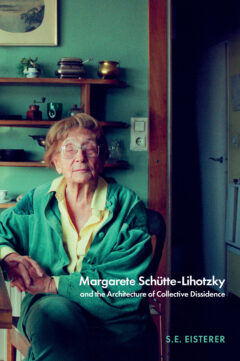 Margarete Schütte-Lihotzky and the Architecture of Collective Dissidence, 1918–1989
S.E. Eisterer (Author),
April 2027
 Collective Trauma and Future Fantasies
Raika Khorshidian (Editor), Birgit Mersmann (Editor), Cathrine Bublatzky (Editor), Julia Stenzel (Editor),
November 2026

 Toekomstdromen
Maarten Van Dijck (Editor), Gerrit Verhoeven (Editor), Hans Cools (Editor),
November 2026
 Feminists Resisting Gendered Violence
Hemangini Gupta (Editor), Fiona Mackay (Editor), Jan Breckenridge (Editor), Louise Chappell (Editor), Rachna Mehra (Editor), Rukmini Sen (Editor), Mailin Suchting (Editor),
October 2026
 A City in Practice
Aude Tournaye (Editor), Filip De Boeck (Editor), Picha Collective (Editor),
September 2026
 Ecologies of Photography in the American West
Monica Bravo (Editor), Carolin Görgen (Editor),
September 2026
 German–Rapanui Entanglements
Cristián Moreno Pakarati (Editor), Diego Muñoz (Editor), Philipp Schorch (Editor),
August 2026
 Trend en toeval – vierde editie
Bruno Blondé (Author), Isabelle Devos (Author), Jord Hanus (Author), Wouter Ryckbosch (Author),
August 2026
 Cinema in Post-War Belgium
Gertjan Willems (Editor), Bjorn Gabriels (Editor), Bénédicte Rochet (Editor),
May 2026
 Performing Magnetism
Eleonora Paklons (Editor), Kristof Smeyers (Editor), Kurt Vanhoutte (Editor), Hannah Welslau (Editor),
May 2026
 Political Exile in the Global Twentieth Century
Wolfram Kaiser (Editor), Piotr H. Kosicki (Editor),
April 2026
 Jean Katambayi Mukendi
Johannes Muselaers (Editor), Stéphane Symons (Editor), Anne-Claire Schmitz (Editor), Emma Enderby (Editor),
April 2026
 Christian Democracy and the Fall of Communism
Michael Gehler (Editor), Piotr H. Kosicki (Editor), Helmut Wohnout (Editor),
April 2026
 Brusselse plaatsnamen
Iadine Degryse (Editor), Benjamin Wayens (Editor), Chantal Kesteloot (Editor), Dennis De Vriese (Editor), Matthijs Degraeve (Editor),
April 2026