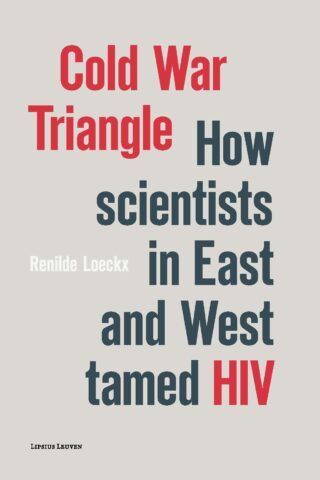

The extraordinary story of scientists in East and West combatting HIV
A small group of scientists were doggedly working in the field of antiviral treatments when the AIDS epidemic struck. Faced with one of the grand challenges of modern biology of the twentieth century, scientists worked across the political divide of the Cold War to produce a new class of antivirals. Their molecules were developed by a Californian start-up together with teams of scientists at the Rega Institute of KU Leuven and the Institute of Organic Chemistry and Biochemistry (IOCB) of the Academy of Sciences in Prague. These molecules became the cornerstone of the blockbuster drugs now used to combat and prevent HIV. Cold War Triangle gives an insight into the human face of science as it recounts the extraordinary story of scientists in East and West who overcame ideological barriers and worked together for the benefit of humanity.
Read more on the book’s dedicated website: www.coldwartriangle.com
Foreword Acknowledgements
Introduction A brief excursion into the history of virology and vaccines
Chapter I. Leuven: a hotbed for antiviral research The cross-fertilization between academia and pharma Vaccines and celebrity scientists
Chapter II. Behind the Iron Curtain The molecular revolution goes east The Academy of Sciences in Prague
Chapter III. Strange bedfellows: a Czech chemist and a Flemish virologist Auspicious omens A young prodigy’s path to science
Chapter IV. The sixties in Leuven and Prague Antiviral penicillin Spring turns into winter
Chapter V. Enzymes: the secret of life as chemistry At Stanford, a new world opens up The Rega Institute cuts corporate ties and goes its own way
Chapter VI. From interferon to nucleosides A first encounter with nucleosides A fateful meeting in Göttingen Bringing compounds to life Chapter VII. Breaking away from interferon A molecule for all seasons Cloning the interferon gene
Chapter VIII. The first antiviral drugs NA TO supports a nucleosides network Bringing antiviral therapy to the clinic
Chapter IX. Aids emerges in the shadow of the Cold War The East German connection The Cold War heats up Revealing a retrovirus
Chapter X. From passivity to action A pivotal year A triangular collaboration is set in motion Launching an aids laboratory in Leuven: the story of d4T
Chapter XI. First attempts to halt the epidemic Two irons in the fire: Bristol-Myers and Janssen Taking stock after AZT Holý’s compound is active against HIV
Chapter XII. Finding the best therapy: the one-a-day-pill A new start-up: Gilead Sciences The birth of Cidofovir, Tenofovir and Adefovir
Epilogue: Of scientists and crusaders
Album Notes References Index
High praise from a Nobel laureate
"I got to know a number of the scientists mentioned in the book and have read it with great interest. It gives an excellent account of an unfolding story of scientific, political and social interest. "
Prof. Jean-Marie Lehn. University of Strasbourg, France. Nobel Laureate in Chemistry.
Accolade from a scientist-entrepreneur
"As a scientist in the seventies I had first hand experience on the hurdles of crossing political borders in advancing human knowledge. The book captures not only this intriguing story of scientists and entrepreneurs, but also evokes the quest for a deeper understanding of microbiology." Dr. Jos B. Peeters. CEO Capricorn Venture Partners.
Rave review from Belgium’s former Minister of Foreign Affairs and EU Trade Commissioner“Ambassador Loeckx tells with passion and vigor
the story of one of the great breakthroughs in medicine: the containment of HIV
that has saved millions of lives. It’s also a great story about the very nature
of humanity: how cooperation among great minds from different horizons and
disciplines transcended the Wall that once divided Europe.”Karel De Gucht served as European
Commissioner for Trade from 2010 to 2014 after being European Commissioner for
International Cooperation, Humanitarian Aid and Crisis Response. He was Belgium’s Minister of Foreign Affairs
from 2004 to 2009.
Glowing remarks from a science writer"Your book was on top of my summer reading pile and yes, it is great! It reads like a detective novel and I am amazed how much science I learned from it, having both an MD and a PhD degree in chemistry. Also, all the familiar names, Brachet, de Duve, Van Montagu...It was a real treat to be reminded of such fascinating scientists that I had met. Like a trip back in time when I accompanied Donny on meetings all over the world. Thanks a lot for such a great work!"Eliane Strosberg, MD, PhD in Chemistry, Author of “ART and SCIENCE“ and “The Human Figure and Jewish Culture”
The book tells a fascinating story and gives a glimpse into the making of scientific discoveries, the rush for patents in research, and collaborative work during hostile political situations. It is mostly an enjoyable read, albeit skewed towards Western protagonists, and will surely enrich our understanding of the multitude of actors involved in HIV research and global scientific production.Dora Vargha, H-Diplo, H-Net Reviews. February, 2019, http://www.h-net.org/reviews/showrev.php?id=53143
Enthusiastic Endorsement from NATO's Secretary General“I found the book explosively fascinating. The way it takes us through the labyrinth of Cold War virus research was riveting. It was like some real-life thriller as each discovery is made and each breakthrough announced.”
Lord Robertson, Former British Defense Minister and Secretary General of NATO (1999- 2004)
'Cold War Triangle' provides an insightful description about some of the most important medical discoveries in recent history. It is a story of substance, and one that sheds light on the complexity of scientific discovery in an ever-changing political environment.David Kinkela, Diplomatic History, Volume 43, Issue 3, June 2019, Pages 592–594, https://doi.org/10.1093/dh/dhy100
Wenngleich sich die Autorin einer interessanten, der breiten Öffentlichkeit vermutlich unbekannten Personenkonstellation und deren pharmazeutischen Errungenschaften zuwendet, erscheint ihre Publikation aus geschichtswissenschaftlicher Sicht kritikwürdig.
Henning Tümmers, Historische Zeitschrift // BAND 313 / 2021, DOI 10.1515/hzhz-2021-1450
Frequently Asked Questions
What is "Cold War Triangle" about?
The extraordinary story of scientists in East and West combatting HIV
A small group of scientists were doggedly working in the field of antiviral treatments when the AIDS epidemic struck. Faced with one of the grand challenges of modern biology of the twentieth century, scientists worked across the political divide of the Cold War to produce a new class of antivirals. Their molecules were developed by a Californian start-up together with teams of scientists at the Rega Institute of KU Leuven and the Institute of Organic Chemistry and Biochemistry (IOCB) of the Academy of Sciences in Prague. These molecules became the cornerstone of the blockbuster drugs now used to combat and prevent HIV. Cold War Triangle gives an insight into the human face of science as it recounts the extraordinary story of scientists in East and West who overcame ideological barriers and worked together for the benefit of humanity.
Read more on the book's dedicated website: www.coldwartriangle.com
Who wrote "Cold War Triangle"?
"Cold War Triangle" was written by Renilde Loeckx.
Renilde Loeckx is former Ambassador of Belgium.
Is "Cold War Triangle" available Open Access?
Yes, "Cold War Triangle" is published Open Access. It is available under a BY-NC-ND license.
What is the Table of Contents for "Cold War Triangle"?
Foreword Acknowledgements
Introduction A brief excursion into the history of virology and vaccines
Chapter I. Leuven: a hotbed for antiviral research The cross-fertilization between academia and pharma Vaccines and celebrity scientists
Chapter II. Behind the Iron Curtain The molecular revolution goes east The Academy of Sciences in Prague
Chapter III. Strange bedfellows: a Czech chemist and a Flemish virologist Auspicious omens A young prodigy’s path to science
Chapter IV. The sixties in Leuven and Prague Antiviral penicillin Spring turns into winter
Chapter V. Enzymes: the secret of life as chemistry At Stanford, a new world opens up The Rega Institute cuts corporate ties and goes its own way
Chapter VI. From interferon to nucleosides A first encounter with nucleosides A fateful meeting in Göttingen Bringing compounds to life Chapter VII. Breaking away from interferon A molecule for all seasons Cloning the interferon gene
Chapter VIII. The first antiviral drugs NA TO supports a nucleosides network Bringing antiviral therapy to the clinic
Chapter IX. Aids emerges in the shadow of the Cold War The East German connection The Cold War heats up Revealing a retrovirus
Chapter X. From passivity to action A pivotal year A triangular collaboration is set in motion Launching an aids laboratory in Leuven: the story of d4T
Chapter XI. First attempts to halt the epidemic Two irons in the fire: Bristol-Myers and Janssen Taking stock after AZT Holý’s compound is active against HIV
Chapter XII. Finding the best therapy: the one-a-day-pill A new start-up: Gilead Sciences The birth of Cidofovir, Tenofovir and Adefovir
Epilogue: Of scientists and crusaders
Album Notes References Index
Related titles
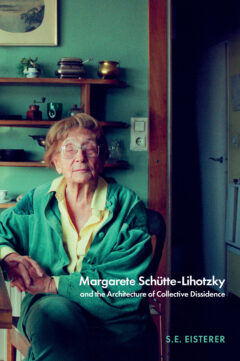 Margarete Schütte-Lihotzky and the Architecture of Collective Dissidence, 1918–1989
S.E. Eisterer (Author),
April 2027
 The Romero Memory
Judith Gruber (Editor), Jonas Van Mulder (Editor), Stephan Parmentier (Editor), Veerle Draulans (Editor), Joren Janssens (Editor), Jacques Haers (Editor), Kim Christiaens (Editor),
November 2026

 Toekomstdromen
Maarten Van Dijck (Editor), Gerrit Verhoeven (Editor), Hans Cools (Editor),
November 2026

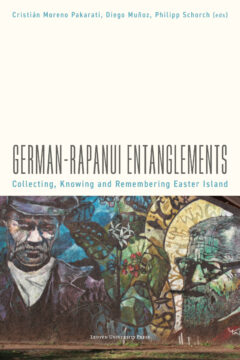 German–Rapanui Entanglements
Cristián Moreno Pakarati (Editor), Diego Muñoz (Editor), Philipp Schorch (Editor),
August 2026
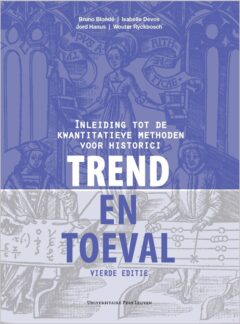 Trend en toeval – vierde editie
Bruno Blondé (Author), Isabelle Devos (Author), Jord Hanus (Author), Wouter Ryckbosch (Author),
August 2026
 Cinema in Post-War Belgium
Gertjan Willems (Editor), Bjorn Gabriels (Editor), Bénédicte Rochet (Editor),
May 2026
 Performing Magnetism
Eleonora Paklons (Editor), Kristof Smeyers (Editor), Kurt Vanhoutte (Editor), Hannah Welslau (Editor),
May 2026
 Political Exile in the Global Twentieth Century
Wolfram Kaiser (Editor), Piotr H. Kosicki (Editor),
April 2026
 Christian Democracy and the Fall of Communism
Michael Gehler (Editor), Piotr H. Kosicki (Editor), Helmut Wohnout (Editor),
April 2026
 Brusselse plaatsnamen
Iadine Degryse (Editor), Benjamin Wayens (Editor), Chantal Kesteloot (Editor), Dennis De Vriese (Editor), Matthijs Degraeve (Editor),
April 2026
 Menswaardigheid en veiligheid in onze digitale wereld
Pieter d'Hoine (Editor), Bart Pattyn (Editor),
March 2026
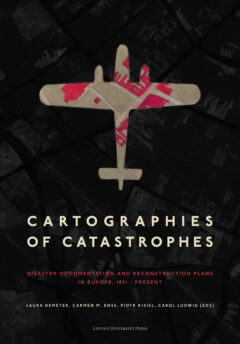 Cartographies of Catastrophes
Laura Demeter (Editor), Carmen M. Enss (Editor), Piotr Kisiel (Editor), Carol Ludwig (Editor),
February 2026
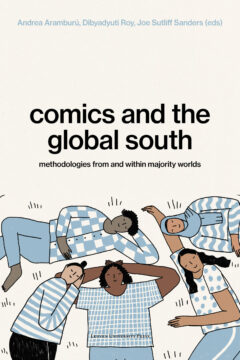 Comics and the Global South
Andrea Aramburú (Editor), Dibyadyuti Roy (Editor), Joe Sutliff Sanders (Editor),
February 2026
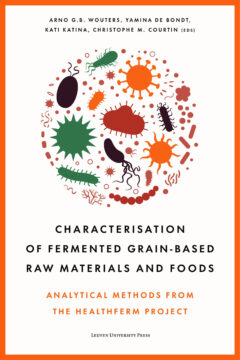 Characterisation of Fermented Grain-based Raw Materials and Foods
Arno G. B. Wouters (Editor), Yamina De Bondt (Editor), Kati Katina (Editor), Christophe M. Courtin (Editor),
February 2026