Reduced Price!
Now only € 15,00 instead of € 51,00
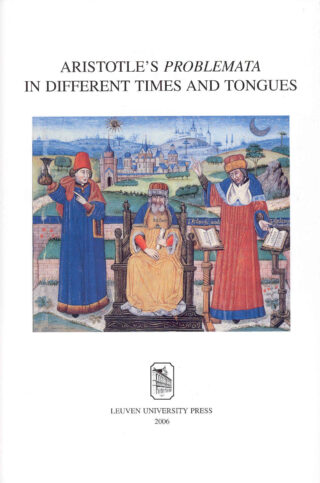
The present volume contains a collection of papers on the reception of Aristotle’s Problemata, a multifaceted text asking various questions about medical, scientific or everyday topics. This text is one of the most neglected Aristotelian treatises, because of its heterogeneous character and its so-called ‘inauthenticity’. It has been the subject of a complex transmission. In ancient times, Aristotle’s text has been augmented and adapted, while still other authors composed similar collections of Problemata. In the Middle Ages,Problemata collections have been translated into Arabic, Latin, and Middle French, each translation being characterized by its own particularities. The Latin translation lead to an extremely influential commentary by the Italian physician Peter of Abano, whereas Evrart de Conty, who made the Middle French translation, added himself a commentary to each discussed problem, often using Peter of Abano’s text as source. Also in the Renaissance, theProblemata appealed to the interest of physicians and philosophers. In their contributions to this book, the authors analyse this complex web of relations between source-texts, translations, and commentaries, in different times and tongues.
Pieter De Leemans and Michèle Goyens
Introduction
Joan Cadden
Preliminary Observations on the Place of the Problemata in Medieval Learning
Robert W. Sharples
Pseudo-Alexander or Pseudo-Aristotle, Medical Puzzles and Physical Problems
Lou S. Filius
The Genre Problemata in Arabic: Its Motions and Changes
Graziella Federici Vescovini
L’Expositio Succinta Problematum Aristotelis de Pierre d’Abano
Maaike Van der Lugt
Aristotle’s Problems in the West: A Contribution to the Study of Medieval Latin Tradition
Iolanda Ventura
Aristoteles fuit causa efficiens huius libri: On the Reception of Pseudo-Aristotle’s Problemata in Late Medieval Encyclopaedic Culture
Françoise Guichard-Tesson
Evrart de Conty, poète, traducteur et commentateur
Caroline Boucher
Des problèmes pour exercer l’entendement des lecteurs: Evrart de Conty, Nicole Oresme et la recherche de la nouveauté
Joëlle Ducos
Lectures et vulgarisation du savoir aristotélicien: les gloses d’Evrart de Conty (sections XXV-XXVI)
Geneviève Dumas
Evrart de Conty et Pierre d’Abano: commentateurs d’Aristote
Annelies Bloem
A la recherche de la subjectivité dans les Problèmes d’Evrart de Conty: un commentateur juché sur les épaules d’Aristote?
John Monfasani
George of Trebizond’s Critique of Theodore Gaza’s Translation of the Aristotelian Problemata
Selected Bibliography
Index codicum manu scriptorum
Index auctorum
Frequently Asked Questions
What is "Aristotle’s Problemata in Different Times and Tongues" about?
Reduced Price!
Now only € 15,00 instead of € 51,00
The present volume contains a collection of papers on the reception of Aristotle's Problemata, a multifaceted text asking various questions about medical, scientific or everyday topics. This text is one of the most neglected Aristotelian treatises, because of its heterogeneous character and its so-called 'inauthenticity'. It has been the subject of a complex transmission. In ancient times, Aristotle's text has been augmented and adapted, while still other authors composed similar collections of Problemata. In the Middle Ages,Problemata collections have been translated into Arabic, Latin, and Middle French, each translation being characterized by its own particularities. The Latin translation lead to an extremely influential commentary by the Italian physician Peter of Abano, whereas Evrart de Conty, who made the Middle French translation, added himself a commentary to each discussed problem, often using Peter of Abano's text as source. Also in the Renaissance, theProblemata appealed to the interest of physicians and philosophers. In their contributions to this book, the authors analyse this complex web of relations between source-texts, translations, and commentaries, in different times and tongues.
Is "Aristotle’s Problemata in Different Times and Tongues" part of a series?
Yes, "Aristotle’s Problemata in Different Times and Tongues" is part of the "Mediaevalia Lovaniensia" series. It's book 39 in the series.

The longstanding, peer-reviewed book series Mediaevalia Lovaniensia. Studies in Medieval History, Society, and Culture publishes high-quality scholarship on the history and culture of the Middle Ages (c. 500–1550). Topics of particular interest to the series include, but are not limited to, social behaviour and power relations in medieval society, processes of identity formation, religious and urban culture, medieval thought and literature, and gender history. The series focuses on Europe and the wider Mediterranean world and is particularly rich in interdisciplinary approaches. By means of monographs and edited volumes, the series explores thematic frontiers and embraces innovative methodological approaches in historical and philological scholarship that is based on an in-depth source-based study.
Mediaevalia Lovaniensia accepts monographs as well as thematically coherent volumes in English. Moreover, it offers scholars the possibility to publish critical editions of primary texts with broader relevance to the understanding of medieval culture and society. The series aspires to publish books that have the potential to become reference works in the field of Medieval Studies.
We encourage early career (postdoctoral) researchers to submit a reworked version of their PhD thesis to this series. Leuven University Press provides authors with two publishing scenarios: traditional (non-Open Access) and the option to publish in Open Access (including language editing).
Editorial Board
Jelle Haemers (KU Leuven)
Jeroen Deploige (Ghent University)
Brigitte Meijns (KU Leuven)
Chanelle Delameillieure (KU Leuven - KULAK)
Baudouin Van den Abeele (UCLouvain)
Proposals
Proposals and enquiries can be sent to one of the editorial board members. Please send a short abstract. Upon approval of the proposal, the full manuscript will be submitted to international blind peer review by two (external) experts. The editors strive towards completing the review of proposals within one month and of complete manuscripts within five months after submission. Manuscripts should preferably be (+/-) 80.000 to 120.000 words in length.
Please make use of the submission form to present your manuscript or proposal to our board.
Authors interested in Open Access can consult the available funding options.
Links & Resources
What is the Table of Contents for "Aristotle’s Problemata in Different Times and Tongues"?
Pieter De Leemans and Michèle Goyens
Introduction
Joan Cadden
Preliminary Observations on the Place of the Problemata in Medieval Learning
Robert W. Sharples
Pseudo-Alexander or Pseudo-Aristotle, Medical Puzzles and Physical Problems
Lou S. Filius
The Genre Problemata in Arabic: Its Motions and Changes
Graziella Federici Vescovini
L'Expositio Succinta Problematum Aristotelis de Pierre d'Abano
Maaike Van der Lugt
Aristotle's Problems in the West: A Contribution to the Study of Medieval Latin Tradition
Iolanda Ventura
Aristoteles fuit causa efficiens huius libri: On the Reception of Pseudo-Aristotle's Problemata in Late Medieval Encyclopaedic Culture
Françoise Guichard-Tesson
Evrart de Conty, poète, traducteur et commentateur
Caroline Boucher
Des problèmes pour exercer l'entendement des lecteurs: Evrart de Conty, Nicole Oresme et la recherche de la nouveauté
Joëlle Ducos
Lectures et vulgarisation du savoir aristotélicien: les gloses d'Evrart de Conty (sections XXV-XXVI)
Geneviève Dumas
Evrart de Conty et Pierre d'Abano: commentateurs d'Aristote
Annelies Bloem
A la recherche de la subjectivité dans les Problèmes d'Evrart de Conty: un commentateur juché sur les épaules d'Aristote?
John Monfasani
George of Trebizond's Critique of Theodore Gaza's Translation of the Aristotelian Problemata
Selected Bibliography
Index codicum manu scriptorum
Index auctorum
Related titles

 Orality and Scribal Culture in the High Middle Ages
Timothy B. Noone (Author), Mark J. Clark (Author),
November 2026
 Toekomstdromen
Maarten Van Dijck (Editor), Gerrit Verhoeven (Editor), Hans Cools (Editor),
November 2026

 The Medieval Aristotle
Nena Bobovnik (Editor), Clelia V. Crialesi (Editor), Lisa Devriese (Editor),
August 2026

 Trend en toeval – vierde editie
Bruno Blondé (Author), Isabelle Devos (Author), Jord Hanus (Author), Wouter Ryckbosch (Author),
August 2026
 Political Exile in the Global Twentieth Century
Wolfram Kaiser (Editor), Piotr H. Kosicki (Editor),
April 2026
 Christian Democracy and the Fall of Communism
Michael Gehler (Editor), Piotr H. Kosicki (Editor), Helmut Wohnout (Editor),
April 2026
 Brusselse plaatsnamen
Iadine Degryse (Editor), Benjamin Wayens (Editor), Chantal Kesteloot (Editor), Dennis De Vriese (Editor), Matthijs Degraeve (Editor),
April 2026

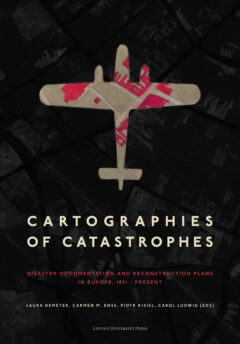 Cartographies of Catastrophes
Laura Demeter (Editor), Carmen M. Enss (Editor), Piotr Kisiel (Editor), Carol Ludwig (Editor),
February 2026
 Thomas Aquinas and Hervaeus Natalis on Concepts and Intentional Objects
Fabrizio Amerini (Author),
February 2026