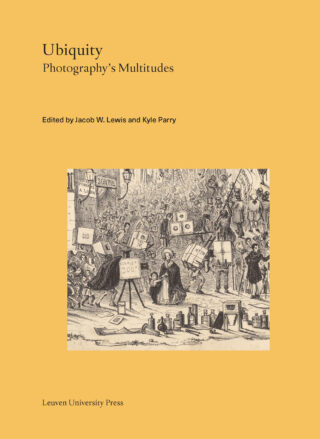

Ubiquity
Photography's Multitudes
Jacob W. Lewis (Editor), Kyle Parry (Editor),

Series: Lieven Gevaert Series 31
Category: Media and Visual Culture, Photography
Language: English
ISBN: 9789462702899
Publication date: December 15, 2021
€25.00 (including 6% VAT)
Buy NowNumber of pages: 304
Size: 230 x 170 x mm
Number of illustrations: 55
Illustrations and other content description:
16 pp. full colour

Funded by: KU Leuven Fund for Fair Open Access
Arts Research Institute at the University of California, Santa Cruz
Liz Warnock Publication Fund, Northwestern University
Stock item: 145765
Standard delivery time for print books:
For Belgium: 5 to 8 working days
For EU: 2 to 3 weeks
For other countries: 4 to 5 weeks
Series: Lieven Gevaert Series 31
Category: Media and Visual Culture, Photography
Language: English
ISBN: 9789461664266
Publication date: December 6, 2021
Download Free EpubNumber of pages: 304
Number of illustrations: 55
Illustrations and other content description:
16 pp. full colour
Funded by: KU Leuven Fund for Fair Open Access
Arts Research Institute at the University of California, Santa Cruz
Liz Warnock Publication Fund, Northwestern University
Series: Lieven Gevaert Series 31
Category: Media and Visual Culture, Photography
Language: English
ISBN: 9789461664020
Publication date: December 1, 2021
Download Free PDFNumber of pages: 304
Number of illustrations: 55
Illustrations and other content description:
16 pp. full colour
Funded by: KU Leuven Fund for Fair Open Access
Arts Research Institute at the University of California, Santa Cruz
Liz Warnock Publication Fund, Northwestern University
A critical anthology on the widespread use and influence of photography
From its invention to the internet age, photography has been considered universal, pervasive, and omnipresent. This anthology of essays posits how the question of when photography came to be everywhere shapes our understanding of all manner of photographic media. Whether looking at a portrait image on the polished silver surface of the daguerreotype, or a viral image on the reflective glass of the smartphone, the experience of looking at photographs and thinking with photography is inseparable from the idea of ubiquity—that is, the apparent ability to be everywhere at once. While photography’s distribution across cultures today is undeniable, the insidious logics and pervasive myths that have governed its spread demand our critical attention, now more than ever.
Contributors: Kate Palmer Albers (Whittier College), Ariella Aïsha Azoulay (Brown University), Maura Coughlin (Bryant University), Niharika Dinkar (Boise State University), Michelle Henning (University of Liverpool), Jacob W. Lewis (University of Rochester), Mohammadreza Mirzaei (University of California, Santa Barbara), Joseph Moore (independent artist), Derek Conrad Murray (University of California, Santa Cruz), Kyle Parry (University of California, Santa Cruz), Annie Rudd (University of Calgary), Mette Sandbye (University of Copenhagen), Catherine Zuromskis (Rochester Institute of Technology)
Ebook available in Open Access.
This publication is GPRC-labeled (Guaranteed Peer-Reviewed Content).
Introduction. Ubiquity Has a History
Jacob W. Lewis and Kyle Parry
Chapter 1. Early Photography’s Presence Jacob W. Lewis
Chapter 2. Photographic Privilege at the World’s Columbian Exposition Annie Rudd
Chapter 3. Material Ecologies in the Géniaux Brothers’ Picture Archive of Brittany, ca. 1900 Maura Coughlin
Chapter 4. “Our Best Machines Are Made of Sunlight”: Photography and Technologies of Light Niharika Dinkar
Chapter 5. Managing Time: Nonhuman Animal Labor in Photographic Images Joseph Moore
Chapter 6. In 1973: Family Photography as Material, Affective History Mette Sandbye
Chapter 7. Where Is My Photo? A Study of the Representation of Tehran in the Work of Contemporary Iranian Photographers Mohammadreza Mirzaei
Chapter 8. Evidence of Feeling: Race, Police Violence, and the Limits of Documentation Catherine Zuromskis
Chapter 9. On Photographic Ubiquity in the Age of Online Self-Imaging Derek Conrad Murray
Chapter 10. Parafiction and the New Latent Image Kate Palmer Albers Chapter 11. Dispersal and Denial: Photographic Ubiquity and the Microbial Analogy Kyle Parry
Chapter 12. That Liking Feeling: Mood, Emotion, and Social Media Photography Michelle Henning
Chapter 13. “The Compass of Repair”: An Interview with Ariella Aïsha Azoulay Jacob W. Lewis & Kyle Parry
Plates
Frequently Asked Questions
What is "Ubiquity" about?
A critical anthology on the widespread use and influence of photography
From its invention to the internet age, photography has been considered universal, pervasive, and omnipresent. This anthology of essays posits how the question of when photography came to be everywhere shapes our understanding of all manner of photographic media. Whether looking at a portrait image on the polished silver surface of the daguerreotype, or a viral image on the reflective glass of the smartphone, the experience of looking at photographs and thinking with photography is inseparable from the idea of ubiquity—that is, the apparent ability to be everywhere at once. While photography’s distribution across cultures today is undeniable, the insidious logics and pervasive myths that have governed its spread demand our critical attention, now more than ever.
Contributors: Kate Palmer Albers (Whittier College), Ariella Aïsha Azoulay (Brown University), Maura Coughlin (Bryant University), Niharika Dinkar (Boise State University), Michelle Henning (University of Liverpool), Jacob W. Lewis (University of Rochester), Mohammadreza Mirzaei (University of California, Santa Barbara), Joseph Moore (independent artist), Derek Conrad Murray (University of California, Santa Cruz), Kyle Parry (University of California, Santa Cruz), Annie Rudd (University of Calgary), Mette Sandbye (University of Copenhagen), Catherine Zuromskis (Rochester Institute of Technology)
Ebook available in Open Access.
This publication is GPRC-labeled (Guaranteed Peer-Reviewed Content).
Who edited "Ubiquity"?
"Ubiquity" was edited by Jacob W. Lewis and Kyle Parry.
Jacob W. Lewis teaches art history at the University of Rochester, New York.
Kyle Parry is assistant professor of history of art and visual culture at the University of California, Santa Cruz.
Is "Ubiquity" part of a series?
Yes, "Ubiquity" is part of the "Lieven Gevaert Series" series. It's book 31 in the series.

The series covers four types of publications:
- outstanding monographic studies
- multi-authored volumes on a specific topic
- book length projects with artists
- translations and/or reprints of classic texts.
All books are published in English and are written for an international audience of scholars.
Format
All books in the series are published in 17*23 cm paperback with French flaps, printed in black and white on white maco paper and with a maximum page extent of 300 pages (120.000 words) including images (unless agreed otherwise).
Authors interested in publishing their book in Open Access can check out the funding options here. Open access books are published under a creative commons license.
Series editors
Hilde Van Gelder, KU Leuven
Alexander Streitberger, UCLouvain
Proposals
Proposals and enquiries can be sent to the series editors.
Please make use of the submission form to present the full manuscript to our board.
Authors interested in Open Access can consult the available funding options.
Links & Resources
Is "Ubiquity" available Open Access?
Yes, "Ubiquity" is published Open Access. It is available under a BY-NC-ND license.
Who funded the publication of "Ubiquity"?
Publication of "Ubiquity" was funded by KU Leuven Fund for Fair Open Access
Arts Research Institute at the University of California, Santa Cruz
Liz Warnock Publication Fund, Northwestern University
.
What is the Table of Contents for "Ubiquity"?
Introduction. Ubiquity Has a History
Jacob W. Lewis and Kyle Parry
Chapter 1. Early Photography’s Presence Jacob W. Lewis
Chapter 2. Photographic Privilege at the World’s Columbian Exposition Annie Rudd
Chapter 3. Material Ecologies in the Géniaux Brothers’ Picture Archive of Brittany, ca. 1900 Maura Coughlin
Chapter 4. “Our Best Machines Are Made of Sunlight”: Photography and Technologies of Light Niharika Dinkar
Chapter 5. Managing Time: Nonhuman Animal Labor in Photographic Images Joseph Moore
Chapter 6. In 1973: Family Photography as Material, Affective History Mette Sandbye
Chapter 7. Where Is My Photo? A Study of the Representation of Tehran in the Work of Contemporary Iranian Photographers Mohammadreza Mirzaei
Chapter 8. Evidence of Feeling: Race, Police Violence, and the Limits of Documentation Catherine Zuromskis
Chapter 9. On Photographic Ubiquity in the Age of Online Self-Imaging Derek Conrad Murray
Chapter 10. Parafiction and the New Latent Image Kate Palmer Albers Chapter 11. Dispersal and Denial: Photographic Ubiquity and the Microbial Analogy Kyle Parry
Chapter 12. That Liking Feeling: Mood, Emotion, and Social Media Photography Michelle Henning
Chapter 13. “The Compass of Repair”: An Interview with Ariella Aïsha Azoulay Jacob W. Lewis & Kyle Parry
Plates
Related titles

 Feminists Resisting Gendered Violence
Hemangini Gupta (Editor), Fiona Mackay (Editor), Jan Breckenridge (Editor), Louise Chappell (Editor), Rachna Mehra (Editor), Rukmini Sen (Editor), Mailin Suchting (Editor),
October 2026
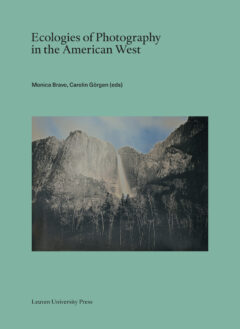 Ecologies of Photography in the American West
Monica Bravo (Editor), Carolin Görgen (Editor),
September 2026
 Cinema in Post-War Belgium
Gertjan Willems (Editor), Bjorn Gabriels (Editor), Bénédicte Rochet (Editor),
May 2026
 Performing Magnetism
Eleonora Paklons (Editor), Kristof Smeyers (Editor), Kurt Vanhoutte (Editor), Hannah Welslau (Editor),
May 2026
 Nomadic Camera
Burcu Dogramaci (Editor), Winfried Gerling (Editor), Jens Jäger (Editor), Birgit Mersmann (Editor),
March 2026
 Comics and the Global South
Andrea Aramburú (Editor), Dibyadyuti Roy (Editor), Joe Sutliff Sanders (Editor),
February 2026
 The Visionary Art of Franco-Belgian Comics, 1930s to 1960s
Hugo Frey (Editor), Maaheen Ahmed (Editor),
September 2025
 Violence and Trauma in Contemporary Performance
Sofie de Smet (Editor), Marieke Breyne (Editor), Pedzisai Maedza (Editor), Christel Stalpaert (Editor),
May 2025
 Architectures of Resistance
Angeliki Sioli (Editor), Nishat Awan (Editor), Kristopher Palagi (Editor),
August 2024