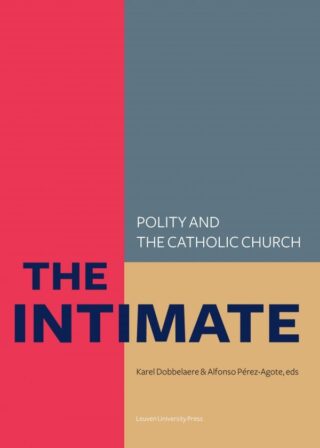
The Intimate: Polity and the Catholic Church
Laws about Life, Death and the Family in So-called Catholic Countries
Karel Dobbelaere (Editor), Alfonso Pérez Agote (Editor),
Series: KADOC-Studies on Religion, Culture and Society 15
Category: History, History 1800-present
Language: English
ISBN: 9789462700277
Publication date: February 27, 2015
€39.50 (including 6% VAT)
Buy NowSize: 238 x 170 x mm

Stock item: 95699
Standard delivery time for print books:
For Belgium: 5 to 8 working days
For EU: 2 to 3 weeks
For other countries: 4 to 5 weeks
Series: KADOC-Studies on Religion, Culture and Society 15
Category: History, History 1800-present
Language: English
ISBN: 9789461662118
Publication date: February 27, 2015
€29.50 (including 6% VAT)
Buy Now
The waning influence of the Catholic church in the ethical and political debate For centuries the Catholic Church was able to impose her ethical rules in matters related to the intimate, that is, questions concerning life (from its beginning until its end) and the family, in the so-called Catholic countries in Western Europe. When the polity started to introduce legislation that was in opposition to the Catholic ethic, the ecclesiastical authorities and part of the population reacted. The media reported massive manifestations in France against same-sex marriages and in Spain against the de-penalization of abortion. In Italy the Episcopal conference entered the political field in opposition to the relaxation of several restrictive legal rules concerning medically assisted procreation and exhorted the voters to abstain from voting so that the referendum did not obtain the necessary quorum. In Portugal, to the contrary, the Church made a “pact” with the prime minister so that the law on same-sex marriages did not include the possibility of adoption. And in Belgium the Episcopal conference limited its actions to clearly expressing with religious, legal, and anthropological arguments its opposition to such laws, which all other Episcopal conferences did also.
In this book, the authors analyse the full spectrum of the issue, including the emergence of such laws; the political discussions; the standpoints defended in the media by professionals, ethicists, and politicians; the votes in the parliaments; the political interventions of the Episcopal conferences; and the attitude of professionals. As a result the reader understands what was at stake and the differences in actions of the various Episcopal conferences. The authors also analyse the pro and con evaluations among the civil population of such actions by the Church. Finally, in a comparative synthesis, they discuss the public positions taken by Pope Francis to evaluate if a change in Church policy might be possible in the near future.
Research by GERICR (Groupe européen de recherche interdisciplinaire sur le changement religieux), a European interdisciplinary research group studying religious changes coordinated by Alfonso Pérez-Agote.
This publication is GPRC-labeled (Guaranteed Peer-Reviewed Content).
Contributors: Céline Béraud (Université de Caen), Annalisa Frisina (Università degli Studi di Padova), Franco Garelli (Università degli Studi di Torino), Antonio Montañés (Universidad Complutense de Madrid), Enzo Pace (Università degli Studi di Padova), Philippe Portier (École pratique des hautes études, Paris-Sorbonne), Jose Santiago (Universidad Complutense de Madrid), Roberto Francesco Scalon (Università degli Studi di Torino), Liliane Voyé (Université Catholique de Louvain)
Introduction
Karel Dobbelaere & Alfonso Pérez-Agote
Euthanasia and the Belgian Catholic World
Liliane Voyé & Karel Dobbelaere
“Mariage pour tous”
The Same-Sex Marriage Controversy in France
Céline Béraud & Philippe Portier
The Italian Catholic Church and the Artificial-Insemination Referendum
Annalisa Frisina, Franco Garelli, Enzo Pace & Roberto Scalon
Ethical Challenges of the Catholic Church in Portugal
The Case of Same-Sex Marriage
Helena Vilaça & Maria João Oliveira
The Catholic Church Faces Ethical Challenges in Spain
The Regulation of Abortion
Alfonso Pérez-Agote, Jose Santiago & Antonio Montañés
Comparative Synthesis
Karel Dobbelaere, Alfonso Pérez-Agote & Céline Béraud
Authors
Colophon
Cet ouvrage, analysant ainsi la complexité des situations nationales, nous met à même d'appréhender les raisons et les modalités de resurgissement ou de renforcement de l'Église catholique dans l'espace politique. Confrontée à la fois à une perte de pouvoir sur les conduites et à de nouveaux défis éthiques, elle revendique, avec des nuances nationales, une prétention à fournir des fondements éthiques au droit et à la politique. Ceci nous met plus généralement en demeure de nous interroger sur l'articulation, dans les démocraties contemporaines, entre droit et morale dans les domaines du droit touchant aux questions éthiques. La question, constitutive de la postmodernité, de la formation et de la légitimité de la norme commune, pour lesquelles John Rawls nous invite, en convoquant «le devoir de civilité», à mettre de cà´té certaines de nos croyances quand il s'agit d'établir des institutions et des règles politiques communes, rencontre ici un point d'achoppement particulièrement important.
Claude Proeschel, Social Sciences and Missions 29 (2016) 141-;206
En resumen, dentro del panorama teórico actual, The Intimate ofrece una visión de conjunto àºnica sobre las estrategias de las diferentes jerarquías católicas europeas que ayudará a comprender cuáles han sido las dinámicas utilizadas para frenar el avance del proceso de secularización, y dentro de este, para comprender cuáles son las posiciones de privilegio a conservar en el escenario político y social de las que se han visto desplazados. Hay muy pocos (diría que ninguno) ensayos que aborden el tema tratado en este libro, y más aàºn, de una manera tan clara y exhaustiva. Referencia fundamental para aquellos interesados en las renovadas estrategias políticas de la Iglesia, así como para aquellos que se acerquen al fenómeno
por primera vez.
Joseba GARCàA MARTàN, Reis. Rev.Esp.Investig.Sociol. Nº 156, Octubre - Diciembre 2016, pp. 159-174
Frequently Asked Questions
What is "The Intimate: Polity and the Catholic Church" about?
The waning influence of the Catholic church in the ethical and political debate For centuries the Catholic Church was able to impose her ethical rules in matters related to the intimate, that is, questions concerning life (from its beginning until its end) and the family, in the so-called Catholic countries in Western Europe. When the polity started to introduce legislation that was in opposition to the Catholic ethic, the ecclesiastical authorities and part of the population reacted. The media reported massive manifestations in France against same-sex marriages and in Spain against the de-penalization of abortion. In Italy the Episcopal conference entered the political field in opposition to the relaxation of several restrictive legal rules concerning medically assisted procreation and exhorted the voters to abstain from voting so that the referendum did not obtain the necessary quorum. In Portugal, to the contrary, the Church made a “pact” with the prime minister so that the law on same-sex marriages did not include the possibility of adoption. And in Belgium the Episcopal conference limited its actions to clearly expressing with religious, legal, and anthropological arguments its opposition to such laws, which all other Episcopal conferences did also.
In this book, the authors analyse the full spectrum of the issue, including the emergence of such laws; the political discussions; the standpoints defended in the media by professionals, ethicists, and politicians; the votes in the parliaments; the political interventions of the Episcopal conferences; and the attitude of professionals. As a result the reader understands what was at stake and the differences in actions of the various Episcopal conferences. The authors also analyse the pro and con evaluations among the civil population of such actions by the Church. Finally, in a comparative synthesis, they discuss the public positions taken by Pope Francis to evaluate if a change in Church policy might be possible in the near future.
Research by GERICR (Groupe européen de recherche interdisciplinaire sur le changement religieux), a European interdisciplinary research group studying religious changes coordinated by Alfonso Pérez-Agote.
This publication is GPRC-labeled (Guaranteed Peer-Reviewed Content).
Contributors: Céline Béraud (Université de Caen), Annalisa Frisina (Università degli Studi di Padova), Franco Garelli (Università degli Studi di Torino), Antonio Montañés (Universidad Complutense de Madrid), Enzo Pace (Università degli Studi di Padova), Philippe Portier (École pratique des hautes études, Paris-Sorbonne), Jose Santiago (Universidad Complutense de Madrid), Roberto Francesco Scalon (Università degli Studi di Torino), Liliane Voyé (Université Catholique de Louvain)
Who edited "The Intimate: Polity and the Catholic Church"?
"The Intimate: Polity and the Catholic Church" was edited by Karel Dobbelaere and Alfonso Pérez Agote.
Karel Dobbelaere is Emeritus Professor of Sociology of the University of Antwerp and KU Leuven.
Alfonso Pérez-Agote is Professor of Sociology at the Universidad Complutense in Madrid.
Is "The Intimate: Polity and the Catholic Church" part of a series?
Yes, "The Intimate: Polity and the Catholic Church" is part of the "KADOC-Studies on Religion, Culture and Society" series. It's book 15 in the series.


The longstanding peer-reviewed book series KADOC Studies in Religion, Culture and Society is devoted to a deeper understanding of the role of religion(s) in society in Europe and the world since 1750. By means of monographs and edited volumes, the series explores thematic frontiers and embraces innovative methodological approaches in historical, sociological and anthropological scholarship on religion, culture and society. The series particularly welcomes manuscripts adopting interreligious and transnational perspectives. Taken together, KADOC Studies in Religion, Culture and Society and its companion series KADOC Artes represent a diptych featuring the immaterial and material legacies of religions in Europe and the world from the 18th century onwards.
KADOC Studies in Religion, Culture and Society is managed by an independent Editorial Board. Books are published in English. Open Access publishing is encouraged. Financial support will be examined on a case-by-case basis and in consultation with the author.
KADOC, the Interfaculty Documentation and Research Centre on Religion, Culture and Society at KU Leuven, is an internationally oriented interdisciplinary research center as well as a heritage institution recognized by the Flemish Government with particularly rich and diverse documentary holdings.
Editorial board
Elena Arigita Maza (Universidad de Granada)
Florian Bock (Ruhr Universität Bochum)
Timothy Brittain‐Catlin (University of Cambridge)
James Chappel (Duke University)
Kim Christiaens (KADOC-KU Leuven)
Kathleen James-Chakraborty (University College Dublin)
James Kennedy (Utrecht University)
Franziska Metzger (PH Luzern)
Patrick Pasture (MoSa‐KU Leuven) - chairman
Isabelle Saint‐Martin (EPHE Paris)
Thijl Sunier (VU Amsterdam)
Árpád von Klimó (Catholic University of America)
Veerle De Laet (Leuven University Press)
Peter Heyrman (KADOC-KU Leuven) - secretary
Proposals
Proposals and enquiries can be sent to Peter Heyrman. The series welcomes monographs and edited volumes. Book proposals may relate to, for example, the political impact of religion, the dynamics between religion and welfare, and missionary history. All proposals and manuscripts are subject to double blind peer review involving at least one external reviewer (proposals) or at least two (manuscripts). The editors strive towards completing the review of proposals within two months and of complete manuscripts within five months after submission.
Please make use of the submission form to present your manuscript or proposal to our board.
Authors interested in Open Access can consult the available funding options.
Links & Resources
What is the Table of Contents for "The Intimate: Polity and the Catholic Church"?
Introduction
Karel Dobbelaere & Alfonso Pérez-Agote
Euthanasia and the Belgian Catholic World
Liliane Voyé & Karel Dobbelaere
“Mariage pour tous”
The Same-Sex Marriage Controversy in France
Céline Béraud & Philippe Portier
The Italian Catholic Church and the Artificial-Insemination Referendum
Annalisa Frisina, Franco Garelli, Enzo Pace & Roberto Scalon
Ethical Challenges of the Catholic Church in Portugal
The Case of Same-Sex Marriage
Helena Vilaça & Maria João Oliveira
The Catholic Church Faces Ethical Challenges in Spain
The Regulation of Abortion
Alfonso Pérez-Agote, Jose Santiago & Antonio Montañés
Comparative Synthesis
Karel Dobbelaere, Alfonso Pérez-Agote & Céline Béraud
Authors
Colophon
Related titles
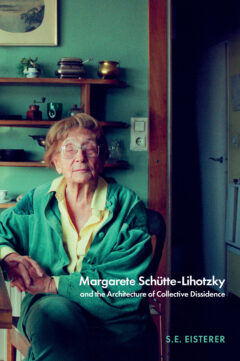 Margarete Schütte-Lihotzky and the Architecture of Collective Dissidence, 1918–1989
S.E. Eisterer (Author),
April 2027
 Toekomstdromen
Maarten Van Dijck (Editor), Gerrit Verhoeven (Editor), Hans Cools (Editor),
November 2026
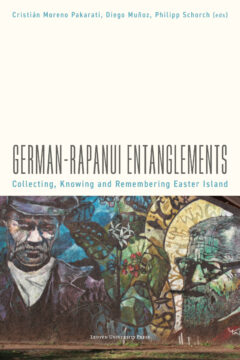 German–Rapanui Entanglements
Cristián Moreno Pakarati (Editor), Diego Muñoz (Editor), Philipp Schorch (Editor),
August 2026

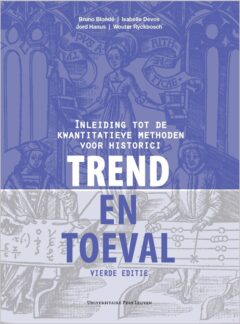 Trend en toeval – vierde editie
Bruno Blondé (Author), Isabelle Devos (Author), Jord Hanus (Author), Wouter Ryckbosch (Author),
August 2026
 Cinema in Post-War Belgium
Gertjan Willems (Editor), Bjorn Gabriels (Editor), Bénédicte Rochet (Editor),
May 2026
 Performing Magnetism
Eleonora Paklons (Editor), Kristof Smeyers (Editor), Kurt Vanhoutte (Editor), Hannah Welslau (Editor),
May 2026
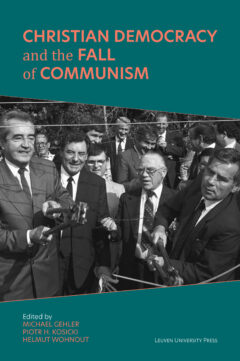 Christian Democracy and the Fall of Communism
Michael Gehler (Editor), Piotr H. Kosicki (Editor), Helmut Wohnout (Editor),
April 2026
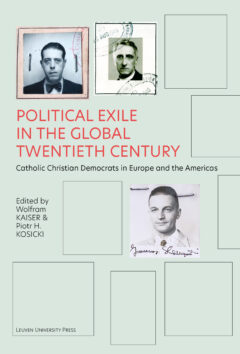 Political Exile in the Global Twentieth Century
Wolfram Kaiser (Editor), Piotr H. Kosicki (Editor),
April 2026
 Brusselse plaatsnamen
Iadine Degryse (Editor), Benjamin Wayens (Editor), Chantal Kesteloot (Editor), Dennis De Vriese (Editor), Matthijs Degraeve (Editor),
April 2026


 Cartographies of Catastrophes
Laura Demeter (Editor), Carmen M. Enss (Editor), Piotr Kisiel (Editor), Carol Ludwig (Editor),
February 2026