Reduced Price!
Now only € 10,00 instead of € 28,00
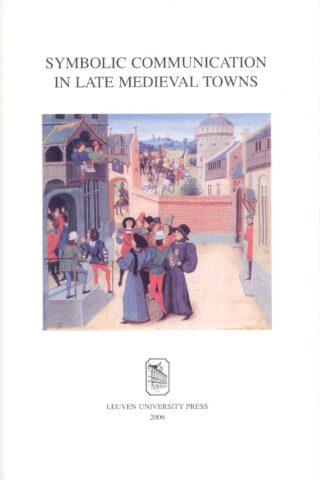
This volume addresses symbolic forms of communication in the late medieval towns of the Low Countries, northern France and the Swiss Confederation. In context of State centralisation, the political autonomy of these towns was threatened by tensions with higher levels of power. Within this conflict both rulers and towns employed symbolic means of communication to legitimise their power position. The intensive use of rituals like theatreplays and gift-exchange demonstrates that symbolic forms of communication were no routine jobs. Towns and rulers actively appropriated and reread older traditions in order to adapt them to the new settings in which they were employed. Tradition and innovation had to be balanced well, in order for the audience to understand the ritual correctly. However, the organiser could never control the new layers of meaning the audience would attach to the event. This volume seeks to explore how new layers of meaning were attached to well-known traditions, how these rituals were perceived and when the recognizability of a ritual was damaged by such appropriations. Both public encounters between rulers and towns are studied, as well as the use of ritual to express the political and religious relations between the various social groups within the towns.
Introduction
Jacoba Van Leeuwen
Ritual and State-Building: Ceremonies in Late Medieval Bruges
Andrew Brown
Public Encounters between the City Council and the Episcopal Lord in Late Medieval Basel: Routine Jobs or Transitions in Symbolic Communication?
Christoph Friedrich Weber
Le roi et son double: a Royal Entry to Late-Medieval Abbeville
Katell Lavéant
Balancing Tradition and Rites of Rebellion: The Ritual Transfer of Power in Bruges on 12 february 1488
Jacoba Van Leeuwen
Giving by Pouring: The Function of Gifts of Wine in the City of Leiden (14th-16th Centuries)
Mario Damen
Negotiating and Establishing Peace between Gestures and Written Documents: The Waldman-Process in Late Medieval Zurich (1489)
Michael Jucker
Register
Frequently Asked Questions
What is "Symbolic Communication in Late Medieval Towns" about?
Reduced Price!
Now only € 10,00 instead of € 28,00
This volume addresses symbolic forms of communication in the late medieval towns of the Low Countries, northern France and the Swiss Confederation. In context of State centralisation, the political autonomy of these towns was threatened by tensions with higher levels of power. Within this conflict both rulers and towns employed symbolic means of communication to legitimise their power position. The intensive use of rituals like theatreplays and gift-exchange demonstrates that symbolic forms of communication were no routine jobs. Towns and rulers actively appropriated and reread older traditions in order to adapt them to the new settings in which they were employed. Tradition and innovation had to be balanced well, in order for the audience to understand the ritual correctly. However, the organiser could never control the new layers of meaning the audience would attach to the event. This volume seeks to explore how new layers of meaning were attached to well-known traditions, how these rituals were perceived and when the recognizability of a ritual was damaged by such appropriations. Both public encounters between rulers and towns are studied, as well as the use of ritual to express the political and religious relations between the various social groups within the towns.
Who edited "Symbolic Communication in Late Medieval Towns"?
"Symbolic Communication in Late Medieval Towns" was edited by Jacoba Van Leeuwen.
Is "Symbolic Communication in Late Medieval Towns" part of a series?
Yes, "Symbolic Communication in Late Medieval Towns" is part of the "Mediaevalia Lovaniensia" series. It's book 37 in the series.

The longstanding, peer-reviewed book series Mediaevalia Lovaniensia. Studies in Medieval History, Society, and Culture publishes high-quality scholarship on the history and culture of the Middle Ages (c. 500–1550). Topics of particular interest to the series include, but are not limited to, social behaviour and power relations in medieval society, processes of identity formation, religious and urban culture, medieval thought and literature, and gender history. The series focuses on Europe and the wider Mediterranean world and is particularly rich in interdisciplinary approaches. By means of monographs and edited volumes, the series explores thematic frontiers and embraces innovative methodological approaches in historical and philological scholarship that is based on an in-depth source-based study.
Mediaevalia Lovaniensia accepts monographs as well as thematically coherent volumes in English. Moreover, it offers scholars the possibility to publish critical editions of primary texts with broader relevance to the understanding of medieval culture and society. The series aspires to publish books that have the potential to become reference works in the field of Medieval Studies.
We encourage early career (postdoctoral) researchers to submit a reworked version of their PhD thesis to this series. Leuven University Press provides authors with two publishing scenarios: traditional (non-Open Access) and the option to publish in Open Access (including language editing).
Editorial Board
Jelle Haemers (KU Leuven)
Jeroen Deploige (Ghent University)
Brigitte Meijns (KU Leuven)
Chanelle Delameillieure (KU Leuven - KULAK)
Baudouin Van den Abeele (UCLouvain)
Proposals
Proposals and enquiries can be sent to one of the editorial board members. Please send a short abstract. Upon approval of the proposal, the full manuscript will be submitted to international blind peer review by two (external) experts. The editors strive towards completing the review of proposals within one month and of complete manuscripts within five months after submission. Manuscripts should preferably be (+/-) 80.000 to 120.000 words in length.
Please make use of the submission form to present your manuscript or proposal to our board.
Authors interested in Open Access can consult the available funding options.
Links & Resources
What is the Table of Contents for "Symbolic Communication in Late Medieval Towns"?
Introduction
Jacoba Van Leeuwen
Ritual and State-Building: Ceremonies in Late Medieval Bruges
Andrew Brown
Public Encounters between the City Council and the Episcopal Lord in Late Medieval Basel: Routine Jobs or Transitions in Symbolic Communication?
Christoph Friedrich Weber
Le roi et son double: a Royal Entry to Late-Medieval Abbeville
Katell Lavéant
Balancing Tradition and Rites of Rebellion: The Ritual Transfer of Power in Bruges on 12 february 1488
Jacoba Van Leeuwen
Giving by Pouring: The Function of Gifts of Wine in the City of Leiden (14th-16th Centuries)
Mario Damen
Negotiating and Establishing Peace between Gestures and Written Documents: The Waldman-Process in Late Medieval Zurich (1489)
Michael Jucker
Register
Related titles
 Orality and Scribal Culture in the High Middle Ages
Timothy B. Noone (Author), Mark J. Clark (Author),
November 2026
 Toekomstdromen
Maarten Van Dijck (Editor), Gerrit Verhoeven (Editor), Hans Cools (Editor),
November 2026
 The Medieval Aristotle
Nena Bobovnik (Editor), Clelia V. Crialesi (Editor), Lisa Devriese (Editor),
August 2026

 Trend en toeval – vierde editie
Bruno Blondé (Author), Isabelle Devos (Author), Jord Hanus (Author), Wouter Ryckbosch (Author),
August 2026

 Political Exile in the Global Twentieth Century
Wolfram Kaiser (Editor), Piotr H. Kosicki (Editor),
April 2026
 Christian Democracy and the Fall of Communism
Michael Gehler (Editor), Piotr H. Kosicki (Editor), Helmut Wohnout (Editor),
April 2026
 Brusselse plaatsnamen
Iadine Degryse (Editor), Benjamin Wayens (Editor), Chantal Kesteloot (Editor), Dennis De Vriese (Editor), Matthijs Degraeve (Editor),
April 2026
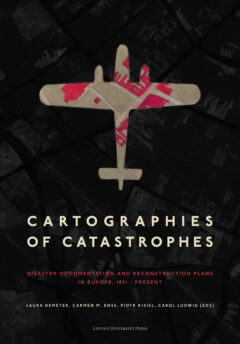 Cartographies of Catastrophes
Laura Demeter (Editor), Carmen M. Enss (Editor), Piotr Kisiel (Editor), Carol Ludwig (Editor),
February 2026
 Thomas Aquinas and Hervaeus Natalis on Concepts and Intentional Objects
Fabrizio Amerini (Author),
February 2026