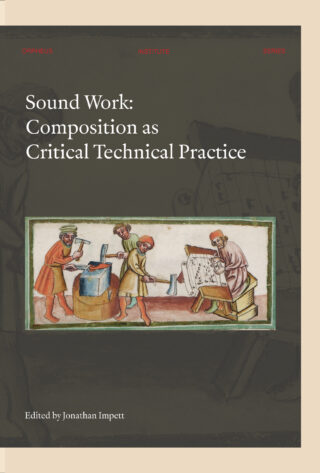
Sound Work
Composition as Critical Technical Practice
Jonathan Impett (Editor),
Series: Orpheus Institute Series
Category: Artistic Practice, Music
Language: English
ISBN: 9789462702585
Publication date: December 17, 2021
€31.00 (including 6% VAT)
Buy NowNumber of pages: 376
Size: 285 x 195 x mm
Number of illustrations: 54
Illustrations and other content description:
b/w & colour section

Stock item: 145789
Standard delivery time for print books:
For Belgium: 5 to 8 working days
For EU: 2 to 3 weeks
For other countries: 4 to 5 weeks
Series: Orpheus Institute Series
Category: Artistic Practice, Music
Language: English
ISBN: 9789461663665
Publication date: December 17, 2021
€47.00 (including 6% VAT)
Buy NowNumber of pages: 376
Number of illustrations: 54
Illustrations and other content description:
b/w & colour section
The potential for critical technical practice in the creation of music
The practices and perception of music creation have evolved with the cultural, social and technological contexts of music and musicians. But musical authorship, in its many technical and aesthetic modes, remains an important component of music culture. Musicians are increasingly called on to share their experience in writing. However, cultural imperatives to account for composition as knowledge production and to make claims for its uniqueness inhibit the development of discourse in both expert and public spheres. Internet pioneer Philip Agre observed a discourse deficit in artificial intelligence research and proposed a critical technical practice, a single disciplinary field with “one foot planted in the craft work of design and the other foot planted in the reflexive work of critique. … A critical technical practice rethinks its own premises, re-evaluates its own methods, and reconsiders its own concepts as a routine part of its daily work.”
This volume considers the potential for critical technical practice in the evolving situation of composition across a wide range of current practices. In seeking to tell more honest, useful stories of composition, it hopes to contribute to a new discourse around the creation of music.
Contributors: Patricia Alessandrini (Stanford University), Alan Blackwell (University of Cambridge), Nicholas Brown (Trinity College Dublin), Marko Ciciliani (University of Music and Performing Arts Graz, Austria), Nicolas Collins (The School of the Art Institute of Chicago), Agostino Di Scipio (Music Conservatory of L’Aquila / “Arts, écologies, transitions” Research Team, Paris), Daniela Fantechi (Orpheus Institute / University of Antwerp), Ambrose Field (University of York), Karim Haddad (IRCAM – Centre Georges Pompidou), Jonathan Impett (Orpheus Institute), Thor Magnusson (University of Sussex / Iceland University of the Arts), Scott McLaughlin (University of Leeds), Lula Romero (composer), David Rosenboom (composer), Ann Warde (independent scholar), Laura Zattra (IRCAM / Rovigo Conservatories of Music), Julie Zhu (Stanford University)
This publication is GPRC-labeled (Guaranteed Peer-Reviewed Content).
Introduction: Music-Making and Storytelling
Jonathan Impett
Too Cool to Boogie: Craft, Culture, and Critique in Computing Alan F. Blackwell
Illusions of Form David Rosenboom
What to Ware? A Guide to Today’s Technological Wardrobe Nicolas Collins
Toward a Critical Musical Practice Ann Warde
The Composer’s Domain: Method and Material Nicholas Brown
Dissociation and Interference in Composers’ Stories about Music: The Renewal of Musical Discourse Jonathan Impett
Plates
The Impossibility of Material Foundations Scott McLaughlin
Thinking Liveness in Performance with Live Electronics: The Need for an Eco-systemic Notion of Agency Agostino Di Scipio
Experiment and Experience: Compositional Practice as Critique Lula Romero
Designing the Threnoscope or, How I Wrote One of My Pieces Thor Magnusson
A Few Reflections about Compositional Practice through a Personal Narrative Daniela Fantechi
Temporal Poetics as a Critical Technical Practice Karim Haddad
Collaborative Creation in Electroacoustic Music: Practices and Self-Awareness in the Work of Musical Assistants Marino Zuccheri, Alvise Vidolin, and Carl Faia Laura Zattra
Parlour Sounds: A Critical Compositional Process towards a Cyberfeminist Theory of Music Technology Patricia Alessandrini and Julie Zhu
Changing the Vocabulary of Creative Research: The Role of Networks, Risk, and Accountability in Transcending Technical Rationality Ambrose Field
Designing Audience–Work Relationships Marko Ciciliani
Online Materials Notes on Contributors Index
Introduction: Music-Making and Storytelling Jonathan Impett
Too Cool to Boogie: Craft, Culture, and Critique in Computing Alan F. Blackwell
Illusions of Form David Rosenboom
What to Ware? A Guide to Today’s Technological Wardrobe Nicolas Collins
Toward a Critical Musical Practice Ann Warde
The Composer’s Domain: Method and Material Nicholas Brown
Dissociation and Interference in Composers’ Stories about Music: The Renewal of Musical Discourse Jonathan Impett
Plates
The Impossibility of Material Foundations Scott McLaughlin
Thinking Liveness in Performance with Live Electronics: The Need for an Eco-systemic Notion of Agency Agostino Di Scipio
Experiment and Experience: Compositional Practice as Critique Lula Romero
Designing the Threnoscope or, How I Wrote One of My Pieces Thor Magnusson
A Few Reflections about Compositional Practice through a Personal Narrative Daniela Fantechi
Temporal Poetics as a Critical Technical Practice Karim Haddad
Collaborative Creation in Electroacoustic Music: Practices and Self-Awareness in the Work of Musical Assistants Marino Zuccheri, Alvise Vidolin, and Carl Faia Laura Zattra
Parlour Sounds: A Critical Compositional Process towards a Cyberfeminist Theory of Music Technology Patricia Alessandrini and Julie Zhu
Changing the Vocabulary of Creative Research: The Role of Networks, Risk, and Accountability in Transcending Technical Rationality Ambrose Field
Designing Audience–Work Relationships Marko Ciciliani
Online Materials Notes on Contributors Index
Frequently Asked Questions
What is "Sound Work" about?
The potential for critical technical practice in the creation of music
The practices and perception of music creation have evolved with the cultural, social and technological contexts of music and musicians. But musical authorship, in its many technical and aesthetic modes, remains an important component of music culture. Musicians are increasingly called on to share their experience in writing. However, cultural imperatives to account for composition as knowledge production and to make claims for its uniqueness inhibit the development of discourse in both expert and public spheres. Internet pioneer Philip Agre observed a discourse deficit in artificial intelligence research and proposed a critical technical practice, a single disciplinary field with “one foot planted in the craft work of design and the other foot planted in the reflexive work of critique. … A critical technical practice rethinks its own premises, re-evaluates its own methods, and reconsiders its own concepts as a routine part of its daily work.”
This volume considers the potential for critical technical practice in the evolving situation of composition across a wide range of current practices. In seeking to tell more honest, useful stories of composition, it hopes to contribute to a new discourse around the creation of music.
Contributors: Patricia Alessandrini (Stanford University), Alan Blackwell (University of Cambridge), Nicholas Brown (Trinity College Dublin), Marko Ciciliani (University of Music and Performing Arts Graz, Austria), Nicolas Collins (The School of the Art Institute of Chicago), Agostino Di Scipio (Music Conservatory of L’Aquila / "Arts, écologies, transitions" Research Team, Paris), Daniela Fantechi (Orpheus Institute / University of Antwerp), Ambrose Field (University of York), Karim Haddad (IRCAM - Centre Georges Pompidou), Jonathan Impett (Orpheus Institute), Thor Magnusson (University of Sussex / Iceland University of the Arts), Scott McLaughlin (University of Leeds), Lula Romero (composer), David Rosenboom (composer), Ann Warde (independent scholar), Laura Zattra (IRCAM / Rovigo Conservatories of Music), Julie Zhu (Stanford University)
This publication is GPRC-labeled (Guaranteed Peer-Reviewed Content).
Who edited "Sound Work"?
"Sound Work" was edited by Jonathan Impett.
Jonathan Impett is director of research at the Orpheus Institute and associate professor at Middlesex University London.
Is "Sound Work" part of a series?
Yes, "Sound Work" is part of the "Orpheus Institute Series" series.

Throughout the Orpheus Institute’s various activities there is a clear focus on the development of a new research discipline in the arts, one that addresses questions and topics that are at the heart of musical practice, building on the unique expertise and perspectives of musicians and in constant dialogue with more established research disciplines.
Within this context, the Orpheus Institute launched an international Research Centre in 2007 that acts as a stable constituent within an ever-growing field of enquiry. The Orpheus Research Centre is a place where musical artists can fruitfully conduct individual and collaborative research on issues that are of concern to all involved in artistic practice. It is important that at the centre of the international Orpheus Institute network is a place, a building, a community. As the concepts and methodologies of artistic research in music have evolved, work at Orpheus Institute has found new structures. Since 2012, research has been consolidated into a number of groups focused on specific areas, each led by a principal investigator of substantial international reputation as a practicing musician. The work of Orpheus Institute is disseminated through events, publications and musical performances, and through its active animation of discussion within the sector.
This series of peer-reviewed publications —launched in 2013— encompasses monographs by Research Fellows and associates of the Orpheus Institute, compilations of lectures, texts, and performances from seminars and study days, and edited volumes on topics arising from work at the institute. Research can be presented in digital media as well as printed texts. As a whole, the series is meant to enhance and advance discourse in the field of artistic research in music and to generate future work in this emerging and vital area of study.

Editorial board
William Brooks (Chair, Series Editor), Peter Dejans, Jonathan Impett, Kathleen Coessens, Paulo de Assis, Heike Vermeire, Ed Crooks, Laura Cull, Aurelie Daems
Proposals
Proposals and enquiries can be sent to the series editor William Brooks.
Please make use of the submission form to present your manuscript or proposal to our board.
Authors interested in Open Access can consult the available funding options.
Links & Resources
What is the Table of Contents for "Sound Work"?
Introduction: Music-Making and Storytelling
Jonathan Impett
Too Cool to Boogie: Craft, Culture, and Critique in Computing Alan F. Blackwell
Illusions of Form David Rosenboom
What to Ware? A Guide to Today’s Technological Wardrobe Nicolas Collins
Toward a Critical Musical Practice Ann Warde
The Composer’s Domain: Method and Material Nicholas Brown
Dissociation and Interference in Composers’ Stories about Music: The Renewal of Musical Discourse Jonathan Impett
Plates
The Impossibility of Material Foundations Scott McLaughlin
Thinking Liveness in Performance with Live Electronics: The Need for an Eco-systemic Notion of Agency Agostino Di Scipio
Experiment and Experience: Compositional Practice as Critique Lula Romero
Designing the Threnoscope or, How I Wrote One of My Pieces Thor Magnusson
A Few Reflections about Compositional Practice through a Personal Narrative Daniela Fantechi
Temporal Poetics as a Critical Technical Practice Karim Haddad
Collaborative Creation in Electroacoustic Music: Practices and Self-Awareness in the Work of Musical Assistants Marino Zuccheri, Alvise Vidolin, and Carl Faia Laura Zattra
Parlour Sounds: A Critical Compositional Process towards a Cyberfeminist Theory of Music Technology Patricia Alessandrini and Julie Zhu
Changing the Vocabulary of Creative Research: The Role of Networks, Risk, and Accountability in Transcending Technical Rationality Ambrose Field
Designing Audience–Work Relationships Marko Ciciliani
Online Materials Notes on Contributors Index
Introduction: Music-Making and Storytelling Jonathan Impett
Too Cool to Boogie: Craft, Culture, and Critique in Computing Alan F. Blackwell
Illusions of Form David Rosenboom
What to Ware? A Guide to Today’s Technological Wardrobe Nicolas Collins
Toward a Critical Musical Practice Ann Warde
The Composer’s Domain: Method and Material Nicholas Brown
Dissociation and Interference in Composers’ Stories about Music: The Renewal of Musical Discourse Jonathan Impett
Plates
The Impossibility of Material Foundations Scott McLaughlin
Thinking Liveness in Performance with Live Electronics: The Need for an Eco-systemic Notion of Agency Agostino Di Scipio
Experiment and Experience: Compositional Practice as Critique Lula Romero
Designing the Threnoscope or, How I Wrote One of My Pieces Thor Magnusson
A Few Reflections about Compositional Practice through a Personal Narrative Daniela Fantechi
Temporal Poetics as a Critical Technical Practice Karim Haddad
Collaborative Creation in Electroacoustic Music: Practices and Self-Awareness in the Work of Musical Assistants Marino Zuccheri, Alvise Vidolin, and Carl Faia Laura Zattra
Parlour Sounds: A Critical Compositional Process towards a Cyberfeminist Theory of Music Technology Patricia Alessandrini and Julie Zhu
Changing the Vocabulary of Creative Research: The Role of Networks, Risk, and Accountability in Transcending Technical Rationality Ambrose Field
Designing Audience–Work Relationships Marko Ciciliani
Online Materials Notes on Contributors Index
Related titles
 Franz Schreker. Der Schmied von Gent
Pieter Bergé (Editor), Steven Vande Moortele (Author), Martijn Vincken (Author),
February 2027
 The Book of Requiems, 1815–1900
John Koslovsky (Editor), Steven Vande Moortele (Editor),
December 2026
 Collective Trauma and Future Fantasies
Raika Khorshidian (Editor), Birgit Mersmann (Editor), Cathrine Bublatzky (Editor), Julia Stenzel (Editor),
November 2026



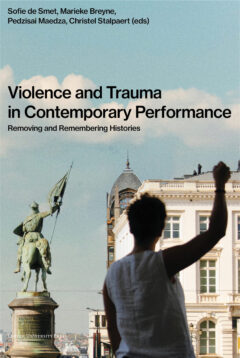 Violence and Trauma in Contemporary Performance
Sofie de Smet (Editor), Marieke Breyne (Editor), Pedzisai Maedza (Editor), Christel Stalpaert (Editor),
May 2025
 Music Theory and Analysis Volume 12 Issue 1, 2025 (Journal Subscription)
John Koslovsky (Editor), Markus Neuwirth (Editor), Derek Remeš (Editor),
May 2025