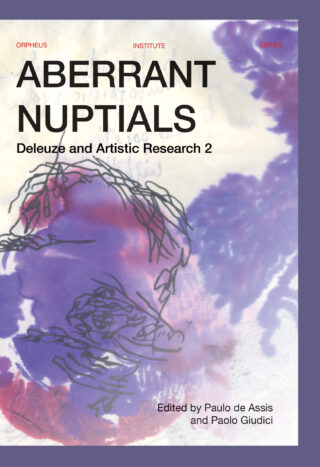

Aberrant Nuptials
Deleuze and Artistic Research 2
Paulo de Assis (Editor), Paolo Giudici (Editor),

Series: Orpheus Institute Series
Category: Artistic Practice, Music
Language: English
ISBN: 9789462702028
Publication date: November 28, 2019
€32.50 (including 6% VAT)
Buy NowNumber of pages: 480
Size: 285 x 195 x 37 mm
Number of illustrations: 90
Illustrations and other content description:
B&W and 1 color section

Stock item: 132202
Standard delivery time for print books:
For Belgium: 5 to 8 working days
For EU: 2 to 3 weeks
For other countries: 4 to 5 weeks
Series: Orpheus Institute Series
Category: Artistic Practice, Music
Language: English
ISBN: 9789461666147
Publication date: February 14, 2025
Download Free PDFNumber of pages: 480
Number of illustrations: 90
Illustrations and other content description:
B&W and 1 color section
More volumes on ‘Deleuze and Artistic Research’:
- Machinic Assemblages of Desire
- The Dark Precursor (Two-Volume Set)
Unique focus on the relation between artistic research and the philosophy of Gilles Deleuze
Aberrant Nuptials explores the diversity and richness of the interactions between artistic research and Deleuze studies. “Aberrant nuptials” is the expression Gilles Deleuze uses to refer to productive encounters between systems characterised by fundamental difference. More than imitation, representation, or reproduction, these encounters foster creative flows of energy, generating new material configurations and intensive experiences. Within different understandings of artistic research, the contributors to this book—architects, composers, film-makers, painters, performers, philosophers, sculptors, and writers—map current practices at the intersection between music, art, and philosophy, contributing to an expansion of horizons and methodologies. Written by established Deleuze scholars who have been working on interferences between art and philosophy, and by musicians and artists who have been reflecting Deleuzian and Post-Deleuzian discourses in their artworks, this volume reflects the current relevance of artistic research and Deleuze studies for the arts.
Contributors: Suzie Attiwill (RMIT University), Sara Baranzoni (Universidad de las Artes of Guayaquil), Zsuzsa Baross (Trent University), Terri Bird (Monash University), Ronald Bogue (University of Georgia), Barbara Bolt (VCA University of Melbourne), Peter Burleigh (University of Basel / HGK, Basel), Edward Campbell (University of Aberdeen / Centre for Modern Thought), Marianna Charitonidou (University of Paris West Nanterre / National Technical University of Athens), Jean-Marc Chouvel (Paris-Sorbonne University), Guillaume Collett (University of Kent), Zornitsa Dimitrova (University of Münster), Lilija Duobliene (University of Vilnius), Andrea Eckersley (RMIT University), Anders Elberling (visual artist), Lucia D’Errico (Orpheus Institute), Bracha L. Ettinger (artist, painter, theorist), Henrik Frisk (Royal Academy of Music Malmö), jan jagodzinski (University of Alberta), Oleg Lebedev (Université Catholique de Louvain), Gustavo Penha (University of São Paulo), Katie Pleming (King’s College London), Liana Psarologaki (University of Suffolk), Emilia Marra (University of Trieste), Tero Nauha (Helsinki Collegium), Stefan Östersjö (Orpheus Institute), Simon O’Sullivan (theorist, artist), Antonia Pont (Deakin University), Elisabeth Presa (University of Melbourne), Spencer Roberts (University of Huddersfield), Jonas Rutgeerts (dramaturge, performance theorist), Anne Sauvagnargues (University of Paris Ouest Nanterre La Défense), Janae Sholtz (Alvernia University), Steve Tromans (musician, independent researcher), Kamini Vellodi (University of Edinburgh), Paolo Vignola (Universidad de las Artes of Guayaquil), Audronė Žukauskaitė (Lithuanian Culture Research Institute).
This publication is GPRC-labeled (Guaranteed Peer-Reviewed Content).
Introduction
Paulo de Assis
Part 1: Sonic Nuptials: Sounds and Gestures of Time
Deleuze’s Syntheses of Time and Their Aesthetical Prolongations: Form, Style, and Achievement
Jean-Marc Chouvel
When Sounds Encounter One Another . . .
Zsuzsa Baross
Geomusic, Ecosophy, and Molecular Oscillators
Ronald Bogue
East Meets West in France: Catching the Musical Scent
Edward Campbell
Topography of the (One): Reflections on Musical Time in Composition and Performance
Stefan Östersjö, Christer Lindwall, Jörgen Dahlqvist
In the (Immanent) Event of Musical-Philosophical Thought
Steve Tromans
Music as a Reservoir of Thought’s Materialisation: Between Metastaseis and Modulor
Marianna Charitonidou
Machinic Propositions: Artistic Practice and Deterritorialisation
Henrik Frisk, Anders Elberling
A Ligetian Way to Make a Piano (or a Piano Piece) Stutter
Gustavo Rodrigues Penha
When Time Begins To Riot: Rhythm and Syncopation in the Work of Jonathan Burrows and Matteo Fargion
Jonas Rutgeerts
Anne Teresa De Keersmaeker: An Unbridled Activity of Vital Lines
Oleg Lebedev
Sonic Forms of Capture
Terri Bird
Part 2: A Little Treatise on Becomology
The Wasp and the Orchid: On Multiplicities and Becomology
Anne Sauvagnargues
Beyond the Death-Drive, beyond the Life-Drive: Being-toward-Birthing with Being-toward-Birth; Copoiesis and the Matrixial Eros—Metafeminist Notes
Bracha L. Ettinger
Thought beyond Research: A Deleuzian Critique of Artistic Research
Kamini Vellodi
An Avant-Garde “Without Authority”: The Posthuman Cosmic Artisan in the Anthropocene
jan jagodzinski
Pure Immanence and the Algorithmic Era: An Aberrant Nuptial
Emilia Marra
Mining the Aesthetico-Conceptual: Deleuze, Derrida, and Artistic Research
Spencer Roberts
Experimenting in Relation to the Anthropocene: An Image of Earth-Thought from a Symptomatic Earth Line
Paolo Vignola
Logic of Sens/ation: Two Conflicting Conceptions of Transdisciplinarity in Deleuze and Guattari
Guillaume Collett
Listening for a New Body: Thinking Change and Learning Reason with Difference and Repetition and Spinoza: Practical Philosophy
Antonia Pont
Outside-Interior: ?Interior
Suzie Attiwill
Encountering Fashion as a Practice of Subjectivation
Andrea Eckersley
A Theory of Becoming: Artistic Spatio-Temporal Experiences after Gilles Deleuze, Alain Badiou, and Brian Massumi
Liana Psarologaki
Part 3: A Garden of Small Nuptials: Images, Movement, and Fabulations
Mythopoesis, Fabulous Images, and Memories of a Sorcerer
Simon O’Sullivan
The Philosopher as a Line: A Deleuzian Perspective on Drawing and the Mobile Image of Thought
Janae Sholtz
For a Future of the Face: Faciality and Performance in the Dance of Marlene Monteiro Freitas
Lucia D’Errico
Elegy to an Oz Republic: First Steps in a Ceremony of Invocation towards Reconciliation
Barbara Bolt
Sound and Image in Artistic Flooding: Vladimir Tarasov, Bill Viola
Lilija Duobliene
Fictioning a Thought of Performance
Tero Nauha
Milieus of Locality: The Aesthetic of the Point of View
Sara Baranzoni
“A Life as an Open Landscape”: Systems of Codetermination in Three Robotic Shows
Zornitsa Dimitrova
Interspecies Sonification: Deleuze, Ruyer, and Bioart
Audronė Žukauskaitė
Desire, Temporality, “Liquid Perception”: Deleuze and the Films of Marguerite Duras
Katie Pleming
Photogenesis—Brokering World
Peter Burleigh
Sculpture Installation: Garden of Small Nuptials
Elizabeth Presa
Appendix
Notes on Contributors
Index
Frequently Asked Questions
What is "Aberrant Nuptials" about?
More volumes on 'Deleuze and Artistic Research':
- Machinic Assemblages of Desire
- The Dark Precursor (Two-Volume Set)
Unique focus on the relation between artistic research and the philosophy of Gilles Deleuze
Aberrant Nuptials explores the diversity and richness of the interactions between artistic research and Deleuze studies. “Aberrant nuptials” is the expression Gilles Deleuze uses to refer to productive encounters between systems characterised by fundamental difference. More than imitation, representation, or reproduction, these encounters foster creative flows of energy, generating new material configurations and intensive experiences. Within different understandings of artistic research, the contributors to this book—architects, composers, film-makers, painters, performers, philosophers, sculptors, and writers—map current practices at the intersection between music, art, and philosophy, contributing to an expansion of horizons and methodologies. Written by established Deleuze scholars who have been working on interferences between art and philosophy, and by musicians and artists who have been reflecting Deleuzian and Post-Deleuzian discourses in their artworks, this volume reflects the current relevance of artistic research and Deleuze studies for the arts.
Contributors: Suzie Attiwill (RMIT University), Sara Baranzoni (Universidad de las Artes of Guayaquil), Zsuzsa Baross (Trent University), Terri Bird (Monash University), Ronald Bogue (University of Georgia), Barbara Bolt (VCA University of Melbourne), Peter Burleigh (University of Basel / HGK, Basel), Edward Campbell (University of Aberdeen / Centre for Modern Thought), Marianna Charitonidou (University of Paris West Nanterre / National Technical University of Athens), Jean-Marc Chouvel (Paris-Sorbonne University), Guillaume Collett (University of Kent), Zornitsa Dimitrova (University of Münster), Lilija Duobliene (University of Vilnius), Andrea Eckersley (RMIT University), Anders Elberling (visual artist), Lucia D’Errico (Orpheus Institute), Bracha L. Ettinger (artist, painter, theorist), Henrik Frisk (Royal Academy of Music Malmö), jan jagodzinski (University of Alberta), Oleg Lebedev (Université Catholique de Louvain), Gustavo Penha (University of São Paulo), Katie Pleming (King’s College London), Liana Psarologaki (University of Suffolk), Emilia Marra (University of Trieste), Tero Nauha (Helsinki Collegium), Stefan Östersjö (Orpheus Institute), Simon O’Sullivan (theorist, artist), Antonia Pont (Deakin University), Elisabeth Presa (University of Melbourne), Spencer Roberts (University of Huddersfield), Jonas Rutgeerts (dramaturge, performance theorist), Anne Sauvagnargues (University of Paris Ouest Nanterre La Défense), Janae Sholtz (Alvernia University), Steve Tromans (musician, independent researcher), Kamini Vellodi (University of Edinburgh), Paolo Vignola (Universidad de las Artes of Guayaquil), Audronė Žukauskaitė (Lithuanian Culture Research Institute).
This publication is GPRC-labeled (Guaranteed Peer-Reviewed Content).
Who edited "Aberrant Nuptials"?
"Aberrant Nuptials" was edited by Paulo de Assis and Paolo Giudici.
Paulo de Assis is artist researcher (pianist, composer, music philosopher) and research fellow at the Orpheus Institute.
Paolo Giudici is an artist-researcher and associated researcher at the Orpheus Institute.
Is "Aberrant Nuptials" part of a series?
Yes, "Aberrant Nuptials" is part of the "Orpheus Institute Series" series.

Throughout the Orpheus Institute’s various activities there is a clear focus on the development of a new research discipline in the arts, one that addresses questions and topics that are at the heart of musical practice, building on the unique expertise and perspectives of musicians and in constant dialogue with more established research disciplines.
Within this context, the Orpheus Institute launched an international Research Centre in 2007 that acts as a stable constituent within an ever-growing field of enquiry. The Orpheus Research Centre is a place where musical artists can fruitfully conduct individual and collaborative research on issues that are of concern to all involved in artistic practice. It is important that at the centre of the international Orpheus Institute network is a place, a building, a community. As the concepts and methodologies of artistic research in music have evolved, work at Orpheus Institute has found new structures. Since 2012, research has been consolidated into a number of groups focused on specific areas, each led by a principal investigator of substantial international reputation as a practicing musician. The work of Orpheus Institute is disseminated through events, publications and musical performances, and through its active animation of discussion within the sector.
This series of peer-reviewed publications —launched in 2013— encompasses monographs by Research Fellows and associates of the Orpheus Institute, compilations of lectures, texts, and performances from seminars and study days, and edited volumes on topics arising from work at the institute. Research can be presented in digital media as well as printed texts. As a whole, the series is meant to enhance and advance discourse in the field of artistic research in music and to generate future work in this emerging and vital area of study.

Editorial board
William Brooks (Chair, Series Editor), Peter Dejans, Jonathan Impett, Kathleen Coessens, Paulo de Assis, Heike Vermeire, Ed Crooks, Laura Cull, Aurelie Daems
Proposals
Proposals and enquiries can be sent to the series editor William Brooks.
Please make use of the submission form to present your manuscript or proposal to our board.
Authors interested in Open Access can consult the available funding options.
Links & Resources
Is "Aberrant Nuptials" available Open Access?
Yes, "Aberrant Nuptials" is published Open Access. It is available under a BY-NC-ND license.
What is the Table of Contents for "Aberrant Nuptials"?
Introduction
Paulo de Assis
Part 1: Sonic Nuptials: Sounds and Gestures of Time
Deleuze’s Syntheses of Time and Their Aesthetical Prolongations: Form, Style, and Achievement
Jean-Marc Chouvel
When Sounds Encounter One Another . . .
Zsuzsa Baross
Geomusic, Ecosophy, and Molecular Oscillators
Ronald Bogue
East Meets West in France: Catching the Musical Scent
Edward Campbell
Topography of the (One): Reflections on Musical Time in Composition and Performance
Stefan Östersjö, Christer Lindwall, Jörgen Dahlqvist
In the (Immanent) Event of Musical-Philosophical Thought
Steve Tromans
Music as a Reservoir of Thought’s Materialisation: Between Metastaseis and Modulor
Marianna Charitonidou
Machinic Propositions: Artistic Practice and Deterritorialisation
Henrik Frisk, Anders Elberling
A Ligetian Way to Make a Piano (or a Piano Piece) Stutter
Gustavo Rodrigues Penha
When Time Begins To Riot: Rhythm and Syncopation in the Work of Jonathan Burrows and Matteo Fargion
Jonas Rutgeerts
Anne Teresa De Keersmaeker: An Unbridled Activity of Vital Lines
Oleg Lebedev
Sonic Forms of Capture
Terri Bird
Part 2: A Little Treatise on Becomology
The Wasp and the Orchid: On Multiplicities and Becomology
Anne Sauvagnargues
Beyond the Death-Drive, beyond the Life-Drive: Being-toward-Birthing with Being-toward-Birth; Copoiesis and the Matrixial Eros—Metafeminist Notes
Bracha L. Ettinger
Thought beyond Research: A Deleuzian Critique of Artistic Research
Kamini Vellodi
An Avant-Garde “Without Authority”: The Posthuman Cosmic Artisan in the Anthropocene
jan jagodzinski
Pure Immanence and the Algorithmic Era: An Aberrant Nuptial
Emilia Marra
Mining the Aesthetico-Conceptual: Deleuze, Derrida, and Artistic Research
Spencer Roberts
Experimenting in Relation to the Anthropocene: An Image of Earth-Thought from a Symptomatic Earth Line
Paolo Vignola
Logic of Sens/ation: Two Conflicting Conceptions of Transdisciplinarity in Deleuze and Guattari
Guillaume Collett
Listening for a New Body: Thinking Change and Learning Reason with Difference and Repetition and Spinoza: Practical Philosophy
Antonia Pont
Outside-Interior: ?Interior
Suzie Attiwill
Encountering Fashion as a Practice of Subjectivation
Andrea Eckersley
A Theory of Becoming: Artistic Spatio-Temporal Experiences after Gilles Deleuze, Alain Badiou, and Brian Massumi
Liana Psarologaki
Part 3: A Garden of Small Nuptials: Images, Movement, and Fabulations
Mythopoesis, Fabulous Images, and Memories of a Sorcerer
Simon O’Sullivan
The Philosopher as a Line: A Deleuzian Perspective on Drawing and the Mobile Image of Thought
Janae Sholtz
For a Future of the Face: Faciality and Performance in the Dance of Marlene Monteiro Freitas
Lucia D’Errico
Elegy to an Oz Republic: First Steps in a Ceremony of Invocation towards Reconciliation
Barbara Bolt
Sound and Image in Artistic Flooding: Vladimir Tarasov, Bill Viola
Lilija Duobliene
Fictioning a Thought of Performance
Tero Nauha
Milieus of Locality: The Aesthetic of the Point of View
Sara Baranzoni
“A Life as an Open Landscape”: Systems of Codetermination in Three Robotic Shows
Zornitsa Dimitrova
Interspecies Sonification: Deleuze, Ruyer, and Bioart
Audronė Žukauskaitė
Desire, Temporality, “Liquid Perception”: Deleuze and the Films of Marguerite Duras
Katie Pleming
Photogenesis—Brokering World
Peter Burleigh
Sculpture Installation: Garden of Small Nuptials
Elizabeth Presa
Appendix
Notes on Contributors
Index
Related titles
 Franz Schreker. Der Schmied von Gent
Pieter Bergé (Editor), Steven Vande Moortele (Author), Martijn Vincken (Author),
February 2027
 The Book of Requiems, 1815–1900
John Koslovsky (Editor), Steven Vande Moortele (Editor),
December 2026
 Collective Trauma and Future Fantasies
Raika Khorshidian (Editor), Birgit Mersmann (Editor), Cathrine Bublatzky (Editor), Julia Stenzel (Editor),
November 2026

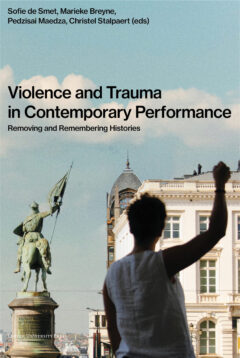 Violence and Trauma in Contemporary Performance
Sofie de Smet (Editor), Marieke Breyne (Editor), Pedzisai Maedza (Editor), Christel Stalpaert (Editor),
May 2025
 Music Theory and Analysis Volume 12 Issue 1, 2025 (Journal Subscription)
John Koslovsky (Editor), Markus Neuwirth (Editor), Derek Remeš (Editor),
May 2025