

Reduced Price!
Now only € 15,00 instead of € 65,00
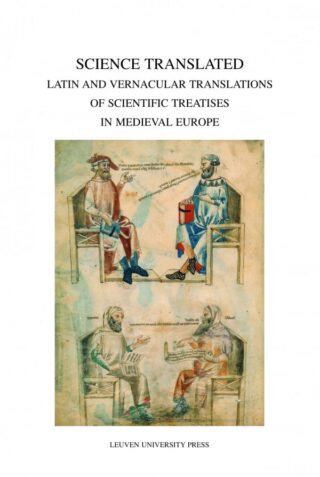
Medieval translators played an important role in the development and evolution of a scientific lexicon. At a time when most scholars deferred to authority, the translations of canonical texts assumed great importance. Moreover, translation occurred at two levels in the Middle Ages. First, Greek or Arabic texts were translated into the learned language, Latin. Second, Latin texts became source-texts themselves, to be translated into the vernaculars as their importance across Europe started to increase. The situation of the respective translators at these two levels was fundamentally different: whereas the former could rely on a long tradition of scientific discourse, the latter had the enormous responsibility of actually developing a scientific vocabulary. The contributions in the present volume investigate both levels, greatly illuminating the emergence of the scientific terminology and concepts that became so fundamental in early modern intellectual discourse. The scientific disciplines covered in the book include, among others, medicine, biology, astronomy, and physics.
- José LAMBERT
Medieval Translations and Translation Studies: some preliminary
considerations - Translations into Latin
- Charles BURNETT
Scientific Translations from Arabic: The Question of Revision - Carla DI MARTINO
Le bonheur perdu: Note sur sa traduction latine médiévale du Talkhîs Kitâb al-Ìiss wa-l-maÌsûs (Epitome du Livre du sens et du sensible) d’Averroès - Michelle REICHERT
Hermann of Dalmatia and Robert of Ketton: Two Twelfth-Century Translators in the Ebro Valley - José Manuel FRADEJAS RUEDA
shaaniqat al-balansiyya or shaaniqat al-baàriyya: On the Arabic Text and the Latin Translations of the Calendar of Cordova - Ilya DINES
The Textual and Pictorial Metamorphoses of the Animal called Chyrogrillius - Outi MERISALO & Päivi PAHTA
Tracing the Trail of Transmission: The pseudo-Galenic De spermate in Latin - Pieter BEULLENS
Aristotle, his Translators, and the Formation of Ichthyologic Nomenclature - Iolanda VENTURA
Translating, Commenting, Re-translating: Some Considerations on the Latin Translations of the Pseudo-Aristotelian Problemata and their Readers - Craig MARTIN
Scientific Terminology and the Effects of Humanism: Renaissance Translations of Meteorologica IV and the Commentary Tradition - Translations into the Vernacular
- Joëlle DUCOS
Traduire la science en langue vernaculaire: du texte au mot - Alessandro VITALE BROVARONE
Traduire des mots et transporter des choses: quelques réflexions sur la littérature savante et l’expérience marchande dans la formation du lexique - Laurence MOULINIER-BROGI
L’uroscopie en vulgaire dans l’Occident médiéval: un tour d’horizon - Silvia TONIATO
Le lexique mathématique au moyen âge entre latin et langues vernaculaires: quelques problèmes posés par les traductions - Hiltrud GERNER
La traduction française de quelques termes d’astronomie du Compendium theologicae veritatis (environ 1265) dans Le Somme abregiet de theologie (1481) - Tony HUNT
The Old French Translation of the ‘Four Masters Gloss’ in Wellcome MS 546 - Sara MARRUNCHEDDU
La traduction française du Moamin dans ses rapports avec la version latine de Théodore d’Antioche - An SMETS & Magali TOULAN
Les accessoires des faucons et des fauconniers dans les traductions françaises du De arte venandi cum avibus de Frédéric II et du De falconibus d’Albert le Grand - Géraldine VEYSSEYRE
Le Livre des proprietés des choses de Jean Corbechon (livre VI),ou la vulgarisation d’une encyclopédie latine - Francesco CAPACCIONI
Infiniti ingegni da’ pi๠non saputi: la prima traduzione italiana dei Ruralia Commoda di Pietro de’ Crescenzi (Libro X) - Marianne ELSAKKERS
The Early Medieval Latin and Vernacular Vocabulary of Abotion and Embryology - Erwin HUIZENGA
Unintended Signatures: Middle Dutch Translators of Surgical Works - Orlanda S.H. LIE
Women’s Medicine in Middle Dutch
Een nuttige bundel voor wie zich op een of andere wijze bezighoudt met de studie en/of editie van vertalingen, in het bijzonder middeleeuwse.
Jules Janssens, Tijdschrift voor Filosofie 72 (2010), 1
In fine, le recueil dirigé par Michèle Goyens, Pieter de Leemans et An Smets est d'une grande rigueur scientifique et d'un intérêt incontournable, tant dans la variété de ses exemples que dans la nature exemplaire des contributions qui le parcourent. à€ ce titre, il est une référence et un réel apport dans l'étude des traductions au Moyen à‚ge.
Olivier Bertrand, Cahiers de recherches médiévales et humanistes [En ligne], 2008, mis en ligne le 26 juin 2011. http://crm.revues.org/12292
Een nuttige bundel voor wie zich op een of andere wijze bezighoudt met de studie en/of editie van vertalingen, in het bijzonder middeleeuwse.
Jules Janssens, Tijdschrift voor Filosofie 72 (2010), 1
In fine, le recueil dirigé par Michèle Goyens, Pieter de Leemans et An Smets est d'une grande rigueur scientifique et d'un intérêt incontournable, tant dans la variété de ses exemples que dans la nature exemplaire des contributions qui le parcourent. à€ ce titre, il est une référence et un réel apport dans l'étude des traductions au Moyen à‚ge.
Olivier Bertrand, Cahiers de recherches médiévales et humanistes [En ligne], 2008, mis en ligne le 26 juin 2011. http://crm.revues.org/12292
Frequently Asked Questions
What is "Science Translated" about?
Reduced Price!
Now only € 15,00 instead of € 65,00
Medieval translators played an important role in the development and evolution of a scientific lexicon. At a time when most scholars deferred to authority, the translations of canonical texts assumed great importance. Moreover, translation occurred at two levels in the Middle Ages. First, Greek or Arabic texts were translated into the learned language, Latin. Second, Latin texts became source-texts themselves, to be translated into the vernaculars as their importance across Europe started to increase. The situation of the respective translators at these two levels was fundamentally different: whereas the former could rely on a long tradition of scientific discourse, the latter had the enormous responsibility of actually developing a scientific vocabulary. The contributions in the present volume investigate both levels, greatly illuminating the emergence of the scientific terminology and concepts that became so fundamental in early modern intellectual discourse. The scientific disciplines covered in the book include, among others, medicine, biology, astronomy, and physics.
Who wrote "Science Translated"?
"Science Translated" was written by Michele Goyens and Pieter De Leemans.
Pieter De Leemans is professor at the De Wulf-Mansion Centre for Ancient, Medieval, and Renaissance Philosophy (KU Leuven) and academic secretary of the Aristotles Latinus. - Hoger Instituut van Wijsbegeerte, KU Leuven
Is "Science Translated" part of a series?
Yes, "Science Translated" is part of the "Mediaevalia Lovaniensia" series. It's book 40 in the series.

The longstanding, peer-reviewed book series Mediaevalia Lovaniensia. Studies in Medieval History, Society, and Culture publishes high-quality scholarship on the history and culture of the Middle Ages (c. 500–1550). Topics of particular interest to the series include, but are not limited to, social behaviour and power relations in medieval society, processes of identity formation, religious and urban culture, medieval thought and literature, and gender history. The series focuses on Europe and the wider Mediterranean world and is particularly rich in interdisciplinary approaches. By means of monographs and edited volumes, the series explores thematic frontiers and embraces innovative methodological approaches in historical and philological scholarship that is based on an in-depth source-based study.
Mediaevalia Lovaniensia accepts monographs as well as thematically coherent volumes in English. Moreover, it offers scholars the possibility to publish critical editions of primary texts with broader relevance to the understanding of medieval culture and society. The series aspires to publish books that have the potential to become reference works in the field of Medieval Studies.
We encourage early career (postdoctoral) researchers to submit a reworked version of their PhD thesis to this series. Leuven University Press provides authors with two publishing scenarios: traditional (non-Open Access) and the option to publish in Open Access (including language editing).
Editorial Board
Jelle Haemers (KU Leuven)
Jeroen Deploige (Ghent University)
Brigitte Meijns (KU Leuven)
Chanelle Delameillieure (KU Leuven - KULAK)
Baudouin Van den Abeele (UCLouvain)
Proposals
Proposals and enquiries can be sent to one of the editorial board members. Please send a short abstract. Upon approval of the proposal, the full manuscript will be submitted to international blind peer review by two (external) experts. The editors strive towards completing the review of proposals within one month and of complete manuscripts within five months after submission. Manuscripts should preferably be (+/-) 80.000 to 120.000 words in length.
Please make use of the submission form to present your manuscript or proposal to our board.
Authors interested in Open Access can consult the available funding options.
Links & Resources
What is the Table of Contents for "Science Translated"?
- José LAMBERT
Medieval Translations and Translation Studies: some preliminary
considerations - Translations into Latin
- Charles BURNETT
Scientific Translations from Arabic: The Question of Revision - Carla DI MARTINO
Le bonheur perdu: Note sur sa traduction latine médiévale du Talkhîs Kitâb al-Ìiss wa-l-maÌsûs (Epitome du Livre du sens et du sensible) d'Averroès - Michelle REICHERT
Hermann of Dalmatia and Robert of Ketton: Two Twelfth-Century Translators in the Ebro Valley - José Manuel FRADEJAS RUEDA
shaaniqat al-balansiyya or shaaniqat al-baàriyya: On the Arabic Text and the Latin Translations of the Calendar of Cordova - Ilya DINES
The Textual and Pictorial Metamorphoses of the Animal called Chyrogrillius - Outi MERISALO & Päivi PAHTA
Tracing the Trail of Transmission: The pseudo-Galenic De spermate in Latin - Pieter BEULLENS
Aristotle, his Translators, and the Formation of Ichthyologic Nomenclature - Iolanda VENTURA
Translating, Commenting, Re-translating: Some Considerations on the Latin Translations of the Pseudo-Aristotelian Problemata and their Readers - Craig MARTIN
Scientific Terminology and the Effects of Humanism: Renaissance Translations of Meteorologica IV and the Commentary Tradition - Translations into the Vernacular
- Joëlle DUCOS
Traduire la science en langue vernaculaire: du texte au mot - Alessandro VITALE BROVARONE
Traduire des mots et transporter des choses: quelques réflexions sur la littérature savante et l'expérience marchande dans la formation du lexique - Laurence MOULINIER-BROGI
L'uroscopie en vulgaire dans l'Occident médiéval: un tour d'horizon - Silvia TONIATO
Le lexique mathématique au moyen âge entre latin et langues vernaculaires: quelques problèmes posés par les traductions - Hiltrud GERNER
La traduction française de quelques termes d'astronomie du Compendium theologicae veritatis (environ 1265) dans Le Somme abregiet de theologie (1481) - Tony HUNT
The Old French Translation of the 'Four Masters Gloss' in Wellcome MS 546 - Sara MARRUNCHEDDU
La traduction française du Moamin dans ses rapports avec la version latine de Théodore d'Antioche - An SMETS & Magali TOULAN
Les accessoires des faucons et des fauconniers dans les traductions françaises du De arte venandi cum avibus de Frédéric II et du De falconibus d'Albert le Grand - Géraldine VEYSSEYRE
Le Livre des proprietés des choses de Jean Corbechon (livre VI),ou la vulgarisation d'une encyclopédie latine - Francesco CAPACCIONI
Infiniti ingegni da' pi๠non saputi: la prima traduzione italiana dei Ruralia Commoda di Pietro de' Crescenzi (Libro X) - Marianne ELSAKKERS
The Early Medieval Latin and Vernacular Vocabulary of Abotion and Embryology - Erwin HUIZENGA
Unintended Signatures: Middle Dutch Translators of Surgical Works - Orlanda S.H. LIE
Women's Medicine in Middle Dutch
Related titles
 Orality and Scribal Culture in the High Middle Ages
Timothy B. Noone (Author), Mark J. Clark (Author),
November 2026
 Toekomstdromen
Maarten Van Dijck (Editor), Gerrit Verhoeven (Editor), Hans Cools (Editor),
November 2026
 Feminists Resisting Gendered Violence
Hemangini Gupta (Editor), Fiona Mackay (Editor), Jan Breckenridge (Editor), Louise Chappell (Editor), Rachna Mehra (Editor), Rukmini Sen (Editor), Mailin Suchting (Editor),
October 2026
 The Medieval Aristotle
Nena Bobovnik (Editor), Clelia V. Crialesi (Editor), Lisa Devriese (Editor),
August 2026

 Trend en toeval – vierde editie
Bruno Blondé (Author), Isabelle Devos (Author), Jord Hanus (Author), Wouter Ryckbosch (Author),
August 2026
 Affect in Translation and Interpreting
Sofía Monzón (Editor), Lucie Spezzatti (Editor), Elisabeth Goemans (Editor),
May 2026
 Research Methods in Literary Reception Studies
Jeroen Dera (Editor), Anne Oerlemans (Editor), Frederik Van Dam (Editor),
May 2026
 Political Exile in the Global Twentieth Century
Wolfram Kaiser (Editor), Piotr H. Kosicki (Editor),
April 2026
 Christian Democracy and the Fall of Communism
Michael Gehler (Editor), Piotr H. Kosicki (Editor), Helmut Wohnout (Editor),
April 2026
 Brusselse plaatsnamen
Iadine Degryse (Editor), Benjamin Wayens (Editor), Chantal Kesteloot (Editor), Dennis De Vriese (Editor), Matthijs Degraeve (Editor),
April 2026
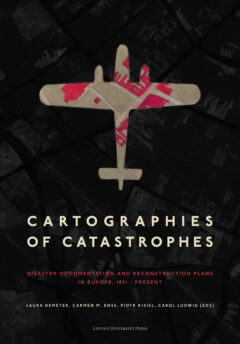 Cartographies of Catastrophes
Laura Demeter (Editor), Carmen M. Enss (Editor), Piotr Kisiel (Editor), Carol Ludwig (Editor),
February 2026