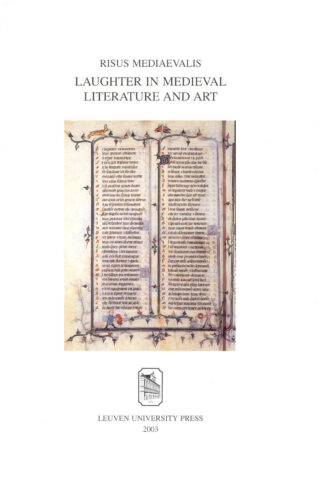
Risus Mediaevalis
Laughter in Medieval Literature and Art
Guido Latré (Author), Herman Braet (Author),
Reduced Price!
Now only € 10,00 instead of € 38,50
Laughter, often defined as humankind’s exclusive characteristics, remains in itself an ambiguity. All the more so when one attempts to understand it in a culture from the past. Can humour be considered as a universal and ahistorical phenomenon? Or do we actually project our own tastes on our forebears? It may well be that one has not always laughed for the same reasons and at the same objects; indeed, some forms like parody and satire seem to thrive upon a variety of now outdated and even half forgotten codes and discourses. In the face of these questions, the Leuven Institute of Medieval Studies has attempted to address some of the multiple aspects of medieval laughter, its possible devices, functions and intentions by inviting a number of colleagues to give or write a paper with their own views on the subject. Surprisingly, although they are discussing a great many texts and genres, quite a few contributors appear to agree that the risus mediaevalis already often proceeds from a contrast, a shifting which in its turn produces an effect of surprise. Medieval humour, however, is not a simple thing and takes many forms: e.g. a comedy of corpses where in last resort, the joke is on death itself-, a wit of wordplay on the borderline of form and content, a ludic or perhaps carnivalesque happening, a burlesque confrontation between registers, a weapon aimed at a certain group, an ironic use or even a satire of conventions, a playful doodle referring to what happens not on the manuscript page but to the world outside. Questions are also being asked about who exactly was supposed to be amused by some of these jokes and to what effect. And what could have been the audience’s response? Did its mirth create a common bond against the other, a release, a confirmation of norm? Or was it sometimes merely a way of enjoying one of the joys of life?
What about Medieval Humour? Some Historiography
Johan Verberckmoes
The Comedy of Corpses in Medieval Comic Tales
Derek Brewer
Laughing at the Language of Love: the Limits of Linguistic Representation in John Heywood’s ‘A Play of Love’
Amanda Piesse
Entre folie et raison: les drà´leries du ms. B.N. fr. 25526
Herman Braet
Quelques effects burlesques dans le ‘Livre des Manières’
Jean Batany
La plaisanterie dans le ‘Lai de Nabaret’
Rosanna Brusegan
Fabliau et satire cléricale: ‘La spécificité de ‘Frere Denise’ par Rutebeuf
Jean Subrenat
Les ‘us’ des femmes et la ‘clergie’ dans ‘Richeut’
Tony Hunt
Halfway to Quixote: Humour in ‘Blandin de Cornoalha’
Norris J. Lacy
Of Wives and Men: Middle Dutch Fabliaux on a Hot Urban Issue
Fred Lodder
Viole(n)t-Stories: The Violet Story and its Adaptations in the Neidhart Plays
Katja Scheel
Footsteps in the Snow: A Latin Tale from Charlemagne to Justus Lipsius and Beyond
Gilbert Tournoy
Frequently Asked Questions
What is "Risus Mediaevalis" about?
Reduced Price!
Now only € 10,00 instead of € 38,50
Laughter, often defined as humankind’s exclusive characteristics, remains in itself an ambiguity. All the more so when one attempts to understand it in a culture from the past. Can humour be considered as a universal and ahistorical phenomenon? Or do we actually project our own tastes on our forebears? It may well be that one has not always laughed for the same reasons and at the same objects; indeed, some forms like parody and satire seem to thrive upon a variety of now outdated and even half forgotten codes and discourses. In the face of these questions, the Leuven Institute of Medieval Studies has attempted to address some of the multiple aspects of medieval laughter, its possible devices, functions and intentions by inviting a number of colleagues to give or write a paper with their own views on the subject. Surprisingly, although they are discussing a great many texts and genres, quite a few contributors appear to agree that the risus mediaevalis already often proceeds from a contrast, a shifting which in its turn produces an effect of surprise. Medieval humour, however, is not a simple thing and takes many forms: e.g. a comedy of corpses where in last resort, the joke is on death itself-, a wit of wordplay on the borderline of form and content, a ludic or perhaps carnivalesque happening, a burlesque confrontation between registers, a weapon aimed at a certain group, an ironic use or even a satire of conventions, a playful doodle referring to what happens not on the manuscript page but to the world outside. Questions are also being asked about who exactly was supposed to be amused by some of these jokes and to what effect. And what could have been the audience’s response? Did its mirth create a common bond against the other, a release, a confirmation of norm? Or was it sometimes merely a way of enjoying one of the joys of life?
Who wrote "Risus Mediaevalis"?
"Risus Mediaevalis" was written by Guido Latré and Herman Braet.
Is "Risus Mediaevalis" part of a series?
Yes, "Risus Mediaevalis" is part of the "Mediaevalia Lovaniensia" series. It's book 30 in the series.

The longstanding, peer-reviewed book series Mediaevalia Lovaniensia. Studies in Medieval History, Society, and Culture publishes high-quality scholarship on the history and culture of the Middle Ages (c. 500–1550). Topics of particular interest to the series include, but are not limited to, social behaviour and power relations in medieval society, processes of identity formation, religious and urban culture, medieval thought and literature, and gender history. The series focuses on Europe and the wider Mediterranean world and is particularly rich in interdisciplinary approaches. By means of monographs and edited volumes, the series explores thematic frontiers and embraces innovative methodological approaches in historical and philological scholarship that is based on an in-depth source-based study.
Mediaevalia Lovaniensia accepts monographs as well as thematically coherent volumes in English. Moreover, it offers scholars the possibility to publish critical editions of primary texts with broader relevance to the understanding of medieval culture and society. The series aspires to publish books that have the potential to become reference works in the field of Medieval Studies.
We encourage early career (postdoctoral) researchers to submit a reworked version of their PhD thesis to this series. Leuven University Press provides authors with two publishing scenarios: traditional (non-Open Access) and the option to publish in Open Access (including language editing).
Editorial Board
Jelle Haemers (KU Leuven)
Jeroen Deploige (Ghent University)
Brigitte Meijns (KU Leuven)
Chanelle Delameillieure (KU Leuven - KULAK)
Baudouin Van den Abeele (UCLouvain)
Proposals
Proposals and enquiries can be sent to one of the editorial board members. Please send a short abstract. Upon approval of the proposal, the full manuscript will be submitted to international blind peer review by two (external) experts. The editors strive towards completing the review of proposals within one month and of complete manuscripts within five months after submission. Manuscripts should preferably be (+/-) 80.000 to 120.000 words in length.
Please make use of the submission form to present your manuscript or proposal to our board.
Authors interested in Open Access can consult the available funding options.
Links & Resources
What is the Table of Contents for "Risus Mediaevalis"?
What about Medieval Humour? Some Historiography
Johan Verberckmoes
The Comedy of Corpses in Medieval Comic Tales
Derek Brewer
Laughing at the Language of Love: the Limits of Linguistic Representation in John Heywood's 'A Play of Love'
Amanda Piesse
Entre folie et raison: les drà´leries du ms. B.N. fr. 25526
Herman Braet
Quelques effects burlesques dans le 'Livre des Manières'
Jean Batany
La plaisanterie dans le 'Lai de Nabaret'
Rosanna Brusegan
Fabliau et satire cléricale: 'La spécificité de 'Frere Denise' par Rutebeuf
Jean Subrenat
Les 'us' des femmes et la 'clergie' dans 'Richeut'
Tony Hunt
Halfway to Quixote: Humour in 'Blandin de Cornoalha'
Norris J. Lacy
Of Wives and Men: Middle Dutch Fabliaux on a Hot Urban Issue
Fred Lodder
Viole(n)t-Stories: The Violet Story and its Adaptations in the Neidhart Plays
Katja Scheel
Footsteps in the Snow: A Latin Tale from Charlemagne to Justus Lipsius and Beyond
Gilbert Tournoy
Related titles
 Collective Trauma and Future Fantasies
Raika Khorshidian (Editor), Birgit Mersmann (Editor), Cathrine Bublatzky (Editor), Julia Stenzel (Editor),
November 2026

 Orality and Scribal Culture in the High Middle Ages
Timothy B. Noone (Author), Mark J. Clark (Author),
November 2026
 Toekomstdromen
Maarten Van Dijck (Editor), Gerrit Verhoeven (Editor), Hans Cools (Editor),
November 2026
 Feminists Resisting Gendered Violence
Hemangini Gupta (Editor), Fiona Mackay (Editor), Jan Breckenridge (Editor), Louise Chappell (Editor), Rachna Mehra (Editor), Rukmini Sen (Editor), Mailin Suchting (Editor),
October 2026
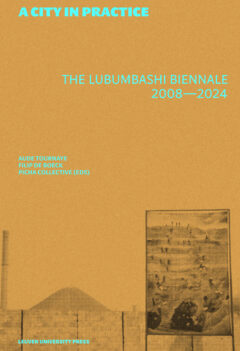 A City in Practice
Aude Tournaye (Editor), Filip De Boeck (Editor), Picha Collective (Editor),
September 2026
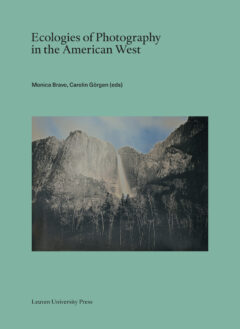 Ecologies of Photography in the American West
Monica Bravo (Editor), Carolin Görgen (Editor),
September 2026
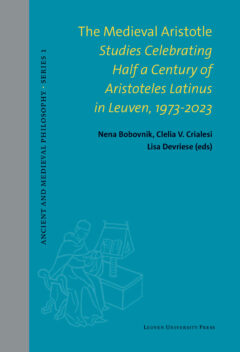 The Medieval Aristotle
Nena Bobovnik (Editor), Clelia V. Crialesi (Editor), Lisa Devriese (Editor),
August 2026
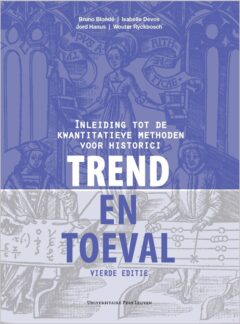 Trend en toeval – vierde editie
Bruno Blondé (Author), Isabelle Devos (Author), Jord Hanus (Author), Wouter Ryckbosch (Author),
August 2026
 Affect in Translation and Interpreting
Sofía Monzón (Editor), Lucie Spezzatti (Editor), Elisabeth Goemans (Editor),
May 2026
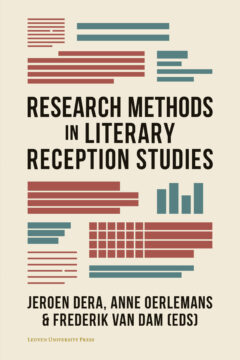 Research Methods in Literary Reception Studies
Jeroen Dera (Editor), Anne Oerlemans (Editor), Frederik Van Dam (Editor),
May 2026
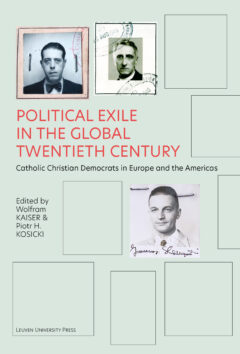 Political Exile in the Global Twentieth Century
Wolfram Kaiser (Editor), Piotr H. Kosicki (Editor),
April 2026
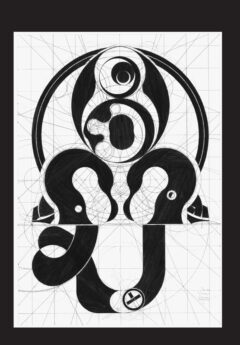 Jean Katambayi Mukendi
Johannes Muselaers (Editor), Stéphane Symons (Editor), Anne-Claire Schmitz (Editor), Emma Enderby (Editor),
April 2026
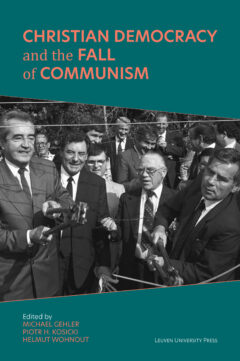 Christian Democracy and the Fall of Communism
Michael Gehler (Editor), Piotr H. Kosicki (Editor), Helmut Wohnout (Editor),
April 2026