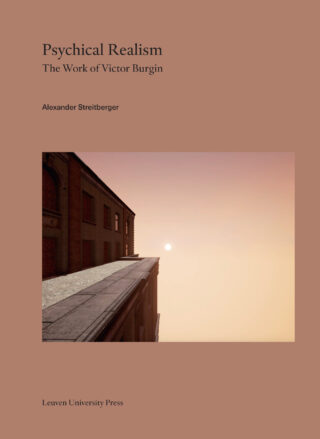
Psychical Realism
The Work of Victor Burgin
Alexander Streitberger (Author),
Series: Lieven Gevaert Series 28
Category: Art, Media and Visual Culture, Photography
Language: English
ISBN: 9789462702462
Publication date: October 22, 2020
€25.00 (including 6% VAT)
Buy NowNumber of pages: 320
Size: 230 x 170 x 19 mm
Number of illustrations: 90
Illustrations and other content description:
36 pp. full colour

Stock item: 137926
Standard delivery time for print books:
For Belgium: 5 to 8 working days
For EU: 2 to 3 weeks
For other countries: 4 to 5 weeks
Comprehensive overview of a highly influential contemporary artist’s work
Victor Burgin counts among the most versatile figures within art and visual culture since the late 1960s. His artwork both connects with and reacts to minimalism, conceptual art, staged photography, appropriation art, video art and, more recently, computer-based imaging. As a scholar his thinking is informed by phenomenology, semiotics, poststructuralism, feminist theory, and psychoanalysis.
This monograph provides a comprehensive and unique overview of Victor Burgin’s body of work over the past five decades. Identifying the concept of ‘psychical realism’ as an overarching umbrella term, Alexander Streitberger traces back the artist’s parallel unfolding of practice and theory, while situating this process within various historical contexts and critical debates. Five chapters link insightful case studies to key issues such as conceptual art and situational aesthetics, the relationship between representation and politics, postmodernist concepts of space, and the digital environment of media images. The book is richly illustrated and includes a sequence from the major work Dear Urania (2016) especially designed by the artist for this book.
This publication is GPRC-labeled (Guaranteed Peer-Reviewed Content).
AcknowledgmentsIntroduction
1. Situational Aesthetics 1.1. Beyond Minimalism: From Object to Perception 1.2. Role-playing: Behavior and Memory 1.3. Photography between Reflection and Recollection 1.4. Serial Art and Systems 1.5. The Text Works and the Perceptual Field 1.6. Linguistic Art and Ideology
2. Toward a Politics of Representation 2.1. The Politicization of Art in Britain 2.2. Guerrilla Rhetoric: The Antanaclastic Works 2.2.1. The Discordance of Ideologies 2.2.2. Semiotic Theory and Artistic Practice 2.2.3. Heroes Don’t Smell Very Nice! 2.3. The Author as Producer 2.3.1. Work Outside and Inside the Gallery 2.3.2. The Tradition of Political Photocollage 2.3.3. The Author as Producer 2.4. Toward a Rhetoric of the Unconscious 2.4.1. The Rhetoric of Art Photography and Advertising 2.4.2. Framing Sexual Difference 2.4.3. Scopophilia and Surveillance
3. Tales from Freud 3.1. Toward a Psychical Realism 3.2. From Socio-history to Psycho-history 3.2.1. A Socio-historical “Psychodrama” 3.2.2. The Shattered Composite 3.2.3. Visual Pleasure and the Photographic Fetish 3.3. The Rebus as a Model of “Critical Seeing” 3.3.1. The Suspended Peripeteian Moment 3.3.2. Voyeurism, Masculinity, and the Uncanny Dance of Ideology 3.4. Between: From Intertext to Masquerades in the Gallery 3.4.1. Hetero-optic Writing 3.4.2. Between Gallery and Cinema 3.4.3. Between the Masks
4. Psychotopologies 4.1. The Discursive Spaces of Postmodernism 4.2. Epistemophilia 4.3. Psychical Space and Postmodernism 4.4. The Paranoiac Space of the City 4.5. Third Space. The Interstitial Location of Culture 4.6. Fiction Films 4.7. The Teletopological Puzzle
5. The Psychomediatic 5.1. The Uncinematic 5.2. The Psychomediatic: Remembering, Repeating, and Working Through 5.3. Photofilmic Psycho-panoramics 5.4. Panorama and Sequence-Image 5.5. Paths through the Virtual Sphere 5.6. Monuments of Melancholia 5.7. The Peripatetic Mode of Spectatorship 5.8. Afterlife
Dear Urania Plates Notes Bibliography
Au cours de cette traversée érudite de l’oeuvre de Burgin, ce sont trois domaines historiographiques qui sans cesse entrecroisent leurs problématiques : une histoire des images qui fait de ce livre une contribution importante aux études visuelles ; une histoire des idées qui permet de parcourir un enchaînement de courants intellectuels marquants ; une histoire des technologies, enfin, indissociable de l’avènement du capitalisme mondialisé. Ce qui ressort d’une telle densité réflexive et expérimentale, c’est l’indéfectible intelligence critique qui meut l’oeuvre de l’artiste. - Valérie Mavridorakis, Focales, 8 | 2024, 1 June 2024, DOI : https://doi.org/10.4000/11r5o
Frequently Asked Questions
What is "Psychical Realism" about?
Comprehensive overview of a highly influential contemporary artist’s work
Victor Burgin counts among the most versatile figures within art and visual culture since the late 1960s. His artwork both connects with and reacts to minimalism, conceptual art, staged photography, appropriation art, video art and, more recently, computer-based imaging. As a scholar his thinking is informed by phenomenology, semiotics, poststructuralism, feminist theory, and psychoanalysis.
This monograph provides a comprehensive and unique overview of Victor Burgin’s body of work over the past five decades. Identifying the concept of ‘psychical realism’ as an overarching umbrella term, Alexander Streitberger traces back the artist’s parallel unfolding of practice and theory, while situating this process within various historical contexts and critical debates. Five chapters link insightful case studies to key issues such as conceptual art and situational aesthetics, the relationship between representation and politics, postmodernist concepts of space, and the digital environment of media images. The book is richly illustrated and includes a sequence from the major work Dear Urania (2016) especially designed by the artist for this book.
This publication is GPRC-labeled (Guaranteed Peer-Reviewed Content).
Who wrote "Psychical Realism"?
"Psychical Realism" was written by Alexander Streitberger.
Alexander Streitberger is professor of art history at UCLouvain.
Is "Psychical Realism" part of a series?
Yes, "Psychical Realism" is part of the "Lieven Gevaert Series" series. It's book 28 in the series.

The series covers four types of publications:
- outstanding monographic studies
- multi-authored volumes on a specific topic
- book length projects with artists
- translations and/or reprints of classic texts.
All books are published in English and are written for an international audience of scholars.
Format
All books in the series are published in 17*23 cm paperback with French flaps, printed in black and white on white maco paper and with a maximum page extent of 300 pages (120.000 words) including images (unless agreed otherwise).
Authors interested in publishing their book in Open Access can check out the funding options here. Open access books are published under a creative commons license.
Series editors
Hilde Van Gelder, KU Leuven
Alexander Streitberger, UCLouvain
Proposals
Proposals and enquiries can be sent to the series editors.
Please make use of the submission form to present the full manuscript to our board.
Authors interested in Open Access can consult the available funding options.
Links & Resources
What is the Table of Contents for "Psychical Realism"?
AcknowledgmentsIntroduction
1. Situational Aesthetics 1.1. Beyond Minimalism: From Object to Perception 1.2. Role-playing: Behavior and Memory 1.3. Photography between Reflection and Recollection 1.4. Serial Art and Systems 1.5. The Text Works and the Perceptual Field 1.6. Linguistic Art and Ideology
2. Toward a Politics of Representation 2.1. The Politicization of Art in Britain 2.2. Guerrilla Rhetoric: The Antanaclastic Works 2.2.1. The Discordance of Ideologies 2.2.2. Semiotic Theory and Artistic Practice 2.2.3. Heroes Don’t Smell Very Nice! 2.3. The Author as Producer 2.3.1. Work Outside and Inside the Gallery 2.3.2. The Tradition of Political Photocollage 2.3.3. The Author as Producer 2.4. Toward a Rhetoric of the Unconscious 2.4.1. The Rhetoric of Art Photography and Advertising 2.4.2. Framing Sexual Difference 2.4.3. Scopophilia and Surveillance
3. Tales from Freud 3.1. Toward a Psychical Realism 3.2. From Socio-history to Psycho-history 3.2.1. A Socio-historical “Psychodrama” 3.2.2. The Shattered Composite 3.2.3. Visual Pleasure and the Photographic Fetish 3.3. The Rebus as a Model of “Critical Seeing” 3.3.1. The Suspended Peripeteian Moment 3.3.2. Voyeurism, Masculinity, and the Uncanny Dance of Ideology 3.4. Between: From Intertext to Masquerades in the Gallery 3.4.1. Hetero-optic Writing 3.4.2. Between Gallery and Cinema 3.4.3. Between the Masks
4. Psychotopologies 4.1. The Discursive Spaces of Postmodernism 4.2. Epistemophilia 4.3. Psychical Space and Postmodernism 4.4. The Paranoiac Space of the City 4.5. Third Space. The Interstitial Location of Culture 4.6. Fiction Films 4.7. The Teletopological Puzzle
5. The Psychomediatic 5.1. The Uncinematic 5.2. The Psychomediatic: Remembering, Repeating, and Working Through 5.3. Photofilmic Psycho-panoramics 5.4. Panorama and Sequence-Image 5.5. Paths through the Virtual Sphere 5.6. Monuments of Melancholia 5.7. The Peripatetic Mode of Spectatorship 5.8. Afterlife
Dear Urania Plates Notes Bibliography
Related titles
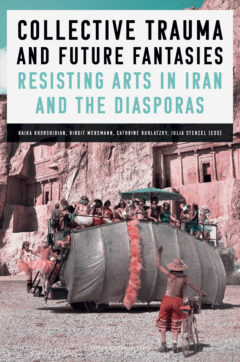 Collective Trauma and Future Fantasies
Raika Khorshidian (Editor), Birgit Mersmann (Editor), Cathrine Bublatzky (Editor), Julia Stenzel (Editor),
November 2026

 Feminists Resisting Gendered Violence
Hemangini Gupta (Editor), Fiona Mackay (Editor), Jan Breckenridge (Editor), Louise Chappell (Editor), Rachna Mehra (Editor), Rukmini Sen (Editor), Mailin Suchting (Editor),
October 2026

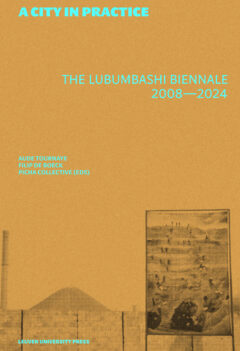 A City in Practice
Aude Tournaye (Editor), Filip De Boeck (Editor), Picha Collective (Editor),
September 2026
 Ecologies of Photography in the American West
Monica Bravo (Editor), Carolin Görgen (Editor),
September 2026
 Cinema in Post-War Belgium
Gertjan Willems (Editor), Bjorn Gabriels (Editor), Bénédicte Rochet (Editor),
May 2026
 Performing Magnetism
Eleonora Paklons (Editor), Kristof Smeyers (Editor), Kurt Vanhoutte (Editor), Hannah Welslau (Editor),
May 2026
 Jean Katambayi Mukendi
Johannes Muselaers (Editor), Stéphane Symons (Editor), Anne-Claire Schmitz (Editor), Emma Enderby (Editor),
April 2026
 Nomadic Camera
Burcu Dogramaci (Editor), Winfried Gerling (Editor), Jens Jäger (Editor), Birgit Mersmann (Editor),
March 2026
 Comics and the Global South
Andrea Aramburú (Editor), Dibyadyuti Roy (Editor), Joe Sutliff Sanders (Editor),
February 2026
 Entangled Art Histories
Valérie Mavridorakis (Editor), Alexander Streitberger (Editor), Hilde Van Gelder (Editor), Erik Verhagen (Editor),
October 2025
 The Visionary Art of Franco-Belgian Comics, 1930s to 1960s
Hugo Frey (Editor), Maaheen Ahmed (Editor),
September 2025
 Violence and Trauma in Contemporary Performance
Sofie de Smet (Editor), Marieke Breyne (Editor), Pedzisai Maedza (Editor), Christel Stalpaert (Editor),
May 2025