

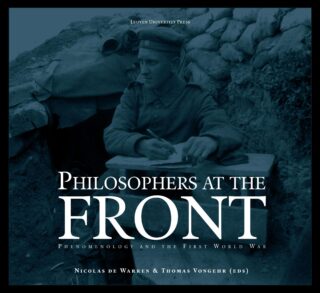
Philosophers at the Front
Phenomenology and the First World War
Nicolas de Warren (Editor), Thomas Vongehr (Editor),
An exceptional collection of letters, postcards, original writings, and photographs
The First World War witnessed an unprecedented mobilization of philosophers and their families: as soldiers at the front; as public figures on the home front; as nurses in field hospitals; as mothers and wives; as sons and fathers. In Germany, the war irrupted in the midst of the rapid growth of Edmund Husserl’s phenomenological movement – widely considered one of the most significant philosophical movements in twentieth century thought. Philosophers at the Front offers a documentary history of phenomenology in the First World War. Through an exceptional collection of primary source materials (letters, postcards, original writings, photographs) from the Husserl Archives in Leuven, the Bayerische Staatsbibliothek, and the Archives of the University of Göttingen, the complex narratives of how the war affected the lives and thought of central figures in the phenomenological movement are charted. Key figures such as Edmund Husserl, his sons Wolfgang and Gerhart, Max Scheler, Edith Stein, Adolf Reinach, Martin Heidegger, and others are included in this collection of materials.
The volume includes reproductions of original material, as well as German transcription of all texts and their English translation.
Philosophers at the Front
Chronology of Significant Dates
The Husserl Family
Edmund Husserl (1859-1938)
Malvine Husserl (1860-1950)
The Husserls in Time of War
Elisabeth („Elli“) Husserl (1892-1981)
Gerhart Husserl (1893-1973)
Wolfgang Husserl (1895-1916)
Documents from the War
Letters of Condolence
Philosophers in War
The “Göttingen Philosophical Society”
Winthrop P. Bell (1884-1965)
Hedwig Conrad-Martius (1888-1966)
Theodor Conrad (1881-1969)
Johannes Daubert (1877-1947)
Moritz Geiger (1880-1937)
Erich von Gündell (1854-1924)
Martin Heidegger (1889-1976)
Gustav Hübener (1889-1941)
Fritz Kaufmann (1891-1958)
Kurt Lewin (1890-1947)
Hans Lipps (1889-1941)
Karl Löwith (1897-1973)
Dietrich Mahnke (1884-1939)
Arnold Metzger (1892-1974)
Friedrich Neumann (1889-1978)
Max Scheler (1874-1928)
Edith Stein (1891-1942)
The Fallen Ones
Rudolf Clemens (1890-1914)
Waldemar Conrad (1878-1915)
Fritz Frankfurther (1889-1914)
Emil Lask (1875-1915)
Adolf Reinach (1883-1917)
Heinrich Rickert jr. (1891-1917)
Hermann Ritzel (1880-1915)
Select Bibliography
List of Sources
Index of Names
Colophon
This is a remarkable book. The curatorial and editorial strategy deployed does not seek to fuse these materials into some overarching narrative or explanation, but lets them speak for themselves, without any undue expectation that what they say will make complete sense. The book instead collects the fragmentary, archival remains of a group of individuals grappling with the impact of a disaster that took years to unfold, and in which much remained misunderstood, unspoken, and undecided, both during and after. Anyone seeking to better understand the philosophical legacy of classical phenomenology in light of the historical context of the First World War will find in this volume an invaluable resource.James Dodd, Notre
Dame Philosophical Reviews, 2019.04.26
Der Band ist ein opulentes Lesebuch, das zum Weiterlesen und Forschen anstiftet und einen guten Einblick in die Lebens‑ und Gedankenwelt der akademischen Kriegsteilnehmer und ihrer Lehrer gibt.Peter Hoeres, Militärgeschichtliche Zeitschrift, 78/2 (2019): 521–523, https://doi.org/10.1515/mgzs-2019-0094
The present volume consists of an impressive and captivating selection of documents pertaining to the phenomenologists’ intellectual and personal involvements in the Great War, with a special focus on Edmund Husserl and his family (pp. 15–115), as well as on phenomenologists killed on the battlefields (pp. 231–275). It also takes into account figures not customarily associated with phenomenology (e.g., Emil Lask, Kurt Lewin). […] Thereby the volume not only paints a balanced and comprehensive historical picture for the general public and scholarly audiences, but it also contains several gems even for specialists deeply entrenched in the historiography of phenomenology. […] The collection by De Warren and Vongehr is so compelling and illuminating that the book makes one want more of it […]In any case, de Warren’s and Vongehr’s exemplary achievement of documenting phenomenology’s involvement in the Great War not only constitutes a valuable collection of historical sources but is also thought-provoking.
Varga, P.A. Husserl Stud (2019). https://doi.org/10.1007/s10743-019-09259-1
Het fraai uitgegeven en rijkelijk geïllustreerde boek leest als een 'who’s who' van de fenomenologie, want het bevat brieven, postkaarten en manuscripten van de hand van onder meer Edmund Husserl en zijn familieleden, Martin Heidegger, Max Scheler, Edith Stein, Fritz Kaufmann, Karl Löwith en Arnold Metzger. Het gaat als het ware om rechtstreekse verslaggeving uit de loopgraven en de hospitalen, en van bij de achterblijvers thuis. De Warren en Vongehr presenteren hun materiaal zonder veel uitleg en context. [...] De aanpak van De Warren en Vongehr heeft ook zijn voordelen. Door niet op zoek te gaan naar het grote verhaal, maar te presenteren wat de betrokkenen dachten en schreven op het moment zelf, krijg je als het ware een barometer in handen waarmee je de stemming onder de fenomenologen (en de intelligentsia in het algemeen) op een welbepaald ogenblik kunt peilen.Toon Horsten, Knack nr 32, 8 augustus 2018
In dit prachtig vormgegeven boek zijn unieke documenten verzameld die het leven van Edmund Husserl en zijn familie, vrienden en studenten weergeven ten tijde van de Eerste Wereldoorlog. In het boek wordt duidelijk hoeveel impact deze oorlog had op het leven van Husserl en zijn omgeving en hoeveel jonge mensen sneuvelden in de strijd. [...] Het boek is een bundeling van brieven, briefkaarten en manuscripten die op unieke wijze inzicht geven in de enorme impact die de oorlog had op het academische leven en het persoonlijke leven van Husserl en zijn omgeving."
Martine Berenpas, Tijdschrift voor Filosofie, 80/2018, doi: 10.2143/TVF.80.3.3285689
Frequently Asked Questions
What is "Philosophers at the Front" about?
An exceptional collection of letters, postcards, original writings, and photographs
The First World War witnessed an unprecedented mobilization of philosophers and their families: as soldiers at the front; as public figures on the home front; as nurses in field hospitals; as mothers and wives; as sons and fathers. In Germany, the war irrupted in the midst of the rapid growth of Edmund Husserl's phenomenological movement – widely considered one of the most significant philosophical movements in twentieth century thought. Philosophers at the Front offers a documentary history of phenomenology in the First World War. Through an exceptional collection of primary source materials (letters, postcards, original writings, photographs) from the Husserl Archives in Leuven, the Bayerische Staatsbibliothek, and the Archives of the University of Göttingen, the complex narratives of how the war affected the lives and thought of central figures in the phenomenological movement are charted. Key figures such as Edmund Husserl, his sons Wolfgang and Gerhart, Max Scheler, Edith Stein, Adolf Reinach, Martin Heidegger, and others are included in this collection of materials.
The volume includes reproductions of original material, as well as German transcription of all texts and their English translation.
Who edited "Philosophers at the Front"?
"Philosophers at the Front" was edited by Nicolas de Warren and Thomas Vongehr.
Nicolas de Warren is Associate Professor of Philosophy at the Pennsylvania State University and Guest Professor of Philosophy at KU Leuven.
Thomas Vongehr studied philosophy in Munich and obtained his PhD from Ludwig-Maximilians-Universität Munich in 1995. Since 2002, he is assistant at the Husserl Archives at KU Leuven.
What is the Table of Contents for "Philosophers at the Front"?
Philosophers at the Front
Chronology of Significant Dates
The Husserl Family
Edmund Husserl (1859-1938)
Malvine Husserl (1860-1950)
The Husserls in Time of War
Elisabeth („Elli“) Husserl (1892-1981)
Gerhart Husserl (1893-1973)
Wolfgang Husserl (1895-1916)
Documents from the War
Letters of Condolence
Philosophers in War
The “Göttingen Philosophical Society”
Winthrop P. Bell (1884-1965)
Hedwig Conrad-Martius (1888-1966)
Theodor Conrad (1881-1969)
Johannes Daubert (1877-1947)
Moritz Geiger (1880-1937)
Erich von Gündell (1854-1924)
Martin Heidegger (1889-1976)
Gustav Hübener (1889-1941)
Fritz Kaufmann (1891-1958)
Kurt Lewin (1890-1947)
Hans Lipps (1889-1941)
Karl Löwith (1897-1973)
Dietrich Mahnke (1884-1939)
Arnold Metzger (1892-1974)
Friedrich Neumann (1889-1978)
Max Scheler (1874-1928)
Edith Stein (1891-1942)
The Fallen Ones
Rudolf Clemens (1890-1914)
Waldemar Conrad (1878-1915)
Fritz Frankfurther (1889-1914)
Emil Lask (1875-1915)
Adolf Reinach (1883-1917)
Heinrich Rickert jr. (1891-1917)
Hermann Ritzel (1880-1915)
Select Bibliography
List of Sources
Index of Names
Colophon
Related titles
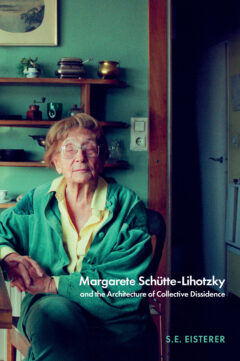 Margarete Schütte-Lihotzky and the Architecture of Collective Dissidence, 1918–1989
S.E. Eisterer (Author),
April 2027
 Orality and Scribal Culture in the High Middle Ages
Timothy B. Noone (Author), Mark J. Clark (Author),
November 2026
 Toekomstdromen
Maarten Van Dijck (Editor), Gerrit Verhoeven (Editor), Hans Cools (Editor),
November 2026
 Summa (Quaestiones ordinariae) art. LXXIII – LXXV
Henry of Ghent (Author), Gordon Wilson (Editor), Juan Carlos Flores (Editor),
September 2026
 German–Rapanui Entanglements
Cristián Moreno Pakarati (Editor), Diego Muñoz (Editor), Philipp Schorch (Editor),
August 2026

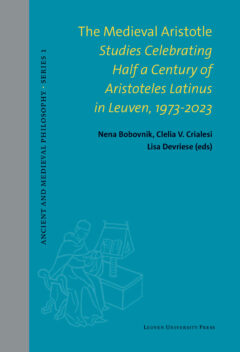 The Medieval Aristotle
Nena Bobovnik (Editor), Clelia V. Crialesi (Editor), Lisa Devriese (Editor),
August 2026
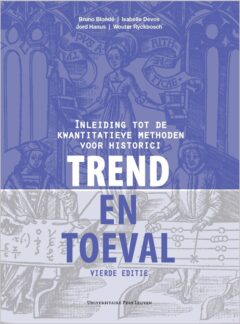 Trend en toeval – vierde editie
Bruno Blondé (Author), Isabelle Devos (Author), Jord Hanus (Author), Wouter Ryckbosch (Author),
August 2026
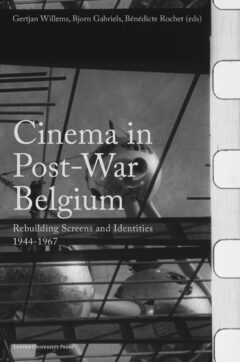 Cinema in Post-War Belgium
Gertjan Willems (Editor), Bjorn Gabriels (Editor), Bénédicte Rochet (Editor),
May 2026
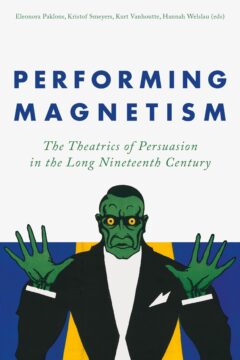 Performing Magnetism
Eleonora Paklons (Editor), Kristof Smeyers (Editor), Kurt Vanhoutte (Editor), Hannah Welslau (Editor),
May 2026
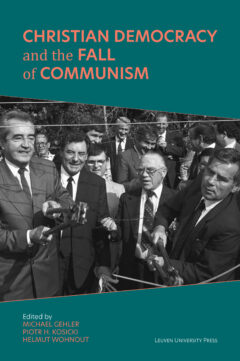 Christian Democracy and the Fall of Communism
Michael Gehler (Editor), Piotr H. Kosicki (Editor), Helmut Wohnout (Editor),
April 2026
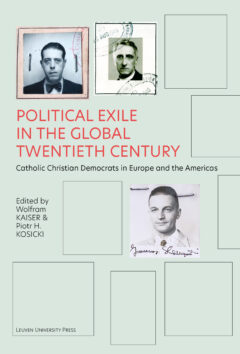 Political Exile in the Global Twentieth Century
Wolfram Kaiser (Editor), Piotr H. Kosicki (Editor),
April 2026
 Brusselse plaatsnamen
Iadine Degryse (Editor), Benjamin Wayens (Editor), Chantal Kesteloot (Editor), Dennis De Vriese (Editor), Matthijs Degraeve (Editor),
April 2026
 Cartographies of Catastrophes
Laura Demeter (Editor), Carmen M. Enss (Editor), Piotr Kisiel (Editor), Carol Ludwig (Editor),
February 2026