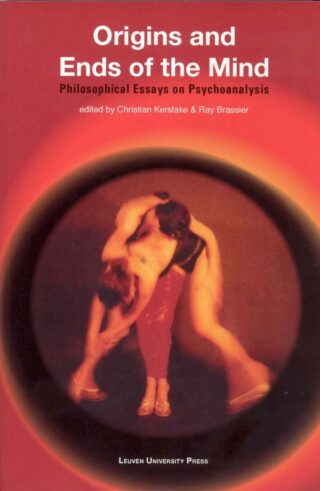
Psychoanalysis claims that the individual human mind is structured by its childhood relationships with its parents. But the theory of attachment, evolutionary psychology and contemporary philosophy of mind have all recently re-introduced new dimensions of innateness into mental development and pathology. If attachment is an instinct, then what is the psychological status of the child’s relation to the mother? If the mind is in part a product of evolution, then how far down do the inhibitory mechanisms of the mind go? If the mind of the child is shaped by their encounter with a set of prohibitions, how, in the light of contemporary ‘cognitive science’ and philosophy of mind, can the child be conceived as ‘taking on’ a rule? How is the construction of the mind related to the normative ends of cognitive experience? Today, it is Lacanian psychoanalysis which most vigorously defends psychoanalytic theory and practice from the encroachment of the biological and ‘cognitive’ sciences. But a paradigm shift nevertheless appears to be underway, in which the classical psychoanalytic theories about the Oedipus complex, primary and secondary repression, sexual difference and psychosexuality, the role of symbols,etc, are being dismantled and reintegrated into a new synthesis of biological and psychological theories. In this collection of theoretical essays by philosophers and psychoanalysts, encounters are brought about between Freudian and Lacanian psychoanalysis on the one hand, and attachment theory, evolutionary psychology and philosophy of mind on the other.
Part 1
Origin and End:
Relations between Psychic Origins and Psychic Normativity
The Missing Link between Psychoanalysis and Attachment Theory: Michael Balint’s New Beginning
Philippe van Haute
Quasi-beliefs and Crazy Beliefs: Subdoxastic States and the ‘Special Characteristics’ of the Unconscious
Brian Garvey
Paradoxes of Normativity in Lacanian Psychoanalysis.
Or: Is Castration Necessary?
Christian Kerslake
Lacan and ethics: the Ends of Analysis and the Production of the Subject
Philip Derbyshire
Part 2
Psychoanalysis and Evolution
The Ultimate Causes of Paranoia: a Cross-Pathological and Psychodynamic Approach
Andreas De Block
Reinterpreting Freud’s Genealogy of Culture
Tinneke Beeckman
The Thanatosis of Enlightenment
Ray Brassier Part 3
Philosophy and the Psychosexual Subject
Poetic Pleasure, Psychosis, and Perversion: Freud on Fore-pleasure
Thomas Geyskens
The Origins and Ends of ‘Sex’
Stella Sandford
Love as Ontology: Psychoanalysis against Philosophy
Justin Clemens
Psychoanalysis: A Non-Ontology of the Human
Marc de Kesel
Frequently Asked Questions
What is "Origins and Ends of the Mind" about?
Psychoanalysis claims that the individual human mind is structured by its childhood relationships with its parents. But the theory of attachment, evolutionary psychology and contemporary philosophy of mind have all recently re-introduced new dimensions of innateness into mental development and pathology. If attachment is an instinct, then what is the psychological status of the child's relation to the mother? If the mind is in part a product of evolution, then how far down do the inhibitory mechanisms of the mind go? If the mind of the child is shaped by their encounter with a set of prohibitions, how, in the light of contemporary 'cognitive science' and philosophy of mind, can the child be conceived as 'taking on' a rule? How is the construction of the mind related to the normative ends of cognitive experience? Today, it is Lacanian psychoanalysis which most vigorously defends psychoanalytic theory and practice from the encroachment of the biological and 'cognitive' sciences. But a paradigm shift nevertheless appears to be underway, in which the classical psychoanalytic theories about the Oedipus complex, primary and secondary repression, sexual difference and psychosexuality, the role of symbols,etc, are being dismantled and reintegrated into a new synthesis of biological and psychological theories. In this collection of theoretical essays by philosophers and psychoanalysts, encounters are brought about between Freudian and Lacanian psychoanalysis on the one hand, and attachment theory, evolutionary psychology and philosophy of mind on the other.
Who edited "Origins and Ends of the Mind"?
"Origins and Ends of the Mind" was edited by Ray Brassier and Christian Kerslake.
Ray Brassier is Research Fellow at the Centre for Research in Modern European Philosophy at Middlesex University (London, UK).
Christian Kerslake is Research Fellow at the Centre for Research in Modern European Philosophy at Middlesex University (London, UK)
Is "Origins and Ends of the Mind" part of a series?
Yes, "Origins and Ends of the Mind" is part of the "Figures of the Unconscious" series. It's book 7 in the series.
In collaboration with the International Society for Psychoanalysis and Philosophy (SIPP-ISPP).


The peer-reviewed book series Figures of the Unconscious was founded in 2001 and provides a platform for exchange at the intersection of philosophy and psychoanalysis. Psychoanalysis occupies a crucial position within contemporary philosophical thinking and many analysts are influenced by philosophical approaches.
Both philosophy and psychoanalysis are concerned with the nature of the subject, questions of knowledge and epistemology, sexuality, life and death, ethical issues, alterity, and the subject’s manifold relationships to the other - to other human and non-human beings and to its environment.
We welcome manuscripts in the areas and at the intersections of
- the history of psychoanalysis and Freudian thought
- the exploration of psychoanalytic concepts and the development of theories
- the research and development of the psychoanalytic movement
- psychoanalytic and philosophical concepts and ideas
- psychoanalysis, gender and queer studies
- interdisciplinary approaches that combine psychoanalysis with other scientific disciplines
- current developments in psychoanalytic approaches
- ethical approaches in psychoanalysis
- epistemological debates
Editors-in-Chief
Beatriz Santos (Université de Paris)
Herman Westerink (Radboud University)
Esther Hutfless (Sigmund Freud University Linz)
Editorial board
Jeff Bloechl (Boston College)
Advisory Board
Jozef Corveleyn (KU Leuven)
Monique David-Ménard (Université de Paris)
Rodrigo De La Fabián (Universidad Diego Portales, Santiago de Chile)
Jens De Vleminck (Leuven)
Eran Dorfman (University of Tel Aviv)
Laurie Laufer (Université de Paris)
Elissa Marder (Emory University, Atlanta)
Claire Nioche (Université Paris XIII)
Vladimir Safatle (Universidade de São Paulo)
Charles Shepherdson (State University of New York at Albany)
Guillaume Silbertin Blanc (Université Paris 8)
Raluca Soreanu (University of Essex)
Celine Surprenant (Paris)
Antônio Teixeira (Universidade Federal de Minas Gerais)
Johan Van Der Walt (University of Luxemburg)
Wilfried Ver Eecke (Georgetown University)
Proposals
The board accepts manuscripts for review from both members and non-members of the SIPP-ISPP. These can be either monographs or edited volumes, provided they align with the aims and scope of the series.
Proposals and enquiries can be sent to the series editors-in-chief.
Please make use of the submission form to present your manuscript or proposal to our board.
Authors interested in Open Access can consult the available funding options.
Links & Resources
What is the Table of Contents for "Origins and Ends of the Mind"?
Part 1
Origin and End:
Relations between Psychic Origins and Psychic Normativity
The Missing Link between Psychoanalysis and Attachment Theory: Michael Balint's New Beginning
Philippe van Haute
Quasi-beliefs and Crazy Beliefs: Subdoxastic States and the 'Special Characteristics' of the Unconscious
Brian Garvey
Paradoxes of Normativity in Lacanian Psychoanalysis.
Or: Is Castration Necessary?
Christian Kerslake
Lacan and ethics: the Ends of Analysis and the Production of the Subject
Philip Derbyshire
Part 2
Psychoanalysis and Evolution
The Ultimate Causes of Paranoia: a Cross-Pathological and Psychodynamic Approach
Andreas De Block
Reinterpreting Freud's Genealogy of Culture
Tinneke Beeckman
The Thanatosis of Enlightenment
Ray Brassier Part 3
Philosophy and the Psychosexual Subject
Poetic Pleasure, Psychosis, and Perversion: Freud on Fore-pleasure
Thomas Geyskens
The Origins and Ends of 'Sex'
Stella Sandford
Love as Ontology: Psychoanalysis against Philosophy
Justin Clemens
Psychoanalysis: A Non-Ontology of the Human
Marc de Kesel
What is the DOI for "Origins and Ends of the Mind"?
The Digital Object Identifier (DOI) for "Origins and Ends of the Mind" is 10.11116/9789461660374.
Related titles

 Orality and Scribal Culture in the High Middle Ages
Timothy B. Noone (Author), Mark J. Clark (Author),
November 2026
 Psychoanalysis on Borders, Limits and Beyond
Yianna Ioannou (Editor), Izzy Powis (Editor), Sinziana Ravini (Editor), Léa Silveira (Editor), Jamieson Webster (Editor),
November 2026
 Summa (Quaestiones ordinariae) art. LXXIII – LXXV
Henry of Ghent (Author), Gordon Wilson (Editor), Juan Carlos Flores (Editor),
September 2026
 The Medieval Aristotle
Nena Bobovnik (Editor), Clelia V. Crialesi (Editor), Lisa Devriese (Editor),
August 2026

 Thomas Aquinas and Hervaeus Natalis on Concepts and Intentional Objects
Fabrizio Amerini (Author),
February 2026

 Seduction, Drive and Repetition
Herman Westerink (Author), Philippe Van Haute (Author),
September 2025

 Thoughts for the Times on Groups and Masses
Daniela Finzi (Editor), Jeanne Wolff Bernstein (Editor),
January 2025
 Epicureanism and Scientific Debates. Epicurean Tradition and its Ancient Reception
Francesca Masi (Editor), Pierre-Marie Morel (Editor), Francesco Verde (Editor),
January 2025
 Towards the Limits of Freudian Thinking
Herman Westerink (Editor), Jenny Willner (Editor), Philippe Van Haute (Editor),
August 2024


 Quaestiones de divinis praedicamentis XXVIII-XXXII
James of Viterbo (Author), Mark D. Gossiaux (Editor), Christopher D. Schabel (Editor),
June 2024
 Truth and Suffering
Paulo Beer (Author), Nelson da Silva Júnior (Preface by), Renata Takatu (Translator),
March 2024
 Summa (Quaestiones ordinariae) art. LXIII-LXVII
Henry of Ghent (Author), Gordon Wilson (Editor), Girard Etzkorn (Editor), Bernd Goehring (Editor), Linda N. Etzkorn (Assisted by),
February 2024
 Epicureanism and Scientific Debates. Antiquity and Late Reception
Francesca Masi (Editor), Pierre-Marie Morel (Editor), Francesco Verde (Editor),
August 2023