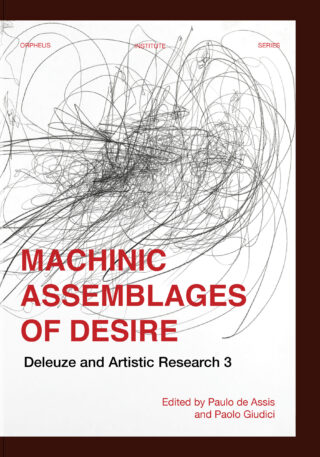
Machinic Assemblages of Desire
Deleuze and Artistic Research 3
Paulo de Assis (Editor), Paolo Giudici (Editor),
Series: Orpheus Institute Series
Category: Artistic Practice, Music
Language: English
ISBN: 9789462702547
Publication date: March 1, 2021
€35.00 (including 6% VAT)
Buy NowNumber of pages: 466
Size: 285 x 195 x 40 mm
Number of illustrations: 120

Stock item: 140590
Standard delivery time for print books:
For Belgium: 5 to 8 working days
For EU: 2 to 3 weeks
For other countries: 4 to 5 weeks
Series: Orpheus Institute Series
Category: Artistic Practice, Music
Language: English
ISBN: 9789461663603
Publication date: March 1, 2021
€52.00 (including 6% VAT)
Buy NowNumber of pages: 466
Number of illustrations: 120
More volumes on ‘Deleuze and Artistic Research’:
Exploring “assemblage theory” in relation to the arts and to artistic research
The concept of assemblage has emerged in recent decades as a central tool for describing, analysing, and transforming dynamic systems in a variety of disciplines. Coined by Deleuze and Guattari in relation to different fields of knowledge, human practices, and nonhuman arrangements, “assemblage” is variously applied today in the arts, philosophy, and human and social sciences, forming links not only between disciplines but also between critical thought and artistic practice. Machinic Assemblages focuses on the concept’s uses, transpositions, and appropriations in the arts, bringing together the voices of artists and philosophers that have been working on and with this topic for many years with those of emerging scholar-practitioners. The volume embraces exciting new and reconceived artistic practices that discuss and challenge existing assemblages, propose new practices within given assemblages, and seek to invent totally unprecedented assemblages.
Contributors: Gareth Abrahams, Burcu Baykan, Ian Buchanan, Edward Campbell, Iain Campbell, Rogério Luiz Costa, Annita Costa Malufe, Paul Dolan, Lilija Duobliene, Vanessa Farfán, Silvio Ferraz, José Gil, Barbara Glowczewski, Christoph Hubatschke, jan jagodzinski, Niall Dermot Kennedy, George E. Lewis, Hsiu-ju Stacy Lo, Clara Maïda, Thomas Nail, Tero Nauha, Alex Nowitz, Morgan O’Hara, Yota Passia, Peter Pál Pelbart, Panagiotis Roupas, Anne Sauvagnargues, Niamh Schmidtke, Chris Stover, Ron Wigglesworth, Audronė Žukauskaitė
This publication is GPRC-labeled (Guaranteed Peer-Reviewed Content).
Editors’ Preface
Introduction: Assemblage and Artistic Research Paulo de Assis
Cartographic Recording of Discourse: Mapping as an Emergent Rhizomatic Drawing Process Ron Wigglesworth
Part 1: Music
Guattari, Consistency, and Experimental Musical Assemblages Edward Campbell
Musical Interaction in the Tetravalence Chris Stover
Time Music between Lines and Images : Time In-between Silvio Ferraz
Abstract Cartographies and Assemblages of Minimal Sound Units: A “Body-Organon”? Clara Maïda
Sounds Flush with the Real: Mixed Semiotic Strategies in Post-Cagean Musical Experimentalism Iain Campbell
“Is Our Machines Learning Yet?”: Machine Learning’s Challenge to Improvisation and the Aesthetic George E. Lewis
Assemblages of Multivocal and Schizophonic Practices: Unleashing the Machined Voice Alex Nowitz
Travelling with Pēratape: Narrating Poetics of an Assemblage of Recording Guy Dubious
Machining the Bird Lilija Duobliene
Part 2: Art
The Dance José Gil
Kinaesthetics: From Assemblages to Fields of Circulation Thomas Nail
Ghastly Assemblages and Glittery Bodies without Organs in the Sculptures of David Altmejd Burcu Baykan
How to Dance with Robots Christoph Hubatschke
Machines with Organs: Model 5052 Vanessa Farfán
Recalcitrant Temporalities: Heterogeneous Time and the Simulated Image Paul Dolan
The Machinic Desire of Cinema Tero Nauha
Free Indirect Discourse and Assemblages: Literary Procedures in Deleuze and Guattari’s Style Annita Costa Malufe
The Intercessor or Heteronym in Gilles Deleuze and Fernando Pessoa Niall Kennedy
Part 3: Ecosophy
Assemblages, Black Holes, and Territories Ian Buchanan
Planetary Assemblages: From Organic to Inorganic and Beyond Audronė Žukauskaitė
Ethology of Images as Machinic Assemblages Anne Sauvagnargues
The Transversality of Assemblages in Indigenous Australia and Alternative Environmental Struggles in France Barbara Glowczewski
Orquestra Errante: Improvising Assemblages Facing the Totalitarian Assemblage Rogério Luiz Moraes Costa
Subjectification, Desubjectification, Assemblages Peter Pál Pelbart
The Non-art of Tehching Hsieh: Art as Life/Life as Art jan jagodzinski
Decoding Surveillance Assemblages: How to Read Li Zi-Fong’s Lines and Hong Kong’s Eyes Hsiu-ju Stacy Lo
Addressing Problems of Our Capitalist Economies through Artistic Production Niamh Schmidtke
The Milieu and the Territorial Assemblage: Insights from Architecture Gareth Abrahams
Hecate: An Apparatus for Mapping Urban Complexity
Yota Passia and Panagiotis Roupas
Appendix: Live Transmission Morgan O’Hara
Appendix: Online Materials
Notes on Contributors
Index
Frequently Asked Questions
What is "Machinic Assemblages of Desire" about?
More volumes on 'Deleuze and Artistic Research':
Exploring “assemblage theory” in relation to the arts and to artistic research
The concept of assemblage has emerged in recent decades as a central tool for describing, analysing, and transforming dynamic systems in a variety of disciplines. Coined by Deleuze and Guattari in relation to different fields of knowledge, human practices, and nonhuman arrangements, “assemblage” is variously applied today in the arts, philosophy, and human and social sciences, forming links not only between disciplines but also between critical thought and artistic practice. Machinic Assemblages focuses on the concept’s uses, transpositions, and appropriations in the arts, bringing together the voices of artists and philosophers that have been working on and with this topic for many years with those of emerging scholar-practitioners. The volume embraces exciting new and reconceived artistic practices that discuss and challenge existing assemblages, propose new practices within given assemblages, and seek to invent totally unprecedented assemblages.
Contributors: Gareth Abrahams, Burcu Baykan, Ian Buchanan, Edward Campbell, Iain Campbell, Rogério Luiz Costa, Annita Costa Malufe, Paul Dolan, Lilija Duobliene, Vanessa Farfán, Silvio Ferraz, José Gil, Barbara Glowczewski, Christoph Hubatschke, jan jagodzinski, Niall Dermot Kennedy, George E. Lewis, Hsiu-ju Stacy Lo, Clara Maïda, Thomas Nail, Tero Nauha, Alex Nowitz, Morgan O’Hara, Yota Passia, Peter Pál Pelbart, Panagiotis Roupas, Anne Sauvagnargues, Niamh Schmidtke, Chris Stover, Ron Wigglesworth, Audronė Žukauskaitė
This publication is GPRC-labeled (Guaranteed Peer-Reviewed Content).
Who edited "Machinic Assemblages of Desire"?
"Machinic Assemblages of Desire" was edited by Paulo de Assis and Paolo Giudici.
Paulo de Assis is artist researcher (pianist, composer, music philosopher) and research fellow at the Orpheus Institute.
Paolo Giudici is an artist-researcher and associated researcher at the Orpheus Institute.
Is "Machinic Assemblages of Desire" part of a series?
Yes, "Machinic Assemblages of Desire" is part of the "Orpheus Institute Series" series.

Throughout the Orpheus Institute’s various activities there is a clear focus on the development of a new research discipline in the arts, one that addresses questions and topics that are at the heart of musical practice, building on the unique expertise and perspectives of musicians and in constant dialogue with more established research disciplines.
Within this context, the Orpheus Institute launched an international Research Centre in 2007 that acts as a stable constituent within an ever-growing field of enquiry. The Orpheus Research Centre is a place where musical artists can fruitfully conduct individual and collaborative research on issues that are of concern to all involved in artistic practice. It is important that at the centre of the international Orpheus Institute network is a place, a building, a community. As the concepts and methodologies of artistic research in music have evolved, work at Orpheus Institute has found new structures. Since 2012, research has been consolidated into a number of groups focused on specific areas, each led by a principal investigator of substantial international reputation as a practicing musician. The work of Orpheus Institute is disseminated through events, publications and musical performances, and through its active animation of discussion within the sector.
This series of peer-reviewed publications —launched in 2013— encompasses monographs by Research Fellows and associates of the Orpheus Institute, compilations of lectures, texts, and performances from seminars and study days, and edited volumes on topics arising from work at the institute. Research can be presented in digital media as well as printed texts. As a whole, the series is meant to enhance and advance discourse in the field of artistic research in music and to generate future work in this emerging and vital area of study.

Editorial board
William Brooks (Chair, Series Editor), Peter Dejans, Jonathan Impett, Kathleen Coessens, Paulo de Assis, Heike Vermeire, Ed Crooks, Laura Cull, Aurelie Daems
Proposals
Proposals and enquiries can be sent to the series editor William Brooks.
Please make use of the submission form to present your manuscript or proposal to our board.
Authors interested in Open Access can consult the available funding options.
Links & Resources
What is the Table of Contents for "Machinic Assemblages of Desire"?
Editors’ Preface
Introduction: Assemblage and Artistic Research Paulo de Assis
Cartographic Recording of Discourse: Mapping as an Emergent Rhizomatic Drawing Process Ron Wigglesworth
Part 1: Music
Guattari, Consistency, and Experimental Musical Assemblages Edward Campbell
Musical Interaction in the Tetravalence Chris Stover
Time Music between Lines and Images : Time In-between Silvio Ferraz
Abstract Cartographies and Assemblages of Minimal Sound Units: A “Body-Organon”? Clara Maïda
Sounds Flush with the Real: Mixed Semiotic Strategies in Post-Cagean Musical Experimentalism Iain Campbell
“Is Our Machines Learning Yet?”: Machine Learning’s Challenge to Improvisation and the Aesthetic George E. Lewis
Assemblages of Multivocal and Schizophonic Practices: Unleashing the Machined Voice Alex Nowitz
Travelling with Pēratape: Narrating Poetics of an Assemblage of Recording Guy Dubious
Machining the Bird Lilija Duobliene
Part 2: Art
The Dance José Gil
Kinaesthetics: From Assemblages to Fields of Circulation Thomas Nail
Ghastly Assemblages and Glittery Bodies without Organs in the Sculptures of David Altmejd Burcu Baykan
How to Dance with Robots Christoph Hubatschke
Machines with Organs: Model 5052 Vanessa Farfán
Recalcitrant Temporalities: Heterogeneous Time and the Simulated Image Paul Dolan
The Machinic Desire of Cinema Tero Nauha
Free Indirect Discourse and Assemblages: Literary Procedures in Deleuze and Guattari’s Style Annita Costa Malufe
The Intercessor or Heteronym in Gilles Deleuze and Fernando Pessoa Niall Kennedy
Part 3: Ecosophy
Assemblages, Black Holes, and Territories Ian Buchanan
Planetary Assemblages: From Organic to Inorganic and Beyond Audronė Žukauskaitė
Ethology of Images as Machinic Assemblages Anne Sauvagnargues
The Transversality of Assemblages in Indigenous Australia and Alternative Environmental Struggles in France Barbara Glowczewski
Orquestra Errante: Improvising Assemblages Facing the Totalitarian Assemblage Rogério Luiz Moraes Costa
Subjectification, Desubjectification, Assemblages Peter Pál Pelbart
The Non-art of Tehching Hsieh: Art as Life/Life as Art jan jagodzinski
Decoding Surveillance Assemblages: How to Read Li Zi-Fong’s Lines and Hong Kong’s Eyes Hsiu-ju Stacy Lo
Addressing Problems of Our Capitalist Economies through Artistic Production Niamh Schmidtke
The Milieu and the Territorial Assemblage: Insights from Architecture Gareth Abrahams
Hecate: An Apparatus for Mapping Urban Complexity
Yota Passia and Panagiotis Roupas
Appendix: Live Transmission Morgan O’Hara
Appendix: Online Materials
Notes on Contributors
Index
Related titles
 The Book of Requiems, 1815–1900
John Koslovsky (Editor), Steven Vande Moortele (Editor),
December 2026
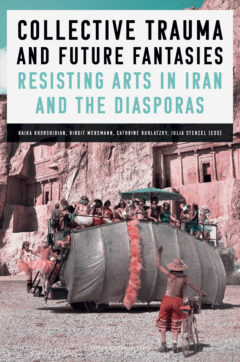 Collective Trauma and Future Fantasies
Raika Khorshidian (Editor), Birgit Mersmann (Editor), Cathrine Bublatzky (Editor), Julia Stenzel (Editor),
November 2026



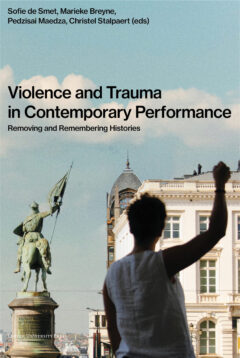 Violence and Trauma in Contemporary Performance
Sofie de Smet (Editor), Marieke Breyne (Editor), Pedzisai Maedza (Editor), Christel Stalpaert (Editor),
May 2025
 Music Theory and Analysis Volume 12 Issue 1, 2025 (Journal Subscription)
John Koslovsky (Editor), Markus Neuwirth (Editor), Derek Remeš (Editor),
May 2025