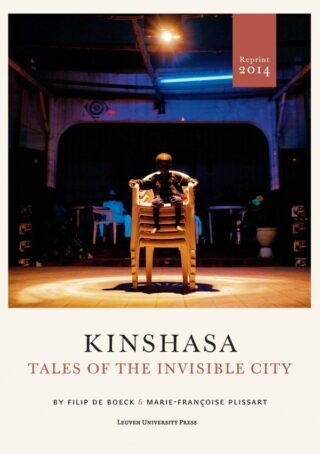
Kinshasa
Tales of the Invisible City
Filip De Boeck (Author), Marie Françoise Plissart (Author),
Als ik één onbekend maar onvoorstelbaar goed boek over of uit de DRC mag aanprijzen, dan ‘Kinshasa. Tales of the Invisible City’ van Filip De Boeck en met foto’s van Marie-Françoise Plissart. De antropologie van Filip De Boeck in dit boek (en in de documentaire Cemetary State) is hedendaags en grootstedelijk. Dat heeft mij helemaal verzoend met wat ooit een zelfingenomen blanke wetenschap was, maar wat in de handen van De Boeck vragen stelt die anders verborgen blijven onder de dominante sociaal-culturele analyse of onder een discours dat even academisch en dus onvermijdelijk ook elitair en dekoloniaal is.‘De onzichtbare stad’ van De Boeck is het Kinshasa waarin hij op zoek gaat naar wat de gewone inwoner beweegt, welke waardesystemen belangrijk zijn, welke inhoud symbolen en dagelijkse activiteiten krijgen. Naar alles wat door gevestigde machten en wetenschappen genegeerd of afgewezen wordt. Waarschuwing: eenmaal je in deze spiegel gekeken hebt, kan je ook nooit meer naar de eigen samenleving kijken met de vanzelfsprekendheid van de gemiddelde betweter op Twitter.
Gie Goris, MO*, juni 2020, 60 jaar onafhankelijkheid van Congo: weinig te vieren, veel te lezen en te leren
Reading African cities into contemporary theory—reprint of a richly illustrated reference work
In their internationally acclaimed publication Kinshasa: Tales of the Invisible City, anthropologist Filip De Boeck and photographer Marie-Françoise Plissart provide a history not only of the physical and visible urban reality that Kinshasa presents today, but also of a second, invisible city as it exists in the mind and imagination of its inhabitants. They bring to light a mirroring reality lurking underneath the surface of the visible world and explore the constant transactions that take place between these two levels in Kinshasa’s urban scape.
With the exhibition that accompanied the release of their Kinshasa book, the authors won a Golden Lion at the 11th International Architecture Bienniale in Venice, 2004.
This beautifully illustrated publication is now again made available. Based on longstanding field research, it provides insight into local social and cultural imaginaries, and thus in the imaginative ways in which local urban subjects continue to make sense of their worlds and invent cultural strategies to cope with the breakdown of urban infrastructure.
PREFACE Reflecting on Reflection through Photography and Text
KINSHASA Tales of the Invisible City and the Second World. An Introduction
INVISIBLE CITIES I The ‘Giant of Kinshasa’, The Story of a Conversion
BEYOND THE GRAVE Memory, Time, Apocalypse and Death in Kinshasa
INVISIBLE CITIES II Omba Shako, The Story of a Street Kid
THE SECOND WORLD Children, the Street and the Occult in Kinshasa
INVISIBLE CITIES III Mado, The Story of a Female Diamond Smuggler
THE POSSIBILITIES OF THE (IM)POSSIBLE
Notes References Index of names Index of illustrations
Filip De Boeck
Filip De Boeck is Professor of Anthropology at KU Leuven, whose research explores urban life, art, and imagination in Central Africa, particularly in the Democratic Republic of Congo.
Marie Françoise Plissart
Marie-Françoise Plissart is a photographer.
This is an important book, extraordinarily rich in ethnographic detail about Kinshasa. Scholars and graduate students will find this book very useful in understanding the urban realities of Kinshasa and more broadly the impact of globalization on African cities.
Fassil Demissie, DePaul University, Chicago, Urban Affairs Review, Volume 42 Number 6, July 2007
Hét standaardwerk over het leven in de hoofdstad echter is de machtige antropologische studie van Filip De Boeck.
David Van Reybrouck, Congo: Een geschiedenis (Bezige bij 2010)
The reference work on living in the capital, however, is the powerful anthropological study of Filip De Boeck.
- David Van Reybrouck (Congo: Een geschiedenis, Bezige bij 2010) about Kinshasa, Tales of the Invisible City
'If we are to advance a more grounded and differentiated understanding of African urban settlements this kind of work is essential. - Edgar Pieterse, Director of the African Centre for Cities, University of Cape Town
'Rich as the book is with passion, imagery, and well-researched stories, it is readably in conversation with, and challenging, western urban theory (whether Harvey, Foucault, Lefebvre, de Certeau, or others), but also with representations of Kinshasa and of the Congo.' - Garth Myers, author of African Cities: Alternative Visions of Urban Theory and Practice, Zed Books, 2011
'Particularly formative work on African cities.' - Sarah Nuttall, Director of Wits Institute for Social and Economic Research
A remarkable research over many years, and an analysis of the Democratic Republic of Congo capital city, into the nature of physical urban reality but also that invisible city of the mind and the imagination and how cultural strategies help overcome the breakdown in the city's infrastructures.
Ian Ritchie's Book List >>>
Les chapitres de ce beau livre, jalonné par les magnifiques photographies de Marie-Françoise Plissart, sont articulés entre eux par la métaphore du miroir qui sert de fil conducteur à l'ouvrage. Le propos de Filip de Boeck, anthropologue à l'Université Catholique de Leuven, se déploie en référence à la fois au roman Les Villes invisibles d'Italo Calvino et à l'essai de Didier Gondola : Villes-miroirs.
Maëline LE LAY, Études littéraires africaines, Numéro 37, 2014
Kinshasa: a 'site of dreams' for contemporary visual artists
De Boeck and Plissart's book, Kinshasa: Tales of the Invisible City combines written and photographic narratives that offer some useful explanations as to why these two (and several other) important Kinois artists concentrate so heavily on the recurring theme of urban utopian futures.
Museum Geographies, September 2014
'Kinshasa: Tales of the Invisible City' is a fascinating and challenging effort to probe the social and cultural complexities of an African metropolis. [...] This book deserves a wide readership among scholars of contemporary African cities. It is beautifully written, and the photographs are stunning.
Jeremy M. Rich (Marywood University), H-Urban (August, 2015)
Frequently Asked Questions
What is "Kinshasa" about?
Reading African cities into contemporary theory—reprint of a richly illustrated reference work
In their internationally acclaimed publication Kinshasa: Tales of the Invisible City, anthropologist Filip De Boeck and photographer Marie-Françoise Plissart provide a history not only of the physical and visible urban reality that Kinshasa presents today, but also of a second, invisible city as it exists in the mind and imagination of its inhabitants. They bring to light a mirroring reality lurking underneath the surface of the visible world and explore the constant transactions that take place between these two levels in Kinshasa’s urban scape.
With the exhibition that accompanied the release of their Kinshasa book, the authors won a Golden Lion at the 11th International Architecture Bienniale in Venice, 2004.
This beautifully illustrated publication is now again made available. Based on longstanding field research, it provides insight into local social and cultural imaginaries, and thus in the imaginative ways in which local urban subjects continue to make sense of their worlds and invent cultural strategies to cope with the breakdown of urban infrastructure.
Who wrote "Kinshasa"?
"Kinshasa" was written by Filip De Boeck and Marie Françoise Plissart.
Filip De Boeck is Professor of Anthropology at KU Leuven, whose research explores urban life, art, and imagination in Central Africa, particularly in the Democratic Republic of Congo.
Marie-Françoise Plissart is a photographer.
What is the Table of Contents for "Kinshasa"?
PREFACE Reflecting on Reflection through Photography and Text
KINSHASA Tales of the Invisible City and the Second World. An Introduction
INVISIBLE CITIES I The 'Giant of Kinshasa', The Story of a Conversion
BEYOND THE GRAVE Memory, Time, Apocalypse and Death in Kinshasa
INVISIBLE CITIES II Omba Shako, The Story of a Street Kid
THE SECOND WORLD Children, the Street and the Occult in Kinshasa
INVISIBLE CITIES III Mado, The Story of a Female Diamond Smuggler
THE POSSIBILITIES OF THE (IM)POSSIBLE
Notes References Index of names Index of illustrations
Related titles
 Margarete Schütte-Lihotzky and the Architecture of Collective Dissidence, 1918–1989
S.E. Eisterer (Author),
April 2027
 Infrastructuring Arrival
Karel Arnaut (Editor), Luce Beeckmans (Editor), Bruno Meeus (Editor),
November 2026

 Feminists Resisting Gendered Violence
Hemangini Gupta (Editor), Fiona Mackay (Editor), Jan Breckenridge (Editor), Louise Chappell (Editor), Rachna Mehra (Editor), Rukmini Sen (Editor), Mailin Suchting (Editor),
October 2026
 A City in Practice
Aude Tournaye (Editor), Filip De Boeck (Editor), Picha Collective (Editor),
September 2026
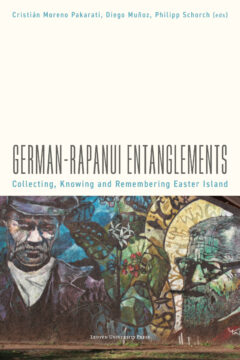 German–Rapanui Entanglements
Cristián Moreno Pakarati (Editor), Diego Muñoz (Editor), Philipp Schorch (Editor),
August 2026
 Jean Katambayi Mukendi
Johannes Muselaers (Editor), Stéphane Symons (Editor), Anne-Claire Schmitz (Editor), Emma Enderby (Editor),
April 2026
 Brusselse plaatsnamen
Iadine Degryse (Editor), Benjamin Wayens (Editor), Chantal Kesteloot (Editor), Dennis De Vriese (Editor), Matthijs Degraeve (Editor),
April 2026
 Cartographies of Catastrophes
Laura Demeter (Editor), Carmen M. Enss (Editor), Piotr Kisiel (Editor), Carol Ludwig (Editor),
February 2026
 Comics and the Global South
Andrea Aramburú (Editor), Dibyadyuti Roy (Editor), Joe Sutliff Sanders (Editor),
February 2026
 Architecture & Feminist Critical Theory
Hilde Heynen (Author), Lucía C. Pérez-Moreno (Editor),
November 2025