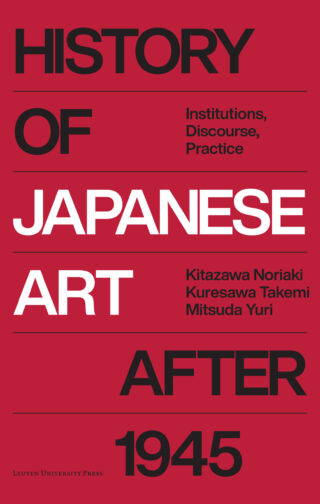
English edition of key essays on Japanese art history
History of Japanese Art after 1945 surveys the development of art in Japan since WWII. The original Japanese work, which has become essential reading for those with an interest in modern and contemporary Japanese art and is a foundational resource for students and researchers, spans a period of 150 years, from the 1850s to the 2010s. Each chapter is dedicated to a specific period and written by a specialist.
The English edition first discusses the formation and evolution of Japanese contemporary art from 1945 to the late 1970s, subsequently deals with the rise of the fine-art museum from the late 1970s to the 1990s, and concludes with an overview of contemporary Japanese art dating from the 1990s to the 2010s.
These three parts are preceded by a new introduction that contextualizes both the original Japanese and the English editions and introduces the reader to the emergence of the concept of art (bijutsu) in modern Japan. This English-language edition provides valuable reading material that offers a deeper insight into contemporary Japanese art.
With an introduction by Kajiya Kenji.
Contributors: Kitazawa Noriaki (editor), Mori Hitoshi (editor), Sato Doushin (editor), Tom Kain (translation editor), Alice Kiwako Ashiwa (translator), Kenneth Masaki Shima (translator), Ariel Acosta (translator), and Sara Sumpter (translator)
Translated from the original Japanese edition published with Tokyo Bijutsu, 2014
In cooperation with Art Platform Japan / The Agency for Cultural Affairs, Government of Japan
Art Platform Japan is an initiative by the Agency for Cultural Affairs, Government of Japan, to maintain the sustainable development of the contemporary art scene in Japan.
Erratum:
p. 28, l. 18‒21
→In 2018, the University of Tokyo Cooperative Association (Co-op) was found to have disposed of Kizuna [Bonds], a painting by Usami Kenji that had hung in the Central Cafeteria of the Hongo Campus for more than forty years, during repairs the previous year.
_____
TRANSLATION CREDITS
NOTES ON THE TRANSLATION
INTRODUCTION TO THE ENGLISH EDITION KAJIYA KENJI
CHAPTER 1.THE FORMATION AND EVOLUTION OF JAPANESE CONTEMPORARY ART [GENDAI BIJUTSU]: 1945 TO THE EARLY 1970S MITSUDA YURI Introduction: The Formation and Evolution of Japanese Contemporary Art Section 1. The Inception of “Contemporary Art”: The 1955 System of Art (1945–54) Section 2. The Era of “Contemporary Art”: Anti-Art (1955–64) Section 3. The Evolution of “Contemporary Art”: Dismantlement and Reincarnation (1965–74) Notes
CHAPTER 2.THE AGE OF THE FINE-ART MUSEUM: THE LATE 1970S TO THE 1990S KITAZAWA NORIAKI Introduction: Institutions and Alternatives Section 1. Fine Art’s “Conservative Revolution” and the New Wave: The Mid-1970s to the Early 1990s Section 2. The Rise of Neo-Pop: The “Modern Art” of the 1990s
CHAPTER 3.THE END OF “ART”: THE 1990S TO THE 2010S KURESAWA TAKEMI Introduction: After the Postmodern—Art after the 1990s Section 1. Formation of New Spaces [Genba] and Institutions [Seido]—The 1990s Section 2. After “Art”: The 2000s to the 2010s Notes
BIBLIOGRAPHY INDEXES
'Anarchy of the Body' is cited in 'History of Japanese Art After 1945', particularly in the third section of the work where Kuresawa Takemi, professor at the Tokyo University of Technology, discusses the postmodern turn of contemporary Japanese art from 1990 to 2010: Kuresawa goes on to list a number of exhibitions and studies that give insight into the sometimes scattered influence of the 1960s on contemporary Japanese art in the 1990s and beyond. KuraDalaiJee’s work is considered here as a 'masterpiece' that deals, not only with the major figures of performance (such as Hi-Red Center), but also with artists and collectives of lesser fame.
Alexandre Taalba, « Chokusetsu kōdō : l’action directe comme méthode artistique au Japon », Critique d’art, 60 | 2023, 80-90, https://journals.openedition.org/critiquedart/104361
Despite this, there is much to be gleaned from History of Art After 1945, just as there is from Image, Fragment, Absence and Anarchy of the Body. Collectively, these new texts represent a significant step forward in the accessibility of modern and contemporary Japanese art history to anglophone academics. Each introduces new ideas, artists, and concepts to a discipline that is still in its infancy in comparison to those of premodern Japanese art or modern Western art. With new publications like these available to readers the world over, volumes which not only present compelling arguments in their own rights but also open the possibility for further research in new and exciting directions, the future of the field looks promising indeed. - Mia Kivel, Art History, Volume 48, Issue 1, February 2025, Pages 207–213, https://doi.org/10.1093/arthis/ulaf006
Frequently Asked Questions
What is "History of Japanese Art after 1945" about?
English edition of key essays on Japanese art history
History of Japanese Art after 1945 surveys the development of art in Japan since WWII. The original Japanese work, which has become essential reading for those with an interest in modern and contemporary Japanese art and is a foundational resource for students and researchers, spans a period of 150 years, from the 1850s to the 2010s. Each chapter is dedicated to a specific period and written by a specialist.
The English edition first discusses the formation and evolution of Japanese contemporary art from 1945 to the late 1970s, subsequently deals with the rise of the fine-art museum from the late 1970s to the 1990s, and concludes with an overview of contemporary Japanese art dating from the 1990s to the 2010s.
These three parts are preceded by a new introduction that contextualizes both the original Japanese and the English editions and introduces the reader to the emergence of the concept of art (bijutsu) in modern Japan. This English-language edition provides valuable reading material that offers a deeper insight into contemporary Japanese art.
With an introduction by Kajiya Kenji.
Contributors: Kitazawa Noriaki (editor), Mori Hitoshi (editor), Sato Doushin (editor), Tom Kain (translation editor), Alice Kiwako Ashiwa (translator), Kenneth Masaki Shima (translator), Ariel Acosta (translator), and Sara Sumpter (translator)
Translated from the original Japanese edition published with Tokyo Bijutsu, 2014
In cooperation with Art Platform Japan / The Agency for Cultural Affairs, Government of Japan
Art Platform Japan is an initiative by the Agency for Cultural Affairs, Government of Japan, to maintain the sustainable development of the contemporary art scene in Japan.
Who wrote "History of Japanese Art after 1945"?
"History of Japanese Art after 1945" was written by Kitazawa Noriaki, Kuresawa Takemi, Mitsuda Yuri and Kajiya Kenji.
Kitazawa Noriaki is guest professor at Musashino Art University in Tokyo.
Kuresawa Takemi is professor at Tokyo University of Technology.
Mitsuda Yuri is professor at Tama Art University in Tokyo.
Kajiya Kenji is professor at The University of Tokyo, and a committee member of Art Platform Japan.
What is the Table of Contents for "History of Japanese Art after 1945"?
Erratum:
p. 28, l. 18‒21
→In 2018, the University of Tokyo Cooperative Association (Co-op) was found to have disposed of Kizuna [Bonds], a painting by Usami Kenji that had hung in the Central Cafeteria of the Hongo Campus for more than forty years, during repairs the previous year.
_____
TRANSLATION CREDITS
NOTES ON THE TRANSLATION
INTRODUCTION TO THE ENGLISH EDITION KAJIYA KENJI
CHAPTER 1.THE FORMATION AND EVOLUTION OF JAPANESE CONTEMPORARY ART [GENDAI BIJUTSU]: 1945 TO THE EARLY 1970S MITSUDA YURI Introduction: The Formation and Evolution of Japanese Contemporary Art Section 1. The Inception of “Contemporary Art”: The 1955 System of Art (1945–54) Section 2. The Era of “Contemporary Art”: Anti-Art (1955–64) Section 3. The Evolution of “Contemporary Art”: Dismantlement and Reincarnation (1965–74) Notes
CHAPTER 2.THE AGE OF THE FINE-ART MUSEUM: THE LATE 1970S TO THE 1990S KITAZAWA NORIAKI Introduction: Institutions and Alternatives Section 1. Fine Art’s “Conservative Revolution” and the New Wave: The Mid-1970s to the Early 1990s Section 2. The Rise of Neo-Pop: The “Modern Art” of the 1990s
CHAPTER 3.THE END OF “ART”: THE 1990S TO THE 2010S KURESAWA TAKEMI Introduction: After the Postmodern—Art after the 1990s Section 1. Formation of New Spaces [Genba] and Institutions [Seido]—The 1990s Section 2. After “Art”: The 2000s to the 2010s Notes
BIBLIOGRAPHY INDEXES
Related titles
 Collective Trauma and Future Fantasies
Raika Khorshidian (Editor), Birgit Mersmann (Editor), Cathrine Bublatzky (Editor), Julia Stenzel (Editor),
November 2026

 Feminists Resisting Gendered Violence
Hemangini Gupta (Editor), Fiona Mackay (Editor), Jan Breckenridge (Editor), Louise Chappell (Editor), Rachna Mehra (Editor), Rukmini Sen (Editor), Mailin Suchting (Editor),
October 2026
 A City in Practice
Aude Tournaye (Editor), Filip De Boeck (Editor), Picha Collective (Editor),
September 2026
 Ecologies of Photography in the American West
Monica Bravo (Editor), Carolin Görgen (Editor),
September 2026
 Jean Katambayi Mukendi
Johannes Muselaers (Editor), Stéphane Symons (Editor), Anne-Claire Schmitz (Editor), Emma Enderby (Editor),
April 2026
 Nomadic Camera
Burcu Dogramaci (Editor), Winfried Gerling (Editor), Jens Jäger (Editor), Birgit Mersmann (Editor),
March 2026
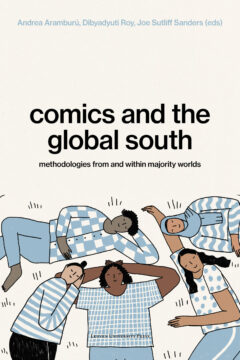 Comics and the Global South
Andrea Aramburú (Editor), Dibyadyuti Roy (Editor), Joe Sutliff Sanders (Editor),
February 2026
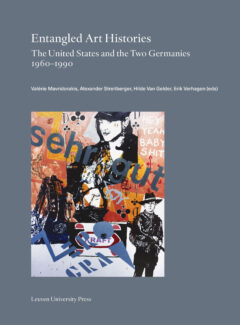 Entangled Art Histories
Valérie Mavridorakis (Editor), Alexander Streitberger (Editor), Hilde Van Gelder (Editor), Erik Verhagen (Editor),
October 2025
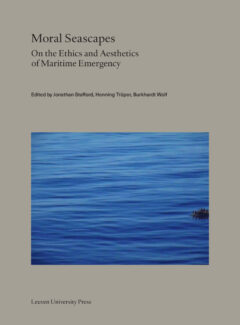 Moral Seascapes
Jonathan Stafford (Editor), Henning Trüper (Editor), Burkhardt Wolf (Editor),
November 2024