

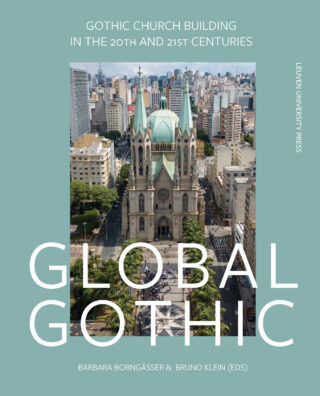
Global Gothic
Gothic Church Buildings in the 20th and 21st Centuries
Barbara Borngässer (Editor), Bruno Klein (Editor),
Series: KADOC-Artes 20
Category: Americas, Architecture and Urban Planning
Language: English
ISBN: 9789462703049
Publication date: February 17, 2022
€35.00 (including 6% VAT)
Buy NowNumber of pages: 248
Size: 280 x 225 x 23 mm
Number of illustrations: 250
Illustrations and other content description:
full colour

Stock item: 146827
Standard delivery time for print books:
For Belgium: 5 to 8 working days
For EU: 2 to 3 weeks
For other countries: 4 to 5 weeks
Gothic style and contemporary architecture worldwide
Although largely overlooked in studies of architectural history, church architecture in a Gothic idiom outlived its 19th century momentum to persist worldwide throughout the 20th century and into the new millennium.
Global Gothic presents a first systematic worldwide understanding of “Gothic” in contemporary architecture, both as a distinct variation and as a competitor to recognized modern styles. The book’s chapters critically discuss Gothic’s various manifestations over the past century, describing and illustrating approaches from Gothic Revival living traditions in the former British Empire and original Gothic appropriation in Latin America to competitions of European builders in former Asian and African colonies. The focus is also on the special appropriations in North America, China and Japan, as well as contemporary solutions that tend to be transnational in style.
With contributions from renowned architecture experts from around the world, Global Gothic provides an overview of this cultural phenomenon and presents a wealth of stunning material, much of it little known. Richly illustrated in full color, it offers an important contribution to colonial and postcolonial global art history and a seldom acknowledged perspective on art history in general.
Contributors: Barbara Borngässer (Technische Universität Dresden), Martín M. Checa-Artasu (Metropolitan Autonomous University, Mexico City), Thomas Coomans (KU Leuven), Pedro Guedes (University of Queensland), Bruno Klein (Technische Universität Dresden), Bettina Marten (Technische Universität Dresden), Olimpia Niglio (Hosei University Tokyo), Peter Scriver (University of Adelaide), Amit Srivastava (University of Adelaide)
This publication is GPRC-labeled (Guaranteed Peer-Reviewed Content).
1 Gothic Going Global About this Book Barbara Borngässer and Bruno Klein
2 A New Old Architecture Global Gothic in the Twentieth and Twenty-First Centuries Bruno Klein
3 Gothic in Europe after the “End” of Neo-Gothic Bruno Klein
4 Tradition in the Age of Progress Notions on Gothic Church Architecture in the United States Bettina Marten
5 Ecclesiastical Gothic in Twentieth- and Twenty-First-Century Canada Bettina Marten
6 Gothic Down Under Barbara Borngässer and Bruno Klein
7 Neo-Gothic in India Autonomy, Fusion, Exuberance Peter Scriver, Amit Srivastava, and Pedro Guedes
8 The Persistence of Neo-Gothic Architecture in Twentieth- and Twenty-First-Century South America Martín M. Checa-Artasu
9 Neo-Gothic Architecture in Mexico from the Porfiriato to the Present Martín M. Checa-Artasu
10 Gótico à brasileira Gothicizing Church Building between Amazonia and Rio Grande do Sul Barbara Borngässer
11 Gothic Architecture in Africa from Colonial to Postcolonial An Attempt Bruno Klein
12 Western, Modern and Postmodern Gothic Churches in Twentieth-Century China: Styles, Identities, and Memories Thomas Coomans
13 Gothic Revival in Japan in the Early Period of the Occidentalizing Experiences between Religious and Civil Architecture Olimpia Niglio
14 Gothic and Event Culture Wedding Chapels Barbara Borngässer
Frequently Asked Questions
What is "Global Gothic" about?
Gothic style and contemporary architecture worldwide
Although largely overlooked in studies of architectural history, church architecture in a Gothic idiom outlived its 19th century momentum to persist worldwide throughout the 20th century and into the new millennium.
Global Gothic presents a first systematic worldwide understanding of "Gothic" in contemporary architecture, both as a distinct variation and as a competitor to recognized modern styles. The book’s chapters critically discuss Gothic’s various manifestations over the past century, describing and illustrating approaches from Gothic Revival living traditions in the former British Empire and original Gothic appropriation in Latin America to competitions of European builders in former Asian and African colonies. The focus is also on the special appropriations in North America, China and Japan, as well as contemporary solutions that tend to be transnational in style.
With contributions from renowned architecture experts from around the world, Global Gothic provides an overview of this cultural phenomenon and presents a wealth of stunning material, much of it little known. Richly illustrated in full color, it offers an important contribution to colonial and postcolonial global art history and a seldom acknowledged perspective on art history in general.
Contributors: Barbara Borngässer (Technische Universität Dresden), Martín M. Checa-Artasu (Metropolitan Autonomous University, Mexico City), Thomas Coomans (KU Leuven), Pedro Guedes (University of Queensland), Bruno Klein (Technische Universität Dresden), Bettina Marten (Technische Universität Dresden), Olimpia Niglio (Hosei University Tokyo), Peter Scriver (University of Adelaide), Amit Srivastava (University of Adelaide)
This publication is GPRC-labeled (Guaranteed Peer-Reviewed Content).
Who edited "Global Gothic"?
"Global Gothic" was edited by Barbara Borngässer and Bruno Klein.
Barbara Borngässer is an art historian, working on late medieval, modern, and contemporary architecture. She is a founding member of the German Carl Justi Association for Cooperation in Art History with Spain, Portugal, and Latin America.
Bruno Klein holds the Chair for Christian Art of Late Antiquity and the Middle Ages at the Technische Universität Dresden and is a member of the Saxon Academy of Sciences. He has authored numerous publications on the historical and social development of art discourses.
Is "Global Gothic" part of a series?
Yes, "Global Gothic" is part of the "KADOC-Artes" series. It's book 20 in the series.
The richly illustrated peer-reviewed book series KADOC Artes offers new insights into the material cultures and legacies of religions in Europe and the world since 1750 from interreligious and transnational perspectives. By means of monographs and edited volumes, the series explores thematic frontiers and embraces innovative methodological approaches in heritage studies. Taken together, KADOC Artes and its companion series KADOC Studies in Religion, Culture and Society represent a diptych featuring the material and immaterial cultures and legacies of religions in Europe and the world from the 18th century onwards.
KADOC ARTES reflects the particular expertise of KADOC – the Interfaculty Documentation and Research Centre on Religion, Culture and Society at KU Leuven – as a heritage institution with particularly rich and diverse documentary holdings, and as an interdisciplinary research center.
KADOC Artes managed by an independent Editorial Board. Books are published in English. The series welcomes monographs and edited volumes.
To submit a book proposal please go to the website of KADOC or consult LUP’s guidelines about submission. The series welcomes monographs and edited volumes. Book proposals may relate to, for example, the representation of religious diversity and the politicization of religious heritage.
All book proposals and manuscripts are subject to double blind peer review involving at least one external reviewer (proposals) or at least two (manuscripts). The editors strive towards completing the review of proposals within two months and of complete manuscripts within five months after submission.


Editorial board
Elena Arigita Maza (Universidad de Granada)
Florian Bock (Ruhr Universität Bochum)
Timothy Brittain‐Catlin (University of Cambridge)
James Chappel (Duke University)
Kim Christiaens (KADOC-KU Leuven)
Kathleen James-Chakraborty (University College Dublin)
James Kennedy (Utrecht University)
Franziska Metzger (PH Luzern)
Patrick Pasture (MoSa‐KU Leuven) - chairman
Isabelle Saint‐Martin (EPHE Paris)
Thijl Sunier (VU Amsterdam)
Árpád von Klimó (Catholic University of America)
Veerle De Laet (Leuven University Press)
Peter Heyrman (KADOC-KU Leuven) - secretary
Proposals
Proposals and enquiries can be sent to Peter Heyrman.
Please make use of the submission form to present your manuscript or proposal to our board.
Authors interested in Open Access can consult the available funding options.
Links & Resources
What is the Table of Contents for "Global Gothic"?
1 Gothic Going Global About this Book Barbara Borngässer and Bruno Klein
2 A New Old Architecture Global Gothic in the Twentieth and Twenty-First Centuries Bruno Klein
3 Gothic in Europe after the “End” of Neo-Gothic Bruno Klein
4 Tradition in the Age of Progress Notions on Gothic Church Architecture in the United States Bettina Marten
5 Ecclesiastical Gothic in Twentieth- and Twenty-First-Century Canada Bettina Marten
6 Gothic Down Under Barbara Borngässer and Bruno Klein
7 Neo-Gothic in India Autonomy, Fusion, Exuberance Peter Scriver, Amit Srivastava, and Pedro Guedes
8 The Persistence of Neo-Gothic Architecture in Twentieth- and Twenty-First-Century South America Martín M. Checa-Artasu
9 Neo-Gothic Architecture in Mexico from the Porfiriato to the Present Martín M. Checa-Artasu
10 Gótico à brasileira Gothicizing Church Building between Amazonia and Rio Grande do Sul Barbara Borngässer
11 Gothic Architecture in Africa from Colonial to Postcolonial An Attempt Bruno Klein
12 Western, Modern and Postmodern Gothic Churches in Twentieth-Century China: Styles, Identities, and Memories Thomas Coomans
13 Gothic Revival in Japan in the Early Period of the Occidentalizing Experiences between Religious and Civil Architecture Olimpia Niglio
14 Gothic and Event Culture Wedding Chapels Barbara Borngässer
Related titles
 Margarete Schütte-Lihotzky and the Architecture of Collective Dissidence, 1918–1989
S.E. Eisterer (Author),
April 2027
 The Romero Memory
Judith Gruber (Editor), Jonas Van Mulder (Editor), Kim Christiaens (Editor), Veerle Draulans (Editor), Jacques Haers (Editor), Joren Janssens (Editor), Stephan Parmentier (Editor),
December 2026

 Infrastructuring Arrival
Karel Arnaut (Editor), Luce Beeckmans (Editor), Bruno Meeus (Editor),
November 2026

 Political Exile in the Global Twentieth Century
Wolfram Kaiser (Editor), Piotr H. Kosicki (Editor),
April 2026
 Cartographies of Catastrophes
Laura Demeter (Editor), Carmen M. Enss (Editor), Piotr Kisiel (Editor), Carol Ludwig (Editor),
February 2026
 Comics and the Global South
Andrea Aramburú (Editor), Dibyadyuti Roy (Editor), Joe Sutliff Sanders (Editor),
February 2026

 Architecture & Feminist Critical Theory
Hilde Heynen (Author), Lucía C. Pérez-Moreno (Editor),
November 2025
 Integration Otherwise Inspiration Kit
Luce Beeckmans (Author), Dounia Salamé (Author), Martina Bovo (Author), Mary Hogan (Author),
June 2025
 Cross-Cultural Heritage
Jonas Van Mulder (Editor), Thomas Coomans (Editor), Dries Vanysacker (Editor),
April 2025
 Bronnengids Interieurontwerp België, 1945-2000
Benoît Vandevoort (Editor), Sam Vanhee (Editor), Fredie Floré (Editor), Els De Vos (Editor), Tine Poot (Editor),
April 2025
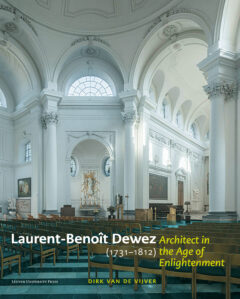 Laurent-Benoît Dewez (1731–1812), Architect in the Age of Enlightenment
Dirk Van de Vijver (Author),
February 2025
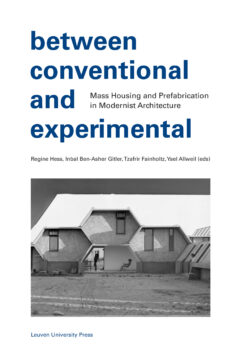 Between Conventional and Experimental
Regine Hess (Editor), Inbal Ben-Asher Gitler (Editor), Tzafrir Fainholtz (Editor), Yael Allweil (Editor),
December 2024