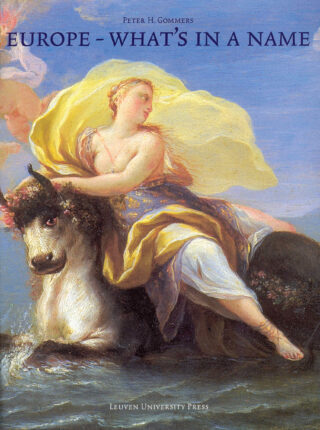
Europe – What’s in a name?
Peter H. Gommers (Author),
Europe is a word that is almost daily on our lips. But how far do we have to go back in order to find the origins of its name?
The first part of this beautiful illustrated book traces the geographical and mythological basis of Europe’s name.
Who came up with the idea to distinguish the world in continents with proper names? The search will bring the reader back to the early history of mankind. How did the ancient Egyptians see the world and populations around them? Where did the Hebrews get the idea to split the world in three? And what was the world-picture in ancient Greece, laid down in geographic treatises and fragments?
Where did the name ‘Europe’ originate from? Could it be from a person, either mortal or divine? In ancient Greek literature the name ‘Europa’ appears quite frequently for Greek goddesses and Greek women. Strangely enough, the best known Europa myth concerns a Phoenician princess, loved by the Greek god Zeus. Many mythographs doubt the Asian descent of the Phoenician Europa. Is her real origin to be located on mainland Greece? How can the contradicting Greek myths be interpreted, and was the name universally accepted as the name for the continent?
In the second part of this book, the author tells the amazing story of how the Arts have treated the Europa myths for almost three millennia. He shows the extraordinary influence of the personification of the geographic continent Europe on literature, music, sculpture, painting, tapestry and other applied arts.
All this clearly demonstrates the vivid interest in Europe for the subject throughout the ages and illustrates, according to Karel van Miert in its Foreword, our common European culture.
Introduction
Europe’s name: The Geographical and Mythological Basis
Europe – Its name in Geography
Europe – A Person?
The Origin of Continents – Their names
-
- Introduction
The name Europe in the 15th and 16th Centuries
The name Europe in the Middle Ages
The name Europe and the Arabs
The name Europe in Byzantium
The name Europe and the Romans
The name Europe in Greek Antiquity
The name Europe in Ancient Egypt and Asia
- Introduction
The Oldest European Civilizations
Mortal or Divine?
The Handling Down of the Greek Mythos
The Phoenician Europa – a Historical Person?
Family of the Phoenician Europa
Special Features of the Phoenician Europa Myth
Deification of the Phoenician Princess?
Other, Greek Europa’s
A Common Background for Different Europa’s
Greek Opinions about a Namegiver
- The Concept of the Continents
Continents and their Names
- Introduction
Europa and the Arts
Introduction
Antiquity
The Middle Ages
The Renaissance
From Baroque to Enlightenment
From Romanticism to Modern Times
Epilogue
Maps
Bibliography
Index of Mortals and Immortals
Geographical Index
Frequently Asked Questions
What is "Europe – What’s in a name?" about?
Europe is a word that is almost daily on our lips. But how far do we have to go back in order to find the origins of its name?
The first part of this beautiful illustrated book traces the geographical and mythological basis of Europe's name.
Who came up with the idea to distinguish the world in continents with proper names? The search will bring the reader back to the early history of mankind. How did the ancient Egyptians see the world and populations around them? Where did the Hebrews get the idea to split the world in three? And what was the world-picture in ancient Greece, laid down in geographic treatises and fragments?
Where did the name 'Europe' originate from? Could it be from a person, either mortal or divine? In ancient Greek literature the name 'Europa' appears quite frequently for Greek goddesses and Greek women. Strangely enough, the best known Europa myth concerns a Phoenician princess, loved by the Greek god Zeus. Many mythographs doubt the Asian descent of the Phoenician Europa. Is her real origin to be located on mainland Greece? How can the contradicting Greek myths be interpreted, and was the name universally accepted as the name for the continent?
In the second part of this book, the author tells the amazing story of how the Arts have treated the Europa myths for almost three millennia. He shows the extraordinary influence of the personification of the geographic continent Europe on literature, music, sculpture, painting, tapestry and other applied arts.
All this clearly demonstrates the vivid interest in Europe for the subject throughout the ages and illustrates, according to Karel van Miert in its Foreword, our common European culture.
Who wrote "Europe – What’s in a name?"?
"Europe – What’s in a name?" was written by Peter H. Gommers.
Is "Europe – What’s in a name?" part of a series?
Yes, "Europe – What’s in a name?" is part of the "History" series. It's book 5 in the series.
What is the Table of Contents for "Europe – What’s in a name?"?
Introduction
Europe's name: The Geographical and Mythological Basis
Europe - Its name in Geography
Europe - A Person?
The Origin of Continents - Their names
-
- Introduction
The name Europe in the 15th and 16th Centuries
The name Europe in the Middle Ages
The name Europe and the Arabs
The name Europe in Byzantium
The name Europe and the Romans
The name Europe in Greek Antiquity
The name Europe in Ancient Egypt and Asia
- Introduction
The Oldest European Civilizations
Mortal or Divine?
The Handling Down of the Greek Mythos
The Phoenician Europa - a Historical Person?
Family of the Phoenician Europa
Special Features of the Phoenician Europa Myth
Deification of the Phoenician Princess?
Other, Greek Europa's
A Common Background for Different Europa's
Greek Opinions about a Namegiver
- The Concept of the Continents
Continents and their Names
- Introduction
Europa and the Arts
Introduction
Antiquity
The Middle Ages
The Renaissance
From Baroque to Enlightenment
From Romanticism to Modern Times
Epilogue
Maps
Bibliography
Index of Mortals and Immortals
Geographical Index
Related titles

 Margarete Schütte-Lihotzky and the Architecture of Collective Dissidence, 1918–1989
S.E. Eisterer (Author),
April 2027


 Toekomstdromen
Maarten Van Dijck (Editor), Gerrit Verhoeven (Editor), Hans Cools (Editor),
November 2026

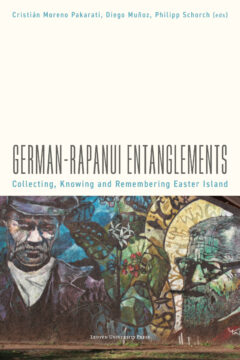 German–Rapanui Entanglements
Cristián Moreno Pakarati (Editor), Diego Muñoz (Editor), Philipp Schorch (Editor),
August 2026

 Trend en toeval – vierde editie
Bruno Blondé (Author), Isabelle Devos (Author), Jord Hanus (Author), Wouter Ryckbosch (Author),
August 2026
 Cinema in Post-War Belgium
Gertjan Willems (Editor), Bjorn Gabriels (Editor), Bénédicte Rochet (Editor),
May 2026


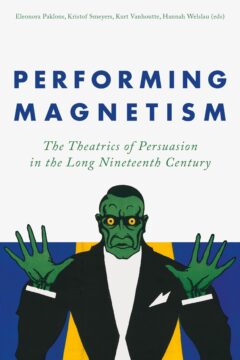 Performing Magnetism
Eleonora Paklons (Editor), Kristof Smeyers (Editor), Kurt Vanhoutte (Editor), Hannah Welslau (Editor),
May 2026
 Christian Democracy and the Fall of Communism
Michael Gehler (Editor), Piotr H. Kosicki (Editor), Helmut Wohnout (Editor),
April 2026
 Political Exile in the Global Twentieth Century
Wolfram Kaiser (Editor), Piotr H. Kosicki (Editor),
April 2026
 Brusselse plaatsnamen
Iadine Degryse (Editor), Benjamin Wayens (Editor), Chantal Kesteloot (Editor), Dennis De Vriese (Editor), Matthijs Degraeve (Editor),
April 2026

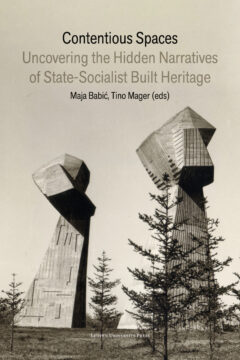
 Cartographies of Catastrophes
Laura Demeter (Editor), Carmen M. Enss (Editor), Piotr Kisiel (Editor), Carol Ludwig (Editor),
February 2026