

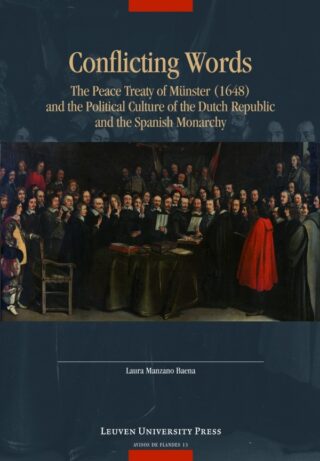
Conflicting Words
The Peace Treaty of Münster (1648) and the Political Culture of the Dutch Republic and the Spanish Monarchy
Laura Manzano Baena (Author),
Series: Avisos de Flandes 13
Category: History, History 1500-1800
Language: English
ISBN: 9789058678676
Publication date: May 12, 2011
€39.50 (including 6% VAT)
Buy NowSize: 250 x 170 x mm

Stock item: 62670
Standard delivery time for print books:
For Belgium: 5 to 8 working days
For EU: 2 to 3 weeks
For other countries: 4 to 5 weeks
Series: Avisos de Flandes 13
Category: History, History 1500-1800
Language: English
ISBN: 9789461660923
Publication date: May 12, 2011
€29.50 (including 6% VAT)
Buy Now
The Peace of Münster, signed between the Catholic Monarchy and the United Provinces in 1648, went against the political culture of both polities. The fact that the Spanish Monarchy definitively accepted the independence of its former subjects clearly negated the policy put forward by the Monarchy during the ‘eighty’ years that the war lasted and to the Monarchy’s declared main goals. For the United Provinces, signing a peace with the archenemy without having brought liberty and religious freedom to ten of the seventeen provinces that formed part of the ancient Burgundian circle was also considered by important groups in the ‘rebel’ provinces as a defection. Portraying the political culture of both the Catholic Monarchy and the United Provinces, this work analyses the views held in both territories concerning the points which were discussed in pamphlets and treatises published during the peace negotiations. It also traces the origin of the arguments presented, showing how they were transformed during the period under study, and discusses their influence, or presence, in the diplomatic negotiations among the ambassadors of the United Provinces and the Catholic Monarchy in the German town of Münster. These discussions are inserted in the wider framework of a Christian realm that had to reassess its own values as a consequence of the confessionalisation process and the Thirty Years’ War, which affected not only the Empire but, in one way or another, all Central and Western Europe.
This publication is GPRC-labeled (Guaranteed Peer-Reviewed Content).
Acknowledgements
Introduction
Chapter 1. Rebels
Confronting rebellion
Religion and revolt: The United Provinces
The Spanish attitude towards rebellion
. ‘No reason to revolt’: Privileges and rebellion
. Sacrilege and rebellion
. Negotiating with rebels in an international setting:
From Cologne to Münster
Chapter 2. Tyrants
Tyranny’s two faces and the problem of tyrannicide
Fighting usurpers: Defining the tyrant in the Spanish Monarchy
. The usurper’s unjust rule
. Distinguishing between impious tyrants and misguided rulers
Defying tyrannical rule in the Low Countries and Catalonia
. The tyrant’s intolerable behaviour
. Trusting the tyrant’s word: The Dutch road to Münster
Chapter 3. Authority
Sources, extension and limits to kingly power in the Spanish Monarchy
. The power of kings
. The morals of power
Refashioning authority in the United Provinces
. Defining political authority
. The peace negotiations with the Spanish Monarchy as a catalyst for internal strife
Chapter 4. Negotiating sovereignty
Hispanic attempts at a protectorate over the United Provinces (1628-1632)
Relinquishing sovereignty: The Treaty of Munster (1648)
. The incomplete Republic
. A patrimonial concept of sovereignty
Transferring the rights over the Low Countries
. Negotiating spiritual sovereignty
Monarchia in Ecclesia
The Dutch Republic and the problem of spiritual sovereignty 192
Chapter 5. Negotiating religious coexistence and toleration
The politics of confessionalization
. The Spanish Monarchy and its confessional reason of state
. From the ‘Arminian troubles’ to William ii’s stadholderate: Religious allegiances and politics in the United Provinces
Religious tolerance and confessional coexistence
. Tolerance as (the lesser) evil
. Dutch tolerance and its limits
The Dutch Republic and its Catholic subjects: negotiating coexistence in Den Bosch
Chapter 6. An invalid conclusion or a peace not meant to last (but which did)
Bibliography
Index
Manzano Baena is able to explore her far-ranging material in remarkable brevity, always basing her assessments on an impressive number of sources. Nonetheless, it would have been interesting if she had explored the main negotiations at Münster a bit further, looking at the arguments the Spanish and Dutch envoys employed. Nevertheless, Manzano Baena's analysis is a good example of how diplomatic history can profit from a cultural perspective, that is, in Manzano Baena's case, decidedly European.
Lena Oetzel, Universität Salzburg, Sixteenth Century Journal XLIV/2 (2013)
[....] the essence of this work, namely, the analysis of the religious-ideological context in which the Münster peace negotiations took place. The book constitutes an innovative and valuable addition to the insights that previous studies focusing on military, political and diplomatic aspects have provided. Laura Manzano's study allows us to reconsider known facts and developments from a new perspective, and that is its merit.
René Vermeir, European History Quarterly July 2013 43: 565-567, doi:10.1177/0265691413493729aa
'Conflicting Words' is and is not a work of political history, intellectual history, or cultural history. It also is and is not a comparative history. Most of the text covers the ideological disputes between the Spanish and the Dutch, but the culminating event—namely, the peace treaty—envelops the entire enterprise in a larger European context. The analysis in this book reveals that the Dutch stadholder Frederick Henry saw himself as both a Dutch statesman and a European noble, that the French served as both examples and counterexamples for both sides of the table, that the specter of past revolts in Portugal and Catalonia haunted the Spanish monarchy, that the Dutch were cognizant of the fate of coreligionists in the Holy Roman empire, and more. Both the history and historiography presented in 'Conflicting Words' show an aspiration not simply to cross borders but ultimately
to create a pan-European history and historical tradition.
Laura Cruz, Western Carolina University, Journal of Modern History, September 2013, vol. 85, no. 3
Frequently Asked Questions
What is "Conflicting Words" about?
The Peace of Münster, signed between the Catholic Monarchy and the United Provinces in 1648, went against the political culture of both polities. The fact that the Spanish Monarchy definitively accepted the independence of its former subjects clearly negated the policy put forward by the Monarchy during the ‘eighty' years that the war lasted and to the Monarchy's declared main goals. For the United Provinces, signing a peace with the archenemy without having brought liberty and religious freedom to ten of the seventeen provinces that formed part of the ancient Burgundian circle was also considered by important groups in the ‘rebel' provinces as a defection. Portraying the political culture of both the Catholic Monarchy and the United Provinces, this work analyses the views held in both territories concerning the points which were discussed in pamphlets and treatises published during the peace negotiations. It also traces the origin of the arguments presented, showing how they were transformed during the period under study, and discusses their influence, or presence, in the diplomatic negotiations among the ambassadors of the United Provinces and the Catholic Monarchy in the German town of Münster. These discussions are inserted in the wider framework of a Christian realm that had to reassess its own values as a consequence of the confessionalisation process and the Thirty Years' War, which affected not only the Empire but, in one way or another, all Central and Western Europe.
This publication is GPRC-labeled (Guaranteed Peer-Reviewed Content).
Who wrote "Conflicting Words"?
"Conflicting Words" was written by Laura Manzano Baena.
Laura Manzano Baena is currently working for the Spanish State Society for Cultural Action.
Is "Conflicting Words" part of a series?
Yes, "Conflicting Words" is part of the "Avisos de Flandes" series. It's book 13 in the series.

Series editor
Werner Thomas, KU Leuven
Proposals
To submit a proposal please send a preliminary abstract (1-2 pp.) and a short bio to series editor Werner Thomas. The evaluation process takes an average of four weeks. Upon approval of the abstract, the full manuscript will be submitted to international peer review. Two peer reviewers will be asked for expert advice, three in case of conflicting reports.
Please make use of the submission form to present the full manuscript to our board.
Authors interested in Open Access can consult the available funding options.
Links & Resources
What is the Table of Contents for "Conflicting Words"?
Acknowledgements
Introduction
Chapter 1. Rebels
Confronting rebellion
Religion and revolt: The United Provinces
The Spanish attitude towards rebellion
. 'No reason to revolt': Privileges and rebellion
. Sacrilege and rebellion
. Negotiating with rebels in an international setting:
From Cologne to Münster
Chapter 2. Tyrants
Tyranny's two faces and the problem of tyrannicide
Fighting usurpers: Defining the tyrant in the Spanish Monarchy
. The usurper's unjust rule
. Distinguishing between impious tyrants and misguided rulers
Defying tyrannical rule in the Low Countries and Catalonia
. The tyrant's intolerable behaviour
. Trusting the tyrant's word: The Dutch road to Münster
Chapter 3. Authority
Sources, extension and limits to kingly power in the Spanish Monarchy
. The power of kings
. The morals of power
Refashioning authority in the United Provinces
. Defining political authority
. The peace negotiations with the Spanish Monarchy as a catalyst for internal strife
Chapter 4. Negotiating sovereignty
Hispanic attempts at a protectorate over the United Provinces (1628-1632)
Relinquishing sovereignty: The Treaty of Munster (1648)
. The incomplete Republic
. A patrimonial concept of sovereignty
Transferring the rights over the Low Countries
. Negotiating spiritual sovereignty
Monarchia in Ecclesia
The Dutch Republic and the problem of spiritual sovereignty 192
Chapter 5. Negotiating religious coexistence and toleration
The politics of confessionalization
. The Spanish Monarchy and its confessional reason of state
. From the 'Arminian troubles' to William ii's stadholderate: Religious allegiances and politics in the United Provinces
Religious tolerance and confessional coexistence
. Tolerance as (the lesser) evil
. Dutch tolerance and its limits
The Dutch Republic and its Catholic subjects: negotiating coexistence in Den Bosch
Chapter 6. An invalid conclusion or a peace not meant to last (but which did)
Bibliography
Index
Related titles

 Toekomstdromen
Maarten Van Dijck (Editor), Gerrit Verhoeven (Editor), Hans Cools (Editor),
November 2026
 Trend en toeval – vierde editie
Bruno Blondé (Author), Isabelle Devos (Author), Jord Hanus (Author), Wouter Ryckbosch (Author),
August 2026
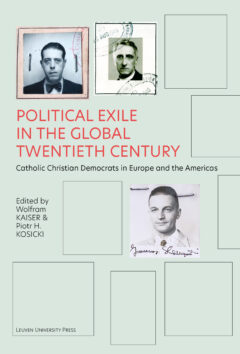 Political Exile in the Global Twentieth Century
Wolfram Kaiser (Editor), Piotr H. Kosicki (Editor),
April 2026

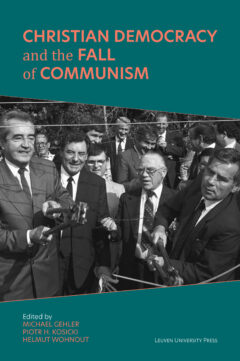 Christian Democracy and the Fall of Communism
Michael Gehler (Editor), Piotr H. Kosicki (Editor), Helmut Wohnout (Editor),
April 2026
 Brusselse plaatsnamen
Iadine Degryse (Editor), Benjamin Wayens (Editor), Chantal Kesteloot (Editor), Dennis De Vriese (Editor), Matthijs Degraeve (Editor),
April 2026

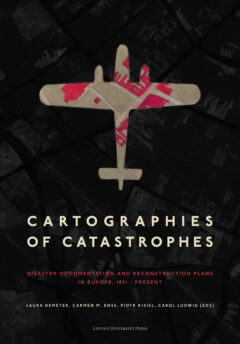 Cartographies of Catastrophes
Laura Demeter (Editor), Carmen M. Enss (Editor), Piotr Kisiel (Editor), Carol Ludwig (Editor),
February 2026



 Denken en dialogeren over identiteit
Karel Van Nieuwenhuyse (Author), Bauke Verbergt (Author), Greet Vermeiren (Author), Ellen Claes (Author),
October 2025
 Vroegmoderne dieren in de Nederlanden
Judith Brouwer (Editor), djoeke van Netten (Editor),
November 2025