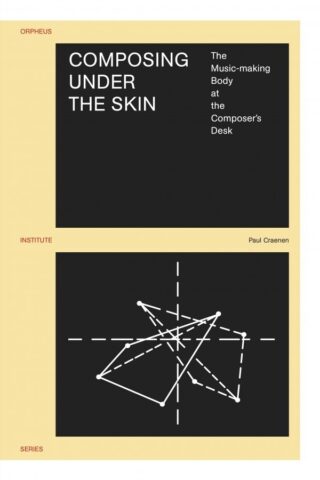
Composing under the Skin
The Music-making Body at the Composer’s Desk
Paul Craenen (Author),
Series: Orpheus Institute Series
Category: Artistic Practice, Music
Language: English
ISBN: 9789058679741
Publication date: April 29, 2014
€45.00 (including 6% VAT)
Buy NowNumber of pages: 284
Size: 285 x 190 x 20 mm

Stock item: 90445
Standard delivery time for print books:
For Belgium: 5 to 8 working days
For EU: 2 to 3 weeks
For other countries: 4 to 5 weeks
Series: Orpheus Institute Series
Category: Artistic Practice, Music
Language: English
ISBN: 9789461661531
Publication date: April 29, 2014
€34.00 (including 6% VAT)
Buy NowNumber of pages: 284
A revealing study of the physical presence of the musician in musical performance. Fingers slipping over guitar strings, the tap of a bow against the body of a cello, a pianist humming along to the music: contemporary composers often work with parasitic, non-conventional sounds such as these. Are they to be perceived as musical elements or do they shift attention to the physical effort of music-making, contact between a body and an instrument? Composer Paul Craenen explores ways in which the musician’s body is revealed in musical performance. He leads us from Cage, Lachenmann, Kagel and their contemporaries to a discussion of how today’s generation of young composers is writing a body paradigm into composition itself. Micro-temporal physical gestures and instrumental timbre provide the key to unveiling the physical presence of both a musician and a ‘composing body’. The author’s concept of ‘intercorporeality’, along with the idea of an alternating linear and non-linear relationship of the composing body to time, casts new light on the relationship between musicians, composers, and music consumers.
This publication is GPRC-labeled (Guaranteed Peer-Reviewed Content).
Introduction
Chapter I: Music from Here and There Metamorphosis of the Sounding Space
Music in the World
The Space surrounding the Music The Space for the Music The Space of the Music
Music from Here and There Eye and Ear Music from Somewhere Points, Lines, Spheres Resonance Discipline Resistance Interruption Concrete Music, Moving Sound Music from There Music from Here Travelling between Here, There, and Somewhere
Chapter II: The Body Resounds The Silent Body Collective Tension Spatial Frustration
The Sounding Body Instrumental Theatre Contact Microphones and EEGs Between the Abstract and the Concrete The Voice Exposed
A Concrete Turn Ideology, Rediscovery, Experiment Audible Processes Sound Art Musique concrèteMusique concrète instrumentale Ambivalences
Chapter III: Composed Instruments A Mediated Relationship The Ecology of Hearing The Dynamics of Resonant Presence
The Instrumental Extension An Invisible Instrument Isolation and Selection Inspiring Effort
Playing Technique and Musicality The Virtuoso Body
Instrumental Thinking
Music-Making as Performance Instrumental Intentions Instrumental Imagination
Instrumental Identity Striking and Bowing Bowing Striking Seeing, Hearing, Feeling Mirroring the Strike, Voicing the Instrument Enacting and Subvocalising Multi-modal Gesture Plucking
The Point and the Line
Sequenza V “Why?” The Trombone as Percussion Percussive Silence Sequenza V, Section B
Composed Instruments Dynamic Identity
Chapter IV: The Composed Body The Composer’s Perspective An Impossible Object Access to the Body
Compositional Strategies Revealing Enlarging Synchronising Demonstrating Conceptualising Projecting Infecting Interacting
Linearity versus Nonlinearity Patchworks From Composition to Design
The Composing Body The Writing Body The Signature of the Composing Body The Body’s Touch The “Now” of Timbre
The Body as a Strategic Zero Point—Beyond the Body The Body as a Filter The Body as Memory Kinaesthetic Explorations Beyond the Body
Refences Index About the author
Frequently Asked Questions
What is "Composing under the Skin" about?
A revealing study of the physical presence of the musician in musical performance. Fingers slipping over guitar strings, the tap of a bow against the body of a cello, a pianist humming along to the music: contemporary composers often work with parasitic, non-conventional sounds such as these. Are they to be perceived as musical elements or do they shift attention to the physical effort of music-making, contact between a body and an instrument? Composer Paul Craenen explores ways in which the musician’s body is revealed in musical performance. He leads us from Cage, Lachenmann, Kagel and their contemporaries to a discussion of how today's generation of young composers is writing a body paradigm into composition itself. Micro-temporal physical gestures and instrumental timbre provide the key to unveiling the physical presence of both a musician and a ‘composing body’. The author's concept of ‘intercorporeality’, along with the idea of an alternating linear and non-linear relationship of the composing body to time, casts new light on the relationship between musicians, composers, and music consumers.
This publication is GPRC-labeled (Guaranteed Peer-Reviewed Content).
Who wrote "Composing under the Skin"?
"Composing under the Skin" was written by Paul Craenen.
Paul Craenen obtained a PhD in the arts at Leiden University in 2011 (docARTES Programme). He is director of Musica, Impulse Centre for Music.
Is "Composing under the Skin" part of a series?
Yes, "Composing under the Skin" is part of the "Orpheus Institute Series" series.

Throughout the Orpheus Institute’s various activities there is a clear focus on the development of a new research discipline in the arts, one that addresses questions and topics that are at the heart of musical practice, building on the unique expertise and perspectives of musicians and in constant dialogue with more established research disciplines.
Within this context, the Orpheus Institute launched an international Research Centre in 2007 that acts as a stable constituent within an ever-growing field of enquiry. The Orpheus Research Centre is a place where musical artists can fruitfully conduct individual and collaborative research on issues that are of concern to all involved in artistic practice. It is important that at the centre of the international Orpheus Institute network is a place, a building, a community. As the concepts and methodologies of artistic research in music have evolved, work at Orpheus Institute has found new structures. Since 2012, research has been consolidated into a number of groups focused on specific areas, each led by a principal investigator of substantial international reputation as a practicing musician. The work of Orpheus Institute is disseminated through events, publications and musical performances, and through its active animation of discussion within the sector.
This series of peer-reviewed publications —launched in 2013— encompasses monographs by Research Fellows and associates of the Orpheus Institute, compilations of lectures, texts, and performances from seminars and study days, and edited volumes on topics arising from work at the institute. Research can be presented in digital media as well as printed texts. As a whole, the series is meant to enhance and advance discourse in the field of artistic research in music and to generate future work in this emerging and vital area of study.

Editorial board
William Brooks (Chair, Series Editor), Peter Dejans, Jonathan Impett, Kathleen Coessens, Paulo de Assis, Heike Vermeire, Ed Crooks, Laura Cull, Aurelie Daems
Proposals
Proposals and enquiries can be sent to the series editor William Brooks.
Please make use of the submission form to present your manuscript or proposal to our board.
Authors interested in Open Access can consult the available funding options.
Links & Resources
What is the Table of Contents for "Composing under the Skin"?
Introduction
Chapter I: Music from Here and There Metamorphosis of the Sounding Space
Music in the World
The Space surrounding the Music The Space for the Music The Space of the Music
Music from Here and There Eye and Ear Music from Somewhere Points, Lines, Spheres Resonance Discipline Resistance Interruption Concrete Music, Moving Sound Music from There Music from Here Travelling between Here, There, and Somewhere
Chapter II: The Body Resounds The Silent Body Collective Tension Spatial Frustration
The Sounding Body Instrumental Theatre Contact Microphones and EEGs Between the Abstract and the Concrete The Voice Exposed
A Concrete Turn Ideology, Rediscovery, Experiment Audible Processes Sound Art Musique concrèteMusique concrète instrumentale Ambivalences
Chapter III: Composed Instruments A Mediated Relationship The Ecology of Hearing The Dynamics of Resonant Presence
The Instrumental Extension An Invisible Instrument Isolation and Selection Inspiring Effort
Playing Technique and Musicality The Virtuoso Body
Instrumental Thinking
Music-Making as Performance Instrumental Intentions Instrumental Imagination
Instrumental Identity Striking and Bowing Bowing Striking Seeing, Hearing, Feeling Mirroring the Strike, Voicing the Instrument Enacting and Subvocalising Multi-modal Gesture Plucking
The Point and the Line
Sequenza V “Why?” The Trombone as Percussion Percussive Silence Sequenza V, Section B
Composed Instruments Dynamic Identity
Chapter IV: The Composed Body The Composer's Perspective An Impossible Object Access to the Body
Compositional Strategies Revealing Enlarging Synchronising Demonstrating Conceptualising Projecting Infecting Interacting
Linearity versus Nonlinearity Patchworks From Composition to Design
The Composing Body The Writing Body The Signature of the Composing Body The Body's Touch The “Now” of Timbre
The Body as a Strategic Zero Point—Beyond the Body The Body as a Filter The Body as Memory Kinaesthetic Explorations Beyond the Body
Refences Index About the author
What is the DOI for "Composing under the Skin"?
The Digital Object Identifier (DOI) for "Composing under the Skin" is 10.11116/9789461661531.
Related titles
 Franz Schreker. Der Schmied von Gent
Pieter Bergé (Editor), Steven Vande Moortele (Author), Martijn Vincken (Author),
February 2027
 The Book of Requiems, 1815–1900
John Koslovsky (Editor), Steven Vande Moortele (Editor),
December 2026
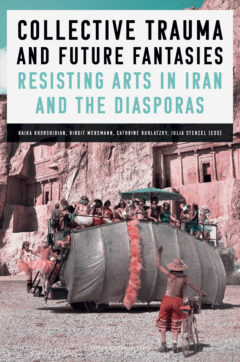 Collective Trauma and Future Fantasies
Raika Khorshidian (Editor), Birgit Mersmann (Editor), Cathrine Bublatzky (Editor), Julia Stenzel (Editor),
November 2026



 Violence and Trauma in Contemporary Performance
Sofie de Smet (Editor), Marieke Breyne (Editor), Pedzisai Maedza (Editor), Christel Stalpaert (Editor),
May 2025
 Music Theory and Analysis Volume 12 Issue 1, 2025 (Journal Subscription)
John Koslovsky (Editor), Markus Neuwirth (Editor), Derek Remeš (Editor),
May 2025