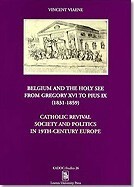
Belgium and the Holy See from Gregory XVI to Pius IX (1831-1859)
Catholic Revival Society and Politics in 19th-Century Europe
Vincent Viaene (Author),
19th-century Belgium was “ce pays où le Pape est Pape comme il l’est dans aucune autre contrée de l’Europe”, as the Catholic Representative Barthelémy Dumortier wrote in 1865. This outspoken Roman orientation was the keystone of the religious revolution of the Catholic revival. New or renewed congregations, priests close to the people and militant laymen gave a decidedly social and activist turn to the faith; dogma and devotion were reconsedered in the light of romanticism. At this crossroad of religion and modernity, the papacy could all the more make its weight felt as the Belgian Constitution granted the clergy a unique liberty in relations with Rome. Over time, the Vatican would exert a powerful impact on the shape of medern politics in Belgium, and on the segmentation of Belgian society along religious lines.
The speical relationship between Belgium and Rome was no one-way traffic. From a somewhat curious ecclesiastical court hopelessly entangled in the old spiderweb of the Papal States, the papacy became the institution we know today, the leader of a “modern” Catholic opinion. Belgium played a role of major importance in this fundamental transformation. The central theme of the book can therefore be defined as a process of mutual integration, if not acculturation, across the Alps. If Belgian Catholics became more “Roman” in the middle of the 19th century, it was not least because the papacy became more “European”.
Introduction
Part I – Religion, Society and Politics in Belgium during the age of Romanticism
-
The Belgian Constitution and Belgian Politics: Rules and Loopholes
- Political Catholicism: a Genealogy
- Liberalism
- Leopold I, Belgian Foreign Policy and the Unionist Tradition in Belgian Politics
- Catholic Revival versus Religious Reform: the Socio-Cultural Background of Partisan Conflict
Part II – Belgium and Rome – Rome and Belgium
-
Belgian Projections and Roman Ralities form Gregory XVI to Pius IX
- Concert and Revival: Roman Policies and Belgian Challenges from the Eve of Independence to the Decline of Unionism
- The Pitfalls of Transigence: the Holy See, Neo-Unionism and the Decline of the Concert (1839-1846)
- Rome Head of the Revival: the Holy See and the Internal Problems of the Belgian Church under Gregory XVI (1831-1846)
- “Politica Evangelica” (1846-1851)
- From Pio Nono to Pius IX (1848-1851)
- Catholic Revival into Catholic Opinion (1851-1859)
Conclusions
Abbreviations
Bibliography
Index
Frequently Asked Questions
What is "Belgium and the Holy See from Gregory XVI to Pius IX (1831-1859)" about?
19th-century Belgium was "ce pays où le Pape est Pape comme il l'est dans aucune autre contrée de l'Europe", as the Catholic Representative Barthelémy Dumortier wrote in 1865. This outspoken Roman orientation was the keystone of the religious revolution of the Catholic revival. New or renewed congregations, priests close to the people and militant laymen gave a decidedly social and activist turn to the faith; dogma and devotion were reconsedered in the light of romanticism. At this crossroad of religion and modernity, the papacy could all the more make its weight felt as the Belgian Constitution granted the clergy a unique liberty in relations with Rome. Over time, the Vatican would exert a powerful impact on the shape of medern politics in Belgium, and on the segmentation of Belgian society along religious lines.
The speical relationship between Belgium and Rome was no one-way traffic. From a somewhat curious ecclesiastical court hopelessly entangled in the old spiderweb of the Papal States, the papacy became the institution we know today, the leader of a "modern" Catholic opinion. Belgium played a role of major importance in this fundamental transformation. The central theme of the book can therefore be defined as a process of mutual integration, if not acculturation, across the Alps. If Belgian Catholics became more "Roman" in the middle of the 19th century, it was not least because the papacy became more "European".
Who wrote "Belgium and the Holy See from Gregory XVI to Pius IX (1831-1859)"?
"Belgium and the Holy See from Gregory XVI to Pius IX (1831-1859)" was written by Vincent Viaene.
Vincent Viaene studied history and international relations at KU Leuven, the Sorbonne, and Yale University. He was a postdoctoral researcher and lecturer at KU Leuven, a senior Fellow at KADOC and a Marie Curie Fellow at Oxford University. In 2012 he joined the Belgian diplomatic corps. Since 2015 he is seconded to the Belgian Royal Household as Advisor of His Majesty King Philip.
Is "Belgium and the Holy See from Gregory XVI to Pius IX (1831-1859)" part of a series?
Yes, "Belgium and the Holy See from Gregory XVI to Pius IX (1831-1859)" is part of the "KADOC-Studies" series. It's book 26 in the series.


De titels verschenen voor 2000 zijn gratis downloadbaar .
What is the Table of Contents for "Belgium and the Holy See from Gregory XVI to Pius IX (1831-1859)"?
Introduction
Part I - Religion, Society and Politics in Belgium during the age of Romanticism
-
The Belgian Constitution and Belgian Politics: Rules and Loopholes
- Political Catholicism: a Genealogy
- Liberalism
- Leopold I, Belgian Foreign Policy and the Unionist Tradition in Belgian Politics
- Catholic Revival versus Religious Reform: the Socio-Cultural Background of Partisan Conflict
Part II - Belgium and Rome - Rome and Belgium
-
Belgian Projections and Roman Ralities form Gregory XVI to Pius IX
- Concert and Revival: Roman Policies and Belgian Challenges from the Eve of Independence to the Decline of Unionism
- The Pitfalls of Transigence: the Holy See, Neo-Unionism and the Decline of the Concert (1839-1846)
- Rome Head of the Revival: the Holy See and the Internal Problems of the Belgian Church under Gregory XVI (1831-1846)
- "Politica Evangelica" (1846-1851)
- From Pio Nono to Pius IX (1848-1851)
- Catholic Revival into Catholic Opinion (1851-1859)
Conclusions
Abbreviations
Bibliography
Index
Related titles
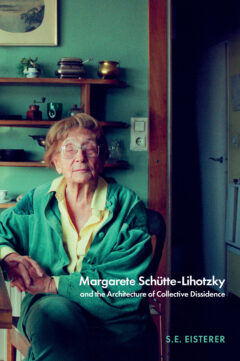 Margarete Schütte-Lihotzky and the Architecture of Collective Dissidence, 1918–1989
S.E. Eisterer (Author),
April 2027
 Toekomstdromen
Maarten Van Dijck (Editor), Gerrit Verhoeven (Editor), Hans Cools (Editor),
November 2026
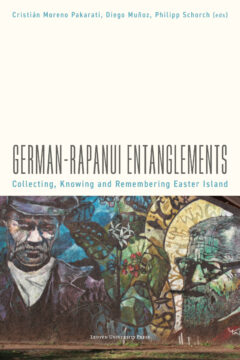 German–Rapanui Entanglements
Cristián Moreno Pakarati (Editor), Diego Muñoz (Editor), Philipp Schorch (Editor),
August 2026

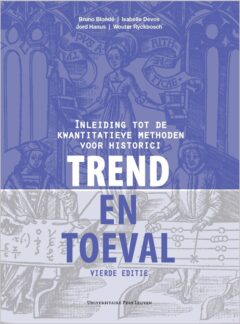 Trend en toeval – vierde editie
Bruno Blondé (Author), Isabelle Devos (Author), Jord Hanus (Author), Wouter Ryckbosch (Author),
August 2026
 Cinema in Post-War Belgium
Gertjan Willems (Editor), Bjorn Gabriels (Editor), Bénédicte Rochet (Editor),
May 2026
 Performing Magnetism
Eleonora Paklons (Editor), Kristof Smeyers (Editor), Kurt Vanhoutte (Editor), Hannah Welslau (Editor),
May 2026
 Political Exile in the Global Twentieth Century
Wolfram Kaiser (Editor), Piotr H. Kosicki (Editor),
April 2026
 Christian Democracy and the Fall of Communism
Michael Gehler (Editor), Piotr H. Kosicki (Editor), Helmut Wohnout (Editor),
April 2026
 Brusselse plaatsnamen
Iadine Degryse (Editor), Benjamin Wayens (Editor), Chantal Kesteloot (Editor), Dennis De Vriese (Editor), Matthijs Degraeve (Editor),
April 2026
 Cartographies of Catastrophes
Laura Demeter (Editor), Carmen M. Enss (Editor), Piotr Kisiel (Editor), Carol Ludwig (Editor),
February 2026