

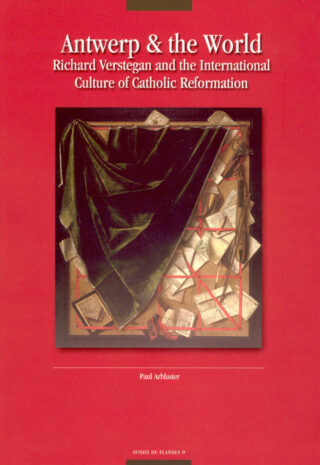
Antwerp and the World
Richard Verstegan and the International Culture of Catholic Reformation
Paul Arblaster (Author),
Richard Verstegan was born in Mid-Tudor London around 1550 and died in the Baroque Antwerp of 1640. During his ninety-odd years of life he saw numerous religious, political and military conflicts, in some of which he was a minor player and on almost all of which he commented in his writings. After studying at Oxford without taking a degree, training as a goldsmith and illegally printing a Catholic book, he fled to France, where he worked as a propagandist for the faction of the Duke of Guise. Imprisoned in France for these activities, he fled to Rome, and eventually settled in Antwerp, where he worked for almost fifty years as, variously, a newswriter, engraver, publisher, editor, translator, polemicist, antiquarian, cloth merchant, poet and satirist. While still in England he produced The Post of the World (1576), the first English guidebook to the Continent. As author of the Restitution of Decayed Intelligence in Antiquities (1605) he restored the Germanic origins of the Anglo-Saxons to serious scholarly study. His Theatrum crudelitatum haereticorum nostri temporis (1587) was a seminal work in the graphic depiction of martyrdom. Verstegan was also the first English translator of the Tridentine Primer and a prolific writer in Dutch. As a contributor to Abraham Verhoeven’s Nieuwe Tijdinghen (Antwerp, 1620-1629) he is one of the earliest identifiable European newspaper journalists.
The author’s epistle to the reader
Part I – A Mirror of Verstegan’s Life and Writings
-
Youth in England (ca 1548-1582)
- First years in exile (1582-1590)
- Books for the English Mission (1590-1603)
- Newswriter, translator and poet (1590-1603)
- Between two careers (1603-1617)
- Poet and journalist (1617-1640)
- Times and writings (1617-1640)
Part II – An anatomy of Verstegan’s world view
-
Verstegan’s world
- The Catholic Church
- Outside the Catholic Church
- Reason of State
- Living together
Conclusion
Bibliography
Index
Frequently Asked Questions
What is "Antwerp and the World" about?
Richard Verstegan was born in Mid-Tudor London around 1550 and died in the Baroque Antwerp of 1640. During his ninety-odd years of life he saw numerous religious, political and military conflicts, in some of which he was a minor player and on almost all of which he commented in his writings. After studying at Oxford without taking a degree, training as a goldsmith and illegally printing a Catholic book, he fled to France, where he worked as a propagandist for the faction of the Duke of Guise. Imprisoned in France for these activities, he fled to Rome, and eventually settled in Antwerp, where he worked for almost fifty years as, variously, a newswriter, engraver, publisher, editor, translator, polemicist, antiquarian, cloth merchant, poet and satirist. While still in England he produced The Post of the World (1576), the first English guidebook to the Continent. As author of the Restitution of Decayed Intelligence in Antiquities (1605) he restored the Germanic origins of the Anglo-Saxons to serious scholarly study. His Theatrum crudelitatum haereticorum nostri temporis (1587) was a seminal work in the graphic depiction of martyrdom. Verstegan was also the first English translator of the Tridentine Primer and a prolific writer in Dutch. As a contributor to Abraham Verhoeven's Nieuwe Tijdinghen (Antwerp, 1620-1629) he is one of the earliest identifiable European newspaper journalists.
Who wrote "Antwerp and the World"?
"Antwerp and the World" was written by Paul Arblaster.
Is "Antwerp and the World" part of a series?
Yes, "Antwerp and the World" is part of the "Avisos de Flandes" series. It's book 9 in the series.

Series editor
Werner Thomas, KU Leuven
Proposals
To submit a proposal please send a preliminary abstract (1-2 pp.) and a short bio to series editor Werner Thomas. The evaluation process takes an average of four weeks. Upon approval of the abstract, the full manuscript will be submitted to international peer review. Two peer reviewers will be asked for expert advice, three in case of conflicting reports.
Please make use of the submission form to present the full manuscript to our board.
Authors interested in Open Access can consult the available funding options.
Links & Resources
What is the Table of Contents for "Antwerp and the World"?
The author's epistle to the reader
Part I - A Mirror of Verstegan's Life and Writings
Youth in England (ca 1548-1582)
- First years in exile (1582-1590)
- Books for the English Mission (1590-1603)
- Newswriter, translator and poet (1590-1603)
- Between two careers (1603-1617)
- Poet and journalist (1617-1640)
- Times and writings (1617-1640)
Part II - An anatomy of Verstegan's world view
Verstegan's world
- The Catholic Church
- Outside the Catholic Church
- Reason of State
- Living together
Conclusion
Bibliography
Index
Related titles
 Toekomstdromen
Maarten Van Dijck (Editor), Gerrit Verhoeven (Editor), Hans Cools (Editor),
November 2026
 Trend en toeval – vierde editie
Bruno Blondé (Author), Isabelle Devos (Author), Jord Hanus (Author), Wouter Ryckbosch (Author),
August 2026
 Political Exile in the Global Twentieth Century
Wolfram Kaiser (Editor), Piotr H. Kosicki (Editor),
April 2026

 Christian Democracy and the Fall of Communism
Michael Gehler (Editor), Piotr H. Kosicki (Editor), Helmut Wohnout (Editor),
April 2026
 Brusselse plaatsnamen
Iadine Degryse (Editor), Benjamin Wayens (Editor), Chantal Kesteloot (Editor), Dennis De Vriese (Editor), Matthijs Degraeve (Editor),
April 2026
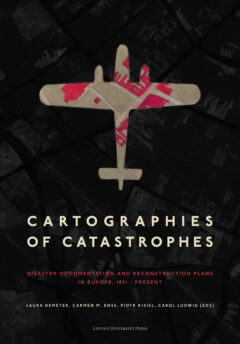 Cartographies of Catastrophes
Laura Demeter (Editor), Carmen M. Enss (Editor), Piotr Kisiel (Editor), Carol Ludwig (Editor),
February 2026
 Denken en dialogeren over identiteit
Karel Van Nieuwenhuyse (Author), Bauke Verbergt (Author), Greet Vermeiren (Author), Ellen Claes (Author),
October 2025
 Vroegmoderne dieren in de Nederlanden
Judith Brouwer (Editor), djoeke van Netten (Editor),
November 2025