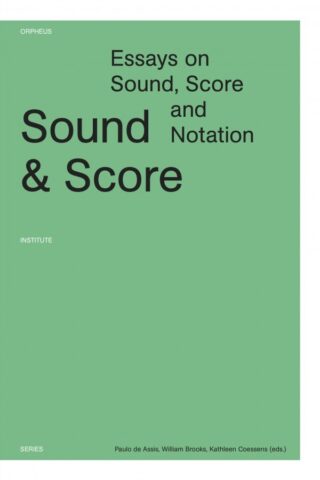
Sound and Score
Essays on Sound, Score and Notation
Paulo de Assis (Editor), William Brooks (Editor), Kathleen Coessens (Editor),
Series: Orpheus Institute Series
Category: Artistic Practice, Music
Language: English
ISBN: 9789058679765
Publication date: October 1, 2013
€39.50 (including 6% VAT)
Buy NowNumber of pages: 230
Size: 280 x 210 x 20 mm

Stock item: 114261
Standard delivery time for print books:
For Belgium: 5 to 8 working days
For EU: 2 to 3 weeks
For other countries: 4 to 5 weeks
Exploring the complex and intimate relations between sound, score and notation. ‘Sound and Score’ brings together music expertise from prominent international researchers and performers exploring the intimate relations between sound and score and the artistic possibilities that this relationship yields for performers, composers and listeners. Considering “notation” as the totality of words, signs, and symbols encountered on the road to an accurate and effective performance of music, this book embraces different styles and periods in a comprehensive understanding of the complex relations between invisible sound and mute notation, between aural perception and visual representation, and between the concreteness of sound and the iconic essence of notation. Three main perspectives structure the analysis: a conceptual approach that offers contributions from different fields of enquiry (history, musicology, semiotics), a practical one that takes the skilled body as its point of departure (written by performers), and finally an experimental perspective that challenges state-of-the-art practices, including transdisciplinary approaches in the crossroads to visual arts and dance.
This publication is GPRC-labeled (Guaranteed Peer-Reviewed Content).
Contributors: Virginia Anderson (Experimental Music Catalogue), Paulo de Assis (Orpheus Institute), Sandeep Bhagwati (Concordia University Montréal), Robin T. Bier (University of York), Maria Calissendorff (Royal College of Music, Stockholm), Miguelangel Clerc (Leiden University), Kathleen Coessens (Vrije Universiteit Brussel and Orpheus Institute), Jeremy Cox (European Association of Conservatoires – AEC), Darla Crispin (Orpheus Institute), Anne Douglas (Robert Gordon University), Gregorio García Karman (University of Huddersfield), Yolande Harris (Leiden University), Susanne Jaresand (Royal College of Music, Stockholm), Tanja Orning (Norwegian Academy of Music, Oslo), Paul Roberts (Guildhall School of Music and Drama, London), Anna Scott (Leiden University), Andreas Georg Stascheit (Institute for Advanced Study in the Humanities, Essen/Dortmund University)
Prelude
Paulo de Assis
Part I: Score and Idea
Chapter 1
What I say and What I do: The Role of Composers’ Own
Performances of Their Scores in Answering Our Research
Questions about Their Works and How We Should Interpret Them
Jeremy Cox
Chapter 2
“The Mysterious Whether Seen as Inspiration or as Alchemy”:
Some Thoughts on the Limitations of Notation
Paul Roberts
Chapter 3
Artistic Practice, Methodology, and Subjectivity: The “I Can”
as Practical Possibility and Original Consciousness
Andreas Georg Stascheit
Chapter 4
From Territories to Transformations: Anton Webern’s Piano
Variations Op. 27 as a Case Study for Research in-and-through
Musical Practice
Darla Crispin
Interlude I: Exploring Musical Integrity and Experimentation
Kathleen Coessens
Part II: Mapping the Interface
Chapter 5
Poem as Score: Finding Melodies for Unnotated
Troubadour Songs
Robin T. Bier
Chapter 6
Sound Drifts: The Phenomenon of Stylistic Change
in the Interpretation of Fixed Texts
Anna Scott
Chapter 7
Pression Revised: Anatomy of Sound, Notated Energy,
and Performance Practice
Tanja Orning
Chapter 8
The In(visible) Sound
Miguelà ngel Clerc
Interlude II: The Score on Shifting Grounds
Kathleen Coessens
Part III: Extending the Boundaries
Chapter 9
The Beginning of Happiness: Approaching Scores in Graphic and
Text Notation
Virginia Anderson
Chapter 10
Closing the Gap between Sound and Score in the Performance
of Electroacoustic Music
Gregorio García Karman
Chapter 11
Notational Perspective and Comprovisation
Sandeep Bhagwati
Interlude III: The Score beyond Music
Kathleen Coessens
Part IV: Choreographies of Sound
Chapter 12
A Physical Interpretation of a Score in a Listening Attitude
Susanne Jaresand and Maria Calissendorff
Chapter 13
Score as Relationship: From Scores to Score Spaces to Scorescapes
Yolande Harris
Chapter 14
Drawing and the Score
Anne Douglas
Postlude
Kathleen Coessens
Personalia
Index
Frequently Asked Questions
What is "Sound and Score" about?
Exploring the complex and intimate relations between sound, score and notation. ‘Sound and Score’ brings together music expertise from prominent international researchers and performers exploring the intimate relations between sound and score and the artistic possibilities that this relationship yields for performers, composers and listeners. Considering “notation” as the totality of words, signs, and symbols encountered on the road to an accurate and effective performance of music, this book embraces different styles and periods in a comprehensive understanding of the complex relations between invisible sound and mute notation, between aural perception and visual representation, and between the concreteness of sound and the iconic essence of notation. Three main perspectives structure the analysis: a conceptual approach that offers contributions from different fields of enquiry (history, musicology, semiotics), a practical one that takes the skilled body as its point of departure (written by performers), and finally an experimental perspective that challenges state-of-the-art practices, including transdisciplinary approaches in the crossroads to visual arts and dance.
This publication is GPRC-labeled (Guaranteed Peer-Reviewed Content).
Contributors: Virginia Anderson (Experimental Music Catalogue), Paulo de Assis (Orpheus Institute), Sandeep Bhagwati (Concordia University Montréal), Robin T. Bier (University of York), Maria Calissendorff (Royal College of Music, Stockholm), Miguelangel Clerc (Leiden University), Kathleen Coessens (Vrije Universiteit Brussel and Orpheus Institute), Jeremy Cox (European Association of Conservatoires – AEC), Darla Crispin (Orpheus Institute), Anne Douglas (Robert Gordon University), Gregorio García Karman (University of Huddersfield), Yolande Harris (Leiden University), Susanne Jaresand (Royal College of Music, Stockholm), Tanja Orning (Norwegian Academy of Music, Oslo), Paul Roberts (Guildhall School of Music and Drama, London), Anna Scott (Leiden University), Andreas Georg Stascheit (Institute for Advanced Study in the Humanities, Essen/Dortmund University)
Who edited "Sound and Score"?
"Sound and Score" was edited by Paulo de Assis, William Brooks and Kathleen Coessens.
Paulo de Assis is artist researcher (pianist, composer, music philosopher) and research fellow at the Orpheus Institute.
William Brooks is professor of music at the University of York, emeritus professor at the University of Illinois, scholar-in-residence at the Newberry Library, and senior research fellow at the Orpheus Institute.
Kathleen Coessens is director of the Koninklijk Conservatorium Brussel, professor at the Vrije Universiteit Brussel, and associate researcher at the Orpheus Institute, Ghent.
Is "Sound and Score" part of a series?
Yes, "Sound and Score" is part of the "Orpheus Institute Series" series.

Throughout the Orpheus Institute’s various activities there is a clear focus on the development of a new research discipline in the arts, one that addresses questions and topics that are at the heart of musical practice, building on the unique expertise and perspectives of musicians and in constant dialogue with more established research disciplines.
Within this context, the Orpheus Institute launched an international Research Centre in 2007 that acts as a stable constituent within an ever-growing field of enquiry. The Orpheus Research Centre is a place where musical artists can fruitfully conduct individual and collaborative research on issues that are of concern to all involved in artistic practice. It is important that at the centre of the international Orpheus Institute network is a place, a building, a community. As the concepts and methodologies of artistic research in music have evolved, work at Orpheus Institute has found new structures. Since 2012, research has been consolidated into a number of groups focused on specific areas, each led by a principal investigator of substantial international reputation as a practicing musician. The work of Orpheus Institute is disseminated through events, publications and musical performances, and through its active animation of discussion within the sector.
This series of peer-reviewed publications —launched in 2013— encompasses monographs by Research Fellows and associates of the Orpheus Institute, compilations of lectures, texts, and performances from seminars and study days, and edited volumes on topics arising from work at the institute. Research can be presented in digital media as well as printed texts. As a whole, the series is meant to enhance and advance discourse in the field of artistic research in music and to generate future work in this emerging and vital area of study.

Editorial board
William Brooks (Chair, Series Editor), Peter Dejans, Jonathan Impett, Kathleen Coessens, Paulo de Assis, Heike Vermeire, Ed Crooks, Laura Cull, Aurelie Daems
Proposals
Proposals and enquiries can be sent to the series editor William Brooks.
Please make use of the submission form to present your manuscript or proposal to our board.
Authors interested in Open Access can consult the available funding options.
Links & Resources
What is the Table of Contents for "Sound and Score"?
Prelude
Paulo de Assis
Part I: Score and Idea
Chapter 1
What I say and What I do: The Role of Composers' Own
Performances of Their Scores in Answering Our Research
Questions about Their Works and How We Should Interpret Them
Jeremy Cox
Chapter 2
“The Mysterious Whether Seen as Inspiration or as Alchemy”:
Some Thoughts on the Limitations of Notation
Paul Roberts
Chapter 3
Artistic Practice, Methodology, and Subjectivity: The “I Can”
as Practical Possibility and Original Consciousness
Andreas Georg Stascheit
Chapter 4
From Territories to Transformations: Anton Webern's Piano
Variations Op. 27 as a Case Study for Research in-and-through
Musical Practice
Darla Crispin
Interlude I: Exploring Musical Integrity and Experimentation
Kathleen Coessens
Part II: Mapping the Interface
Chapter 5
Poem as Score: Finding Melodies for Unnotated
Troubadour Songs
Robin T. Bier
Chapter 6
Sound Drifts: The Phenomenon of Stylistic Change
in the Interpretation of Fixed Texts
Anna Scott
Chapter 7
Pression Revised: Anatomy of Sound, Notated Energy,
and Performance Practice
Tanja Orning
Chapter 8
The In(visible) Sound
Miguelà ngel Clerc
Interlude II: The Score on Shifting Grounds
Kathleen Coessens
Part III: Extending the Boundaries
Chapter 9
The Beginning of Happiness: Approaching Scores in Graphic and
Text Notation
Virginia Anderson
Chapter 10
Closing the Gap between Sound and Score in the Performance
of Electroacoustic Music
Gregorio García Karman
Chapter 11
Notational Perspective and Comprovisation
Sandeep Bhagwati
Interlude III: The Score beyond Music
Kathleen Coessens
Part IV: Choreographies of Sound
Chapter 12
A Physical Interpretation of a Score in a Listening Attitude
Susanne Jaresand and Maria Calissendorff
Chapter 13
Score as Relationship: From Scores to Score Spaces to Scorescapes
Yolande Harris
Chapter 14
Drawing and the Score
Anne Douglas
Postlude
Kathleen Coessens
Personalia
Index
Related titles
 The Book of Requiems, 1815–1900
John Koslovsky (Editor), Steven Vande Moortele (Editor),
December 2026
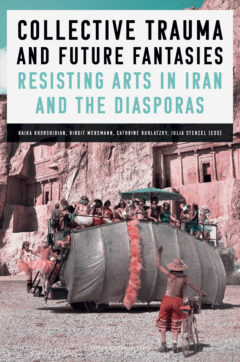 Collective Trauma and Future Fantasies
Raika Khorshidian (Editor), Birgit Mersmann (Editor), Cathrine Bublatzky (Editor), Julia Stenzel (Editor),
November 2026

 Violence and Trauma in Contemporary Performance
Sofie de Smet (Editor), Marieke Breyne (Editor), Pedzisai Maedza (Editor), Christel Stalpaert (Editor),
May 2025
 Music Theory and Analysis Volume 12 Issue 1, 2025 (Journal Subscription)
John Koslovsky (Editor), Markus Neuwirth (Editor), Derek Remeš (Editor),
May 2025