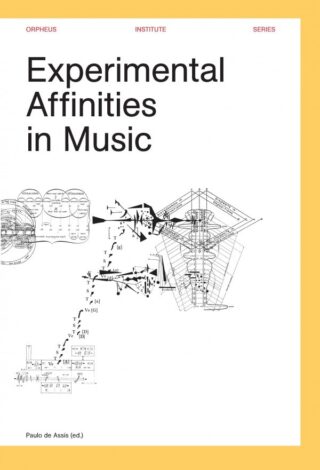

Experimental Affinities in Music
Paulo de Assis (Editor),

Series: Orpheus Institute Series
Category: Artistic Practice, Music
Language: English
ISBN: 9789462700611
Publication date: March 21, 2016
€45.00 (including 6% VAT)
Buy NowNumber of pages: 252
Size: 285 x 190 x mm

Funded by: ERC
Stock item: 107648
Standard delivery time for print books:
For Belgium: 5 to 8 working days
For EU: 2 to 3 weeks
For other countries: 4 to 5 weeks
Series: Orpheus Institute Series
Category: Artistic Practice, Music
Language: English
ISBN: 9789461661883
Publication date: December 17, 2015
Download Free PDFNumber of pages: 252
Funded by: ERC
Exploring experimental attitudes in music
Experimental Affinities in Music brings together diverse artistic, musicological, historical, and philosophical essays, enhancing a broad discourse on artistic experimentation, and exploring various experimental attitudes in music composed between the thirteenth and twentieth centuries.
The golden thread running through the different chapters is the quest for inherently experimental musical practices, a quest pursued from interrogating, descriptive, or challenging perspectives, and always in relation to concrete music examples.
Experimental is taken as an adventurous compositional, interpretive, or performative attitude that can cut across different ages and styles. Affinitiessuggest connectors and connections, convergences, contiguities, and adjacencies that are found in and through a diversity of approaches and topics.
The texts share a common genesis: the lectures of the International Orpheus Academies for Music and Theory convened by Luk Vaes (2011) and Paulo de Assis (2012, 2013). The affinities found in this volume include essays by Lydia Goehr, Felix Diergarten, Mark Lindley, Martin Kirnbauer, Edward Wickham, Lawrence Kramer, Hermann Danuser, and Thomas Christensen, as well as interviews with pianist Leon Fleisher, with pianist-composer Frederic Rzewski, and with composer Helmut Lachenmann.
Ebook available in Open Access.
This publication is GPRC-labeled (Guaranteed Peer-Reviewed Content).
Contributors
Paulo de Assis (Orpheus Institute, Ghent), Thomas Christensen (University of Chicago), Hermann Danuser (Humboldt University), Felix Diergarten (Schola Cantorum Basiliensis), Leon Fleisher (pianist), Lydia Goehr (Columbia University), Martin Kirnbauer (University of Basel), Lawrence Kramer (Fordham University), Helmut Lachenmann (composer), Mark Lindley (University of Hyderabad), Frederic Rzewski (pianist-composer), Luk Vaes (Orpheus Institute, Ghent), Edward Wickham (St Catharine’s College, Cambridge)
Introduction Paulo de Assis Chapter One Explosive Experiments and the Fragility of the Experimental Lydia Goehr Chapter Two Omnis ars ex experimentis dependeat: “Experiments” in Fourteenth-Century Musical Thought Felix Diergarten Chapter Three “Vieltönigkeit” instead of Microtonality: The Theory and Practice of Sixteenth- and Seventeenth-Century “Microtonal” Music Martin Kirnbauer Chapter Four Inscriptions: An Interview with Helmut Lachenmann Chapter Five Nuance and Innovation in Part I of the “48” Mark Lindley Chapter Six Tales from Babel: Musical Adventures in the Science of Hearing Edward Wickham
Chapter Seven From Clockwork to Pulsation: Music and Artificial Life in the Eighteenth Century Lawrence Kramer
Chapter Eight The Inner Ear: An Interview with Leon Fleisher
Chapter Nine Execution—Interpretation—Performance: The History of a Terminological Conflict Hermann Danuser Chapter Ten Monumental Theory Thomas Christensen Chapter Eleven Testing Respect(fully): An Interview with Frederic Rzewski Luk Vaes Appendix Notes on Contributors Index
Frequently Asked Questions
What is "Experimental Affinities in Music" about?
Exploring experimental attitudes in music
Experimental Affinities in Music brings together diverse artistic, musicological, historical, and philosophical essays, enhancing a broad discourse on artistic experimentation, and exploring various experimental attitudes in music composed between the thirteenth and twentieth centuries.
The golden thread running through the different chapters is the quest for inherently experimental musical practices, a quest pursued from interrogating, descriptive, or challenging perspectives, and always in relation to concrete music examples.
Experimental is taken as an adventurous compositional, interpretive, or performative attitude that can cut across different ages and styles. Affinitiessuggest connectors and connections, convergences, contiguities, and adjacencies that are found in and through a diversity of approaches and topics.
The texts share a common genesis: the lectures of the International Orpheus Academies for Music and Theory convened by Luk Vaes (2011) and Paulo de Assis (2012, 2013). The affinities found in this volume include essays by Lydia Goehr, Felix Diergarten, Mark Lindley, Martin Kirnbauer, Edward Wickham, Lawrence Kramer, Hermann Danuser, and Thomas Christensen, as well as interviews with pianist Leon Fleisher, with pianist-composer Frederic Rzewski, and with composer Helmut Lachenmann.
Ebook available in Open Access.
This publication is GPRC-labeled (Guaranteed Peer-Reviewed Content).
Contributors
Paulo de Assis (Orpheus Institute, Ghent), Thomas Christensen (University of Chicago), Hermann Danuser (Humboldt University), Felix Diergarten (Schola Cantorum Basiliensis), Leon Fleisher (pianist), Lydia Goehr (Columbia University), Martin Kirnbauer (University of Basel), Lawrence Kramer (Fordham University), Helmut Lachenmann (composer), Mark Lindley (University of Hyderabad), Frederic Rzewski (pianist-composer), Luk Vaes (Orpheus Institute, Ghent), Edward Wickham (St Catharine’s College, Cambridge)
Who wrote "Experimental Affinities in Music"?
"Experimental Affinities in Music" was written by Paulo de Assis, Lydia Goehr, Felix Diergarten, Martin Kirnbauer, Helmut Lachenmann, Mark Lindley, Edward Wickham, Lawrence Kramer, Leon Fleisher, Hermann Danuser, Thomas Christensen, Luk Vaes and Frederic Rzewski.
Paulo de Assis is artist researcher (pianist, composer, music philosopher) and research fellow at the Orpheus Institute.
Thomas Christensen is Professor of Music and the Humanities at the University of Chicago.
Is "Experimental Affinities in Music" part of a series?
Yes, "Experimental Affinities in Music" is part of the "Orpheus Institute Series" series.

Throughout the Orpheus Institute’s various activities there is a clear focus on the development of a new research discipline in the arts, one that addresses questions and topics that are at the heart of musical practice, building on the unique expertise and perspectives of musicians and in constant dialogue with more established research disciplines.
Within this context, the Orpheus Institute launched an international Research Centre in 2007 that acts as a stable constituent within an ever-growing field of enquiry. The Orpheus Research Centre is a place where musical artists can fruitfully conduct individual and collaborative research on issues that are of concern to all involved in artistic practice. It is important that at the centre of the international Orpheus Institute network is a place, a building, a community. As the concepts and methodologies of artistic research in music have evolved, work at Orpheus Institute has found new structures. Since 2012, research has been consolidated into a number of groups focused on specific areas, each led by a principal investigator of substantial international reputation as a practicing musician. The work of Orpheus Institute is disseminated through events, publications and musical performances, and through its active animation of discussion within the sector.
This series of peer-reviewed publications —launched in 2013— encompasses monographs by Research Fellows and associates of the Orpheus Institute, compilations of lectures, texts, and performances from seminars and study days, and edited volumes on topics arising from work at the institute. Research can be presented in digital media as well as printed texts. As a whole, the series is meant to enhance and advance discourse in the field of artistic research in music and to generate future work in this emerging and vital area of study.

Editorial board
William Brooks (Chair, Series Editor), Peter Dejans, Jonathan Impett, Kathleen Coessens, Paulo de Assis, Heike Vermeire, Ed Crooks, Laura Cull, Aurelie Daems
Proposals
Proposals and enquiries can be sent to the series editor William Brooks.
Please make use of the submission form to present your manuscript or proposal to our board.
Authors interested in Open Access can consult the available funding options.
Links & Resources
Is "Experimental Affinities in Music" available Open Access?
Yes, "Experimental Affinities in Music" is published Open Access. It is available under a BY-NC-ND license.
Who funded the publication of "Experimental Affinities in Music"?
Publication of "Experimental Affinities in Music" was funded by ERC
.
What is the Table of Contents for "Experimental Affinities in Music"?
Introduction Paulo de Assis Chapter One Explosive Experiments and the Fragility of the Experimental Lydia Goehr Chapter Two Omnis ars ex experimentis dependeat: “Experiments” in Fourteenth-Century Musical Thought Felix Diergarten Chapter Three “Vieltönigkeit” instead of Microtonality: The Theory and Practice of Sixteenth- and Seventeenth-Century “Microtonal” Music Martin Kirnbauer Chapter Four Inscriptions: An Interview with Helmut Lachenmann Chapter Five Nuance and Innovation in Part I of the “48” Mark Lindley Chapter Six Tales from Babel: Musical Adventures in the Science of Hearing Edward Wickham
Chapter Seven From Clockwork to Pulsation: Music and Artificial Life in the Eighteenth Century Lawrence Kramer
Chapter Eight The Inner Ear: An Interview with Leon Fleisher
Chapter Nine Execution—Interpretation—Performance: The History of a Terminological Conflict Hermann Danuser Chapter Ten Monumental Theory Thomas Christensen Chapter Eleven Testing Respect(fully): An Interview with Frederic Rzewski Luk Vaes Appendix Notes on Contributors Index
Related titles
 The Book of Requiems, 1815–1900
John Koslovsky (Editor), Steven Vande Moortele (Editor),
December 2026
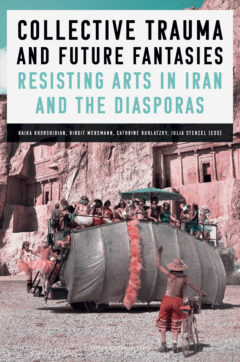 Collective Trauma and Future Fantasies
Raika Khorshidian (Editor), Birgit Mersmann (Editor), Cathrine Bublatzky (Editor), Julia Stenzel (Editor),
November 2026

 Violence and Trauma in Contemporary Performance
Sofie de Smet (Editor), Marieke Breyne (Editor), Pedzisai Maedza (Editor), Christel Stalpaert (Editor),
May 2025
 Music Theory and Analysis Volume 12 Issue 1, 2025 (Journal Subscription)
John Koslovsky (Editor), Markus Neuwirth (Editor), Derek Remeš (Editor),
May 2025