

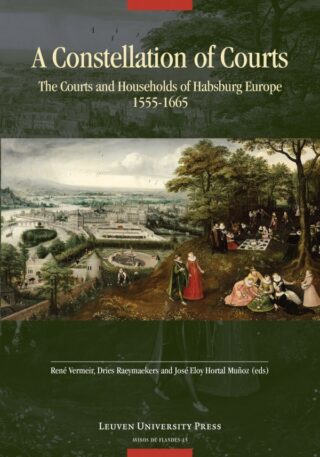

A Constellation of Courts
The Courts and Households of Habsburg Europe, 1555–1665
René Vermeir (Editor), Dries Raeymaekers (Editor), José Eloy Hortal Muñoz (Editor),

Series: Avisos de Flandes 15
Category: History, History 1500-1800
Language: English
ISBN: 9789058679901
Publication date: October 30, 2014
€51.50 (including 6% VAT)
Buy NowNumber of pages: 394
Size: 244 x 170 x mm

Stock item: 92474
Standard delivery time for print books:
For Belgium: 5 to 8 working days
For EU: 2 to 3 weeks
For other countries: 4 to 5 weeks
Series: Avisos de Flandes 15
Category: History, History 1500-1800
Language: English
ISBN: 9789461664297
Publication date: October 21, 2021
Download Free PDFNumber of pages: 394
This volume focuses on the various Habsburg courts and households of the two branches of the dynasty that arose following the division of the territories originally held by Charles V. The authors trace the connections between these courtly communities regardless of their standing or composition, exposing the underlying network they formed. By cutting across the traditional division in the historiography between the Spanish and Austrian Habsburgs and also examining the roles played by the courts and households of lesser known members of the dynasty, this volume determines to what degree the organization followed a particular model and to what extent individuals were able to move between courts in pursuit of career opportunities and advancement.
This publication is GPRC-labeled (Guaranteed Peer-Reviewed Content).
Contributors Alejandro López Álvarez (Universidad Autónoma de Madrid), Carlos Javier Carlos Morales (Universidad Autónoma de Madrid), Olivier Chaline (Université Paris IV – Sorbonne), Alicia Esteban Estríngana (Universidad de Alcalá), José Eloy Hortal Muñoz (Universidad Rey Juan Carlos), Birgit Houben (University of Antwerp), Katrin Keller (Universität Wien), José Martínez Millán (Universidad Autónoma de Madrid), Manuel Rivero (Universidad Autónoma de Madrid), Astrid von Schlachta (Universität Regensburg), Werner Thomas (KU Leuven)
Courts and households of the Habsburg dynasty: history and historiography
The political configuration of the Spanish Monarchy: the court and royal households José Martínez Millán
The court of Madrid and the courts of the viceroys Manuel Rivero
The economic foundations of the royal household of the Spanish Habsburgs, 1556-;1621 Carlos Javier de Carlos Morales
The household of archduke Albert of Austria from his arrival in Madrid until his election as governor of the Low Countries: 1570-;1595 José Eloy Hortal Muñoz
Flemish elites under Philip III’s patronage (1598-1621): household, court and territory in the Spanish Habsburg Monarchy
Alicia Esteban Estríngana
The ‘Spanish Faction’ at the court of the archdukes Albert and Isabella Werner Thomas
“Vous estez les premiers vassaux que j’aye et que j’aime le plus.” Burgundians in the Brussels courts of the widowed Isabella and of the Cardinal-Infant don Ferdinand (1621-1641)* Birgit Houben
Anne of Austria, founder of the Val-de-Grâce in Paris Olivier Chaline
Some reflections on the ceremonial and image of the kings and queens of the House of Habsburg in the sixteenth and seventeenth centuries Alejandro López àlvarez
From Graz to Vienna: structures and careers in the Frauenzimmer between 1570 and 1657 Katrin Keller
The Innsbruck court in the 17th century: identity and ceremonial of a court in flux Astrid von Schlachta
Quo vadis: present and potential approaches to the relations between the courts and households of the Habsburg dynasty in the Early Modern period
Appendix: Principal offices of the court of the Spanish Habsburg kings 371
Index
René Vermeir
René Vermeir is professor of Early Modern History at Ghent University.
Dries Raeymaekers
Dries Raeymaekers is lecturer in Early Modern History at Radboud University Nijmegen.
Dries Raeymaekers is als universitair docent Vroegmoderne Geschiedenis verbonden aan de Radboud Universiteit Nijmegen. Hij is tevens voorzitter van de Vlaams-Nederlandse Vereniging voor Nieuwe Geschiedenis.
José Eloy Hortal Muñoz
José Eloy Hortal Muñoz is professor of Early Modern History at Universidad Rey Juan Carlos.
That is not to deny the considerable value of this collection, not least in bringing some of the latest research on Habsburg Europe to an anglophone readership and in showing how that research might develop in the future. The collection's brief conclusion deliberately makes the case that this is in effect work in progress. By pointing out further directions for research, the editors remind us of the vitality of work on the Habsburgs as one of Europe's most powerful and dazzling dynasties, and of how much more there is to do.
Toby Osborne, English Historical Review (2016) 131 (552): 1147-1149. doi: 10.1093/ehr/cew206
In drawing attention to such deep structures of court life while acknowledging the flurry of politics, diplomacy and ceremonial, this collection makes an important contribution to our advancing understanding of the early modern court.
Steven Gunn, Tijdschrift voor Geschiedenis, Volume 129, Number 3, August 2016, pp. 447-500(54)
Frequently Asked Questions
What is "A Constellation of Courts" about?
This volume focuses on the various Habsburg courts and households of the two branches of the dynasty that arose following the division of the territories originally held by Charles V. The authors trace the connections between these courtly communities regardless of their standing or composition, exposing the underlying network they formed. By cutting across the traditional division in the historiography between the Spanish and Austrian Habsburgs and also examining the roles played by the courts and households of lesser known members of the dynasty, this volume determines to what degree the organization followed a particular model and to what extent individuals were able to move between courts in pursuit of career opportunities and advancement.
This publication is GPRC-labeled (Guaranteed Peer-Reviewed Content).
Contributors Alejandro López Álvarez (Universidad Autónoma de Madrid), Carlos Javier Carlos Morales (Universidad Autónoma de Madrid), Olivier Chaline (Université Paris IV - Sorbonne), Alicia Esteban Estríngana (Universidad de Alcalá), José Eloy Hortal Muñoz (Universidad Rey Juan Carlos), Birgit Houben (University of Antwerp), Katrin Keller (Universität Wien), José Martínez Millán (Universidad Autónoma de Madrid), Manuel Rivero (Universidad Autónoma de Madrid), Astrid von Schlachta (Universität Regensburg), Werner Thomas (KU Leuven)
Who edited "A Constellation of Courts"?
"A Constellation of Courts" was edited by René Vermeir, Dries Raeymaekers and José Eloy Hortal Muñoz.
René Vermeir is professor of Early Modern History at Ghent University.
Dries Raeymaekers is lecturer in Early Modern History at Radboud University Nijmegen.
Dries Raeymaekers is als universitair docent Vroegmoderne Geschiedenis verbonden aan de Radboud Universiteit Nijmegen. Hij is tevens voorzitter van de Vlaams-Nederlandse Vereniging voor Nieuwe Geschiedenis.
José Eloy Hortal Muñoz is professor of Early Modern History at Universidad Rey Juan Carlos.
Is "A Constellation of Courts" part of a series?
Yes, "A Constellation of Courts" is part of the "Avisos de Flandes" series. It's book 15 in the series.

Series editor
Werner Thomas, KU Leuven
Proposals
To submit a proposal please send a preliminary abstract (1-2 pp.) and a short bio to series editor Werner Thomas. The evaluation process takes an average of four weeks. Upon approval of the abstract, the full manuscript will be submitted to international peer review. Two peer reviewers will be asked for expert advice, three in case of conflicting reports.
Please make use of the submission form to present the full manuscript to our board.
Authors interested in Open Access can consult the available funding options.
Links & Resources
Is "A Constellation of Courts" available Open Access?
Yes, "A Constellation of Courts" is published Open Access. It is available under a BY-NC-ND license.
What is the Table of Contents for "A Constellation of Courts"?
Courts and households of the Habsburg dynasty: history and historiography
The political configuration of the Spanish Monarchy: the court and royal households José Martínez Millán
The court of Madrid and the courts of the viceroys Manuel Rivero
The economic foundations of the royal household of the Spanish Habsburgs, 1556-;1621 Carlos Javier de Carlos Morales
The household of archduke Albert of Austria from his arrival in Madrid until his election as governor of the Low Countries: 1570-;1595 José Eloy Hortal Muñoz
Flemish elites under Philip III's patronage (1598-1621): household, court and territory in the Spanish Habsburg Monarchy
Alicia Esteban Estríngana
The 'Spanish Faction' at the court of the archdukes Albert and Isabella Werner Thomas
“Vous estez les premiers vassaux que j'aye et que j'aime le plus.” Burgundians in the Brussels courts of the widowed Isabella and of the Cardinal-Infant don Ferdinand (1621-1641)* Birgit Houben
Anne of Austria, founder of the Val-de-Grâce in Paris Olivier Chaline
Some reflections on the ceremonial and image of the kings and queens of the House of Habsburg in the sixteenth and seventeenth centuries Alejandro López àlvarez
From Graz to Vienna: structures and careers in the Frauenzimmer between 1570 and 1657 Katrin Keller
The Innsbruck court in the 17th century: identity and ceremonial of a court in flux Astrid von Schlachta
Quo vadis: present and potential approaches to the relations between the courts and households of the Habsburg dynasty in the Early Modern period
Appendix: Principal offices of the court of the Spanish Habsburg kings 371
Index
What is the DOI for "A Constellation of Courts"?
The Digital Object Identifier (DOI) for "A Constellation of Courts" is 10.11116/9789461664297.
Related titles
 Toekomstdromen
Maarten Van Dijck (Editor), Gerrit Verhoeven (Editor), Hans Cools (Editor),
November 2026

 Trend en toeval – vierde editie
Bruno Blondé (Author), Isabelle Devos (Author), Jord Hanus (Author), Wouter Ryckbosch (Author),
August 2026

 Political Exile in the Global Twentieth Century
Wolfram Kaiser (Editor), Piotr H. Kosicki (Editor),
April 2026
 Christian Democracy and the Fall of Communism
Michael Gehler (Editor), Piotr H. Kosicki (Editor), Helmut Wohnout (Editor),
April 2026
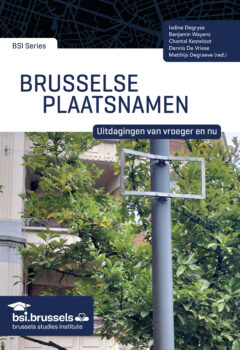 Brusselse plaatsnamen
Iadine Degryse (Editor), Benjamin Wayens (Editor), Chantal Kesteloot (Editor), Dennis De Vriese (Editor), Matthijs Degraeve (Editor),
April 2026

 Cartographies of Catastrophes
Laura Demeter (Editor), Carmen M. Enss (Editor), Piotr Kisiel (Editor), Carol Ludwig (Editor),
February 2026


 Denken en dialogeren over identiteit
Karel Van Nieuwenhuyse (Author), Bauke Verbergt (Author), Greet Vermeiren (Author), Ellen Claes (Author),
October 2025
 Vroegmoderne dieren in de Nederlanden
Judith Brouwer (Editor), djoeke van Netten (Editor),
November 2025