Quodlibet XV
Henry of Ghent (Author), Girard Etzkorn (Editor), Gordon Wilson (Editor),
Henry of Ghent’s Quodlibet XV, his last Quodlibet before his death, was composed sometime after the fall of Acre (May 10, 1291) and Nicolas IV’s letter Illuminet super nos (sent on August 1, 1291), both of which are referred to in this Quodlibeta. This Quodlibet would have been prepared for distribution shortly after the public disputation was delivered, either in Advent of 1291 or Lent of 1292. The sixteen questions treat a range of issues, e.g. the immaculate conception, the omnipotence of God, the nature of an “instance”, the absolute and ordained powers of the pope and the nature of a just war. The positions of Henry in Quodlibet XV were influential. For example, nearly a century after its composition, Thomas de Rossy refers to this text of Henry in his De conceptione Virginis Immaculatae. The text was reconstructed based upon manuscripts copied from a first Parisian university exemplar, manuscripts whose model was probably a second Parisian university exemplar, and a manuscript which was in the possession of Godfrey of Fontaines, whose model may have been a nearly completed version of what would ultimately be a source of the first Parisian exemplar.
Foreword
Critical study
Introduction
The Editions and the Manuscripts
Historical and Codicological Elements Used For the Establishment of the Text: The Text Examined Exteriorly
1. Quodlibet XV as a Text of Henry of Ghent
2. Quodlibet XV as a Text Edited by the University in Paris
A. The First University Exemplar
B. A Possible Second Exemplar
The General Relationships of the Manuscripts: The Text Examined Interiorly
1. The Isolated Accidents
2. The Common Accidents
A. A Second Exemplar Other Than the Parisian University Exemplar of 8 Pecia?
Manuscript 14 (PARIS, Bibl. Nat., lat. 15350): Independent of the University Exemplar Tradition
1. Manuscript 14 (PARIS, Bibl. Nat., lat. 15350): An Incomplete Text of Quodlibet XV
2. The Corrections to Manuscript 14 in Quodlibet XV
3. The Model of Manuscript 14
The First Parisian Exemplar
The Reconstruction of the Critical Text
The References in Quodlibet XV
The Genesis of the Exemplars, Represented by a Diagram
Technique of the Edition
— Symbols: 1. In the Text Itself
2. In the Critical Apparatus
— Abbreviations: 1. In the Critical Apparatus
2. In the Apparatus of Citations
Sigla of the Manuscripts
QUODLIBET XV
q. 1. Utrum Deus posset facere quod vacuum esset
q. 2. Utrum Christus ascendat super omnes caelos
q. 3. Utrum omnis actio humana Christi sit supernaturalis
q. 4. Utrum operatio qua convertebatur cibus in corpus Christi fuerat naturalis
q. 5. Utrum relatio habeat debilius esse inter praedicamenta
q. 6. Utrum sit possibile ponere plures formas et diversas accidentales differentes solo numero simul in eodem subiecto indivisibili
q. 7. Utrum aliquod agens creatum in agendo posset attingere substantiam primae materiae
q. 8. Utrum operatio intelligendi qua angelus vel mens humana intelligit se differat a se
q. 9. Utrum intellectio qua angelus aut mens humana intelligit se sit sibi essentialior quam illa qua intelligit Deum
q. 10. Utrum anima gloriosa, resumpto corpore glorioso, possit videre obiectum sensibile absque sensu medio
q. 11. Utrum homo generatus a viro et muliere, si assumeretur in unitate personae a Filio Dei, esset filius viri illius
q. 12. Utrum magister vel scholaris qui tenetur ad horas canonicas, si dimittat illas dicere uno die propter studium et lectiones ex proposito et spe recuperandi et dicendi illas alio die, peccet mortaliter
q. 13. Utrum conceptio Virginis Mariae sit celebranda ratione conceptionis
q. 14. Utrum indulgentiae praelatorum tantum valeant quantum sonant
q. 15. Utrum licitum sit magistris disputare de potestate praelatorum
q. 16. Utrum miles irruens praevolando consortes suos in hostium exercitum faciat opus magnanimitatis
TABLES
Works Cited by Henry
Onomastic Table
Manuscripts Cited
Quoted Publications
Table of Contents
Frequently Asked Questions
What is "Quodlibet XV" about?
Henry of Ghent's Quodlibet XV, his last Quodlibet before his death, was composed sometime after the fall of Acre (May 10, 1291) and Nicolas IV's letter Illuminet super nos (sent on August 1, 1291), both of which are referred to in this Quodlibeta. This Quodlibet would have been prepared for distribution shortly after the public disputation was delivered, either in Advent of 1291 or Lent of 1292. The sixteen questions treat a range of issues, e.g. the immaculate conception, the omnipotence of God, the nature of an "instance", the absolute and ordained powers of the pope and the nature of a just war. The positions of Henry in Quodlibet XV were influential. For example, nearly a century after its composition, Thomas de Rossy refers to this text of Henry in his De conceptione Virginis Immaculatae. The text was reconstructed based upon manuscripts copied from a first Parisian university exemplar, manuscripts whose model was probably a second Parisian university exemplar, and a manuscript which was in the possession of Godfrey of Fontaines, whose model may have been a nearly completed version of what would ultimately be a source of the first Parisian exemplar.
Who wrote "Quodlibet XV"?
"Quodlibet XV" was written by Henry of Ghent.
Who edited "Quodlibet XV"?
"Quodlibet XV" was edited by Girard Etzkorn and Gordon Wilson.
Girard J. Etzkorn is a former professor emeritus at St. Bonaventure University. He died in 2023.
Gordon A. Wilson is Professor Emeritus at the University of North Carolina at Asheville.
Is "Quodlibet XV" part of a series?
Yes, "Quodlibet XV" is part of the "Ancient and Medieval Philosophy - Series 2: Henrici de Gandavo Opera Omnia" series. It's book 20 in the series.
Two major works of Henry of Ghent, namely his - fifteen Quodlibeta and his Quaestiones Ordinariae (Summa), along with works of his that have never before been printed, are being published in modern critical edition in the Ancient and Medieval Philosophy - Series 2, Henrici de Gandavo Opera omnia.

Henry of Ghent, who taught initially at the Faculty of Arts in Paris before 1276 and subsequently at the Faculty of Theology in Paris from 1276 until his death in 1293, was an original and extremely important thinker. A major influence on John Duns Scotus, Henry's ideas had a direct impact on the scholastic discussion into the early modern period. His two major works, namely his - fifteen Quodlibeta and his Quaestiones Ordinariae (Summa), along with works of his that have never before been printed, are being published in modern critical edition in the Ancient and Medieval Philosophy - Series 2, Henrici de Gandavo Opera omnia.
Launched in the 1970s by Raymond Macken, who served as its first general coordinator, the series is now coordinated by Gordon A. Wilson of the University of North Carolina at Asheville, USA.
In association with the De Wulf-Mansion Centre.
Editorial Coordinator
Bernd Goehring, Wagner College, USA, and KU Leuven, Belgium
Editorial Board
Valérie Cordonier, Centre National de la Recherches Scientifique, France
Kent Emery Jr., University of Notre Dame, USA
Russell Friedman, KU Leuven, Belgium
Guy Guldentops, Universität zu Köln, Germany
Jenny Pelletier, KU Leuven, Belgium
Pasquale Porro, Università degli Studi di Milano, Italy
Carlos Steel, KU Leuven, Belgium
Gordon A. Wilson, University of North Carolina at Asheville, USA
Proposals
Proposals and enquiries can be sent to Russell L. Friedman. Please send a preliminary abstract (3-4 pp.) and a short bio. Upon approval of this abstract, the full manuscript will be submitted to international peer review.
Please make use of the submission form to present the full manuscript to our board.
Authors interested in Open Access can consult the available funding options.
Links & Resources
What is the Table of Contents for "Quodlibet XV"?
Foreword
Critical study
Introduction
The Editions and the Manuscripts
Historical and Codicological Elements Used For the Establishment of the Text: The Text Examined Exteriorly
1. Quodlibet XV as a Text of Henry of Ghent
2. Quodlibet XV as a Text Edited by the University in Paris
A. The First University Exemplar
B. A Possible Second Exemplar
The General Relationships of the Manuscripts: The Text Examined Interiorly
1. The Isolated Accidents
2. The Common Accidents
A. A Second Exemplar Other Than the Parisian University Exemplar of 8 Pecia?
Manuscript 14 (PARIS, Bibl. Nat., lat. 15350): Independent of the University Exemplar Tradition
1. Manuscript 14 (PARIS, Bibl. Nat., lat. 15350): An Incomplete Text of Quodlibet XV
2. The Corrections to Manuscript 14 in Quodlibet XV
3. The Model of Manuscript 14
The First Parisian Exemplar
The Reconstruction of the Critical Text
The References in Quodlibet XV
The Genesis of the Exemplars, Represented by a Diagram
Technique of the Edition
-- Symbols: 1. In the Text Itself
2. In the Critical Apparatus
-- Abbreviations: 1. In the Critical Apparatus
2. In the Apparatus of Citations
Sigla of the Manuscripts
QUODLIBET XV
q. 1. Utrum Deus posset facere quod vacuum esset
q. 2. Utrum Christus ascendat super omnes caelos
q. 3. Utrum omnis actio humana Christi sit supernaturalis
q. 4. Utrum operatio qua convertebatur cibus in corpus Christi fuerat naturalis
q. 5. Utrum relatio habeat debilius esse inter praedicamenta
q. 6. Utrum sit possibile ponere plures formas et diversas accidentales differentes solo numero simul in eodem subiecto indivisibili
q. 7. Utrum aliquod agens creatum in agendo posset attingere substantiam primae materiae
q. 8. Utrum operatio intelligendi qua angelus vel mens humana intelligit se differat a se
q. 9. Utrum intellectio qua angelus aut mens humana intelligit se sit sibi essentialior quam illa qua intelligit Deum
q. 10. Utrum anima gloriosa, resumpto corpore glorioso, possit videre obiectum sensibile absque sensu medio
q. 11. Utrum homo generatus a viro et muliere, si assumeretur in unitate personae a Filio Dei, esset filius viri illius
q. 12. Utrum magister vel scholaris qui tenetur ad horas canonicas, si dimittat illas dicere uno die propter studium et lectiones ex proposito et spe recuperandi et dicendi illas alio die, peccet mortaliter
q. 13. Utrum conceptio Virginis Mariae sit celebranda ratione conceptionis
q. 14. Utrum indulgentiae praelatorum tantum valeant quantum sonant
q. 15. Utrum licitum sit magistris disputare de potestate praelatorum
q. 16. Utrum miles irruens praevolando consortes suos in hostium exercitum faciat opus magnanimitatis
TABLES
Works Cited by Henry
Onomastic Table
Manuscripts Cited
Quoted Publications
Table of Contents
Related titles
 Orality and Scribal Culture in the High Middle Ages
Timothy B. Noone (Author), Mark J. Clark (Author),
November 2026
 Summa (Quaestiones ordinariae) art. LXXIII – LXXV
Henry of Ghent (Author), Gordon Wilson (Editor), Juan Carlos Flores (Editor),
September 2026
 The Medieval Aristotle
Nena Bobovnik (Editor), Clelia V. Crialesi (Editor), Lisa Devriese (Editor),
August 2026

 Thomas Aquinas and Hervaeus Natalis on Concepts and Intentional Objects
Fabrizio Amerini (Author),
February 2026
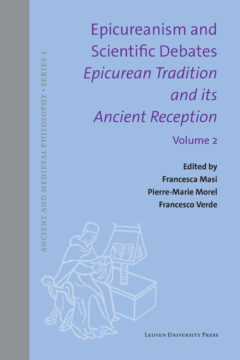 Epicureanism and Scientific Debates. Epicurean Tradition and its Ancient Reception
Francesca Masi (Editor), Pierre-Marie Morel (Editor), Francesco Verde (Editor),
January 2025
 Quaestiones de divinis praedicamentis XXVIII-XXXII
James of Viterbo (Author), Mark D. Gossiaux (Editor), Christopher D. Schabel (Editor),
June 2024
 Summa (Quaestiones ordinariae) art. LXIII-LXVII
Henry of Ghent (Author), Gordon Wilson (Editor), Girard Etzkorn (Editor), Bernd Goehring (Editor), Linda N. Etzkorn (Assisted by),
February 2024
 Epicureanism and Scientific Debates. Antiquity and Late Reception
Francesca Masi (Editor), Pierre-Marie Morel (Editor), Francesco Verde (Editor),
August 2023
 Questiones super I-VII libros Politicorum
Peter of Auvergne (Author), Marco Toste (Editor),
December 2022