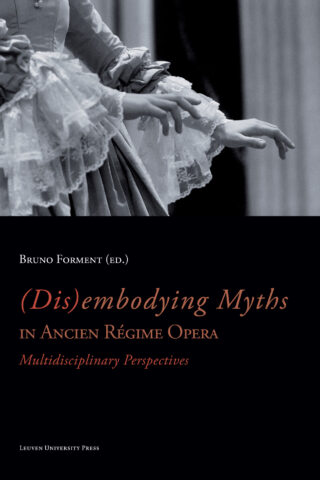
(Dis)embodying Myths in Ancien Régime Opera
Multidisciplinary Perspectives
Bruno Forment (Editor),
Category: History, History 1500-1800, Music
Language: English
ISBN: 9789461660572
Publication date: April 20, 2012
€22.00 (including 6% VAT)
Buy Now
The role of mythology in Ancien Régime opera
Throughout the Ancien Régime, mythology played a vital role in opera, defining such epoch-making works as Claudio Monteverdi’s La favola d’Orfeo (1607) and Christoph Gluck’s Iphigénie en Tauride (1779). The operatic presence of the Greco-Roman gods and heroes was anything but unambiguous or unproblematic, however. (Dis)embodying Myths in Ancien Régime Opera highlights myth’s chameleonic life in the Italian dramma per musica and French tragédie en musique of the seventeenth and eighteenth centuries.
Written by eminent scholars in the fields of music, literature, theatre, and cultural studies, the six essays in this book address important questions. Through what ideological lenses did the Ancien Régime perceive an ancient legacy that was fundamentally pagan and fictitious, as opposed to Christian and rationalistic? What dramaturgies did librettists and composers devise to adapt mythical topics to altering philosophical and esthetic doctrines? Were the ancients’ precepts obeyed or precisely overridden by the age of ‘classicism’? And how could myths be made to fit changing modes of spectatorship?
Enlightening and wide-ranging on an essentially multidisciplinary development in European culture, (Dis)embodying Myths in Ancien Régime Opera will appeal to all music, literature, and art lovers seeking to deepen their knowledge of an increasingly popular repertoire.
This publication is GPRC-labeled (Guaranteed Peer-Reviewed Content).
Music examples and illustrations
Preface
Lo scherno degli dei
Myth and derision in the dramma per musica of the seventeenth century
Jean-François Lattarico
Helpings from the great banquets of epic
Handel’s Teseo and Arianna in Creta
Robert C. Ketterer
Envoicing the divine
Oracles in lyric and spoken drama in seventeenth-century France
Geoffrey Burgess
Addressing the divine
The ‘numinous’ accompagnato in opera seria
Bruno Forment
Iphigenia’s curious ménage à trois in myth, drama, and opera
Reinhard Strohm
Spectatorship and involvement in Gluck’s
Iphigénie en Tauride
Bram van Oostveldt
Bibliography
Contributors’ biographies
Index
Bruno Forment
Bruno Forment is the principal investigator of the ‘Resounding Libraries’ research cluster at Orpheus Instituut and the Leader of the ‘Performances’ Working Group in the European COST Action EarlyMuse.
Bruno Forment is hoofdonderzoeker aan het Orpheus Instituut in Gent. Hij publiceerde talrijke boeken en essays over 18e-eeuwse opera, scenografie en artistiek onderzoek. Daarnaast is hij actief als musicus en als erfgoedspecialist.
'(Dis)embodying Myths in Ancien Régime Opera' is an attractive volume that offers useful critical perspectives on seventeenth- and eighteenth-century opera, and is a welcome and stimulating addition to early opera studies. For those already engaged in such work, nevertheless, its leanness also serves as a reminder of how much progress is still to be made in this area.
Michael Lee, Eighteenth Century Music, Volume 10, Issue 02, September 2013, pp 287-289 doi:10.1017/S1478570613000080
The articles are generally of high quality [...] the volume is an important contribution to our knowledge of opera in the Ancien Régime. Buford Norman, Emeritus University of South Carolina, Columbia, SC, USA, The Seventeenth Century, 29:4, 438-439
Frequently Asked Questions
What is "(Dis)embodying Myths in Ancien Régime Opera" about?
The role of mythology in Ancien Régime opera
Throughout the Ancien Régime, mythology played a vital role in opera, defining such epoch-making works as Claudio Monteverdi's La favola d'Orfeo (1607) and Christoph Gluck's Iphigénie en Tauride (1779). The operatic presence of the Greco-Roman gods and heroes was anything but unambiguous or unproblematic, however. (Dis)embodying Myths in Ancien Régime Opera highlights myth's chameleonic life in the Italian dramma per musica and French tragédie en musique of the seventeenth and eighteenth centuries.
Written by eminent scholars in the fields of music, literature, theatre, and cultural studies, the six essays in this book address important questions. Through what ideological lenses did the Ancien Régime perceive an ancient legacy that was fundamentally pagan and fictitious, as opposed to Christian and rationalistic? What dramaturgies did librettists and composers devise to adapt mythical topics to altering philosophical and esthetic doctrines? Were the ancients' precepts obeyed or precisely overridden by the age of ‘classicism'? And how could myths be made to fit changing modes of spectatorship?
Enlightening and wide-ranging on an essentially multidisciplinary development in European culture, (Dis)embodying Myths in Ancien Régime Opera will appeal to all music, literature, and art lovers seeking to deepen their knowledge of an increasingly popular repertoire.
This publication is GPRC-labeled (Guaranteed Peer-Reviewed Content).
Who edited "(Dis)embodying Myths in Ancien Régime Opera"?
"(Dis)embodying Myths in Ancien Régime Opera" was edited by Bruno Forment.
Bruno Forment is the principal investigator of the ‘Resounding Libraries’ research cluster at Orpheus Instituut and the Leader of the ‘Performances’ Working Group in the European COST Action EarlyMuse.
Bruno Forment is hoofdonderzoeker aan het Orpheus Instituut in Gent. Hij publiceerde talrijke boeken en essays over 18e-eeuwse opera, scenografie en artistiek onderzoek. Daarnaast is hij actief als musicus en als erfgoedspecialist.
What is the Table of Contents for "(Dis)embodying Myths in Ancien Régime Opera"?
Music examples and illustrations
Preface
Lo scherno degli dei
Myth and derision in the dramma per musica of the seventeenth century
Jean-François Lattarico
Helpings from the great banquets of epic
Handel's Teseo and Arianna in Creta
Robert C. Ketterer
Envoicing the divine
Oracles in lyric and spoken drama in seventeenth-century France
Geoffrey Burgess
Addressing the divine
The 'numinous' accompagnato in opera seria
Bruno Forment
Iphigenia's curious ménage à trois in myth, drama, and opera
Reinhard Strohm
Spectatorship and involvement in Gluck's
Iphigénie en Tauride
Bram van Oostveldt
Bibliography
Contributors' biographies
Index
What is the DOI for "(Dis)embodying Myths in Ancien Régime Opera"?
The Digital Object Identifier (DOI) for "(Dis)embodying Myths in Ancien Régime Opera" is 10.11116/9789461660572.
Related titles
 The Book of Requiems, 1815–1900
John Koslovsky (Editor), Steven Vande Moortele (Editor),
December 2026
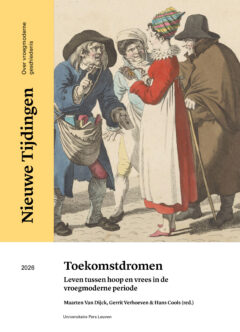 Toekomstdromen
Maarten Van Dijck (Editor), Gerrit Verhoeven (Editor), Hans Cools (Editor),
November 2026
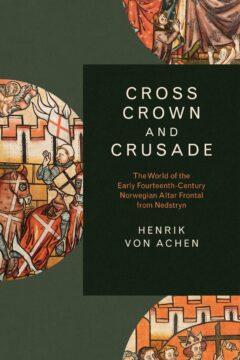
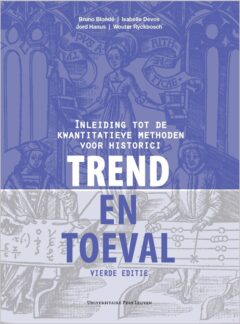 Trend en toeval – vierde editie
Bruno Blondé (Author), Isabelle Devos (Author), Jord Hanus (Author), Wouter Ryckbosch (Author),
August 2026
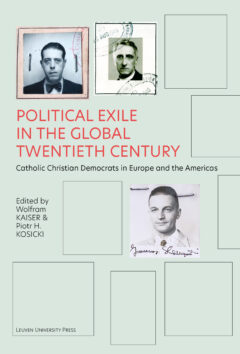 Political Exile in the Global Twentieth Century
Wolfram Kaiser (Editor), Piotr H. Kosicki (Editor),
April 2026

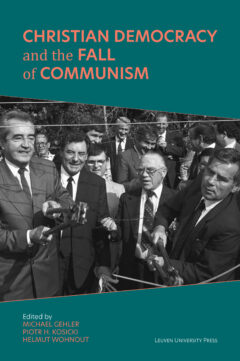 Christian Democracy and the Fall of Communism
Michael Gehler (Editor), Piotr H. Kosicki (Editor), Helmut Wohnout (Editor),
April 2026
 Brusselse plaatsnamen
Iadine Degryse (Editor), Benjamin Wayens (Editor), Chantal Kesteloot (Editor), Dennis De Vriese (Editor), Matthijs Degraeve (Editor),
April 2026
 Cartographies of Catastrophes
Laura Demeter (Editor), Carmen M. Enss (Editor), Piotr Kisiel (Editor), Carol Ludwig (Editor),
February 2026