

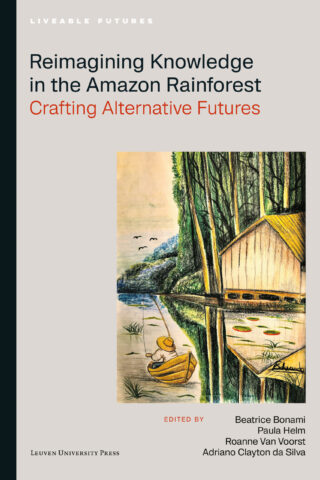

Reimagining Knowledge in the Amazon Rainforest
Crafting Alternative Futures
Beatrice Bonami (Editor), Paula Helm (Editor), Roanne van Voorst (Editor), Adriano Clayton da Silva (Editor),

Series: Liveable Futures
Category: Climate and Ecology
Language: English
ISBN: 9789462705524
Publication date: January 28, 2027
€35.00 (including 6% VAT)
COMING SOON
Available to pre-order two weeks before date of publication.
Number of pages: 230
Size: 234 x 156 x mm
Illustrations and other content description:
Illustrated, full colour

Funded by: KU Leuven Fund for Fair Open Access
University of Amsterdam
Standard delivery time for print books:
For Belgium: 5 to 8 working days
For EU: 2 to 3 weeks
For other countries: 4 to 5 weeks
Series: Liveable Futures
Category: Climate and Ecology
Language: English
ISBN: 9789461668172
Publication date: January 28, 2027
COMING SOON
Number of pages: 230
Illustrations and other content description:
Illustrated, full colour
Funded by: KU Leuven Fund for Fair Open Access
University of Amsterdam
Series: Liveable Futures
Category: Climate and Ecology
Language: English
ISBN: 9789461668165
Publication date: January 28, 2027
COMING SOON
Number of pages: 230
Illustrations and other content description:
Illustrated, full colour
Funded by: KU Leuven Fund for Fair Open Access
University of Amsterdam
A co-creative approach to imagining better futures.
Reimagining Knowledge in the Amazon Rainforest centers voices too often excluded from academic debates. Created in close collaboration with Indigenous, riverine, rural, urban, and academic contributors from the Amazon, this book shows how knowledge grows from relationships, place, language, and care. Rather than studying the Amazon from the outside, it brings local experiences into conversation with debates on technology, language, and social change. Through drawings, poetry, academic texts, and activism, the volume explores how local contexts shape and transform digital narratives from the Global North, while imagining futures where diversity reshapes the ethos of innovation.
Bringing together bold ideas, original concepts, artworks created by children of the Amazon, and shared authorship, the book offers critical insights and hopeful ways of imagining liveable futures. Addressing contemporary concerns such as digital transformation, ecological crisis, and non extractive knowledge practices, it will be welcomed by scholars and others interested in anthropology, science and technology studies (STS), linguistics, Indigenous studies, environmental humanities, and futures research.
Beatrice Bonami
Beatrice Bonami is a STS Scholar Research, Teaching and Research Fellow at the University of Edinburgh. Her work focuses on technology decoloniality, frugal AI and data models, and alterontologies in non-Western approaches to ethnography and development.
Paula Helm
Paula Helm is Professor of Empirical Ethics at the Goethe University Frankfurt. Her work brings together anthropology, STS, and technology ethics.
Roanne van Voorst
Roanne van Voorst is a futures anthropologist affiliated with the University of Amsterdam. She leads research on human–nonhuman collaboration, refugee health, and digitization.
Adriano Clayton da Silva
Adriano Clayton da Silva is Professor at the Federal University of Amazonas. He researches translation, minority and endangered languages, intersemiotic translation, and digital literacy in Amazonian contexts.
Stefania Milan
Emiliano Treré
Marina Magalhães de Morais
Naziano Filizola
Yásnaya Elena Aguilar Gil
Linett Taylor
Josias Ferreira de Souza
Hellen Cristina Picanço Simas
Arjun Appadurai
Frequently Asked Questions
What is "Reimagining Knowledge in the Amazon Rainforest" about?
A co-creative approach to imagining better futures.
Reimagining Knowledge in the Amazon Rainforest centers voices too often excluded from academic debates. Created in close collaboration with Indigenous, riverine, rural, urban, and academic contributors from the Amazon, this book shows how knowledge grows from relationships, place, language, and care. Rather than studying the Amazon from the outside, it brings local experiences into conversation with debates on technology, language, and social change. Through drawings, poetry, academic texts, and activism, the volume explores how local contexts shape and transform digital narratives from the Global North, while imagining futures where diversity reshapes the ethos of innovation.
Bringing together bold ideas, original concepts, artworks created by children of the Amazon, and shared authorship, the book offers critical insights and hopeful ways of imagining liveable futures. Addressing contemporary concerns such as digital transformation, ecological crisis, and non extractive knowledge practices, it will be welcomed by scholars and others interested in anthropology, science and technology studies (STS), linguistics, Indigenous studies, environmental humanities, and futures research.
Who wrote "Reimagining Knowledge in the Amazon Rainforest"?
"Reimagining Knowledge in the Amazon Rainforest" was written by Stefania Milan, Emiliano Treré, Marina Magalhães de Morais, Naziano Filizola, Yásnaya Elena Aguilar Gil, Linett Taylor, Josias Ferreira de Souza, Hellen Cristina Picanço Simas and Arjun Appadurai.
Who edited "Reimagining Knowledge in the Amazon Rainforest"?
"Reimagining Knowledge in the Amazon Rainforest" was edited by Beatrice Bonami, Paula Helm, Roanne van Voorst and Adriano Clayton da Silva.
Beatrice Bonami is a STS Scholar Research, Teaching and Research Fellow at the University of Edinburgh. Her work focuses on technology decoloniality, frugal AI and data models, and alterontologies in non-Western approaches to ethnography and development.
Paula Helm is Professor of Empirical Ethics at the Goethe University Frankfurt. Her work brings together anthropology, STS, and technology ethics.
Roanne van Voorst is a futures anthropologist affiliated with the University of Amsterdam. She leads research on human–nonhuman collaboration, refugee health, and digitization.
Adriano Clayton da Silva is Professor at the Federal University of Amazonas. He researches translation, minority and endangered languages, intersemiotic translation, and digital literacy in Amazonian contexts.
Is "Reimagining Knowledge in the Amazon Rainforest" part of a series?
Yes, "Reimagining Knowledge in the Amazon Rainforest" is part of the "Liveable Futures" series.
 Liveable Futures provides a platform to articulate the ideals, relations and knowledge we need for liveable futures. The various contributions explore what is essential for political processes, institutions and scientific insights to garner sufficient trust and reliability. They also open up the question of what is crucial to further enable us to care—rather than discover, profit or exploit.
‘Liveable futures’ are put forth as alternative aspirations to sustainability. ‘Liveable’ ranges from likely to survive, to suitable for living in, to pleasant to live in. Such a sliding scale seems appropriate for uncertain times. Liveable is an adjective that provides more depth, more modulation to the possibility of flourishing than a neo-liberal economic focus on growth. ‘Liveable futures’ indicates that the possibility of survival—and therefore also the possibility of NOT living on—has to be taken into careful account. A liveable future is neither a measureable object (like growth), nor a certainty, nor an assessment (like sustainability), but a set of conditions that are good enough to live in.
The series aims to articulate and affect the political, scientific, material and symbolic configurations we use to make our worlds, and to help imagine the kinds of futures we want. It will include works that span one or more of the following fields or disciplines:
- Science and technology studies
- Environmental history
- Anthropology of science/technology/nature
- Environmental humanities
- Social Epistemology
The series welcomes contributions by established scholars as well as by promising young researchers, and embraces diversity in terms of gender, nationality, and ethnicity.
All books are written for an international audience of scholars. All manuscripts are subject to peer review.
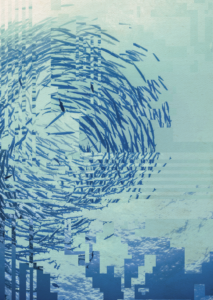
Picture: Lone Thomasky & Bits&Bäume / https://betterimagesofai.org / https://creativecommons.org/licenses/by/4.0/
An underwater photo taken looking up to a large circular school of fish while the sun sparkles in the blue water. However, the image is slightly distorted by digital artefacts.
Series editors
- Prof. dr. Anne Beaulieu (Chair), Utrecht University
- Marije Miedema (Editorial Assistant), University of Groningen
- Dr. Stephanie Ketterer, Wageningen University
- Prof. dr. Paul Wouters, Leiden University
- Prof. dr. Nishant Shah, The Chinese University of Hong Kong
- Dr. Edgar Gómez-Cruz, University of Texas
- Dr. Oluwabunmi Bernard, Obafemi Awolowo University
Proposals
Proposals and enquiries can be sent to the series’ chair prof. dr. Anne Beaulieu.
Please make use of the submission form to present your manuscript or proposal to our board.
Authors interested in Open Access can consult the available funding options.
Links & Resources
The first title is expected in Fall 2026.
Is "Reimagining Knowledge in the Amazon Rainforest" available Open Access?
Yes, "Reimagining Knowledge in the Amazon Rainforest" is published Open Access. It is available under a BY-NC-ND license.
Who funded the publication of "Reimagining Knowledge in the Amazon Rainforest"?
Publication of "Reimagining Knowledge in the Amazon Rainforest" was funded by KU Leuven Fund for Fair Open Access
University of Amsterdam
.
What is the DOI for "Reimagining Knowledge in the Amazon Rainforest"?
The Digital Object Identifier (DOI) for "Reimagining Knowledge in the Amazon Rainforest" is 10.11116/9789461668172.
Related titles
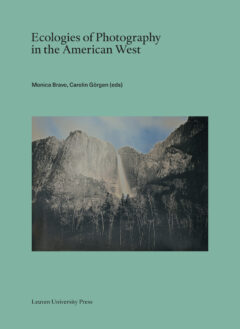 Ecologies of Photography in the American West
Monica Bravo (Editor), Carolin Görgen (Editor),
September 2026
 Moral Seascapes
Jonathan Stafford (Editor), Henning Trüper (Editor), Burkhardt Wolf (Editor),
November 2024
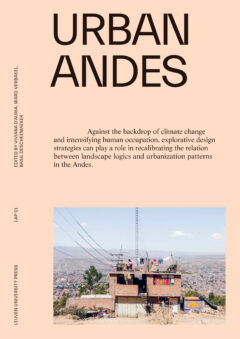 Urban Andes
Viviana d’Auria (Editor), Ward Verbakel (Editor), Basil Descheemaeker (Editor),
August 2022
 Oil Wealth and Development in Uganda and Beyond
Arnim Langer (Editor), Ukoha Ukiwo (Editor), Pamela Mbabazi (Editor),
January 2020
 Mapping Landscapes in Transformation
Thomas Coomans (Editor), Bieke Cattoor (Editor), Krista De Jonge (Editor),
June 2019