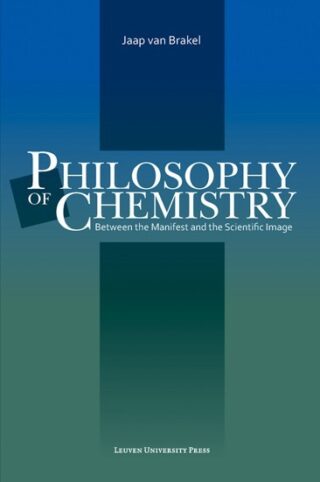
Philosophy of Chemistry
Between the manifest and the scientific image
Jaap Van Brakel (Author),
This book addresses themes in the newly emerging discipline of philosophy of chemistry, in particular issues in connection with discussions in general philosophy of science on natural kinds, reduction and ceteris paribus laws. The philosophical issue addressed in all chapters is the relation between, on the one hand, the manifest image (the daily practice or common-sense-life-form) and on the other the scientific image, both of which claim to be the final arbiter of ‘everything’. With respect to chemistry the question can be raised: were does it fit in – with the manifest or scientific image? Most philosophers and chemists probably would reply unhesitatingly: the scientific image. The aim of this book is to raise doubts about that self-evidence. It is argued that chemistry is primarily the science of manifest substances, whereas ‘micro’ or ‘submicro’ scientific talk, though important, useful, and insightful does not change what matters, namely the properties of manifest substances. These manifest substances, their properties and uses cannot be reduced to talk of molecules or solutions of the Schrödinger equation. If ‘submicroscopic’ quantum mechanics were to be wrong, it would not affect all (or any) ‘microlevel’ chemical knowledge of molecules. If molecular chemistry were to be wrong, it wouldn’t disqualify knowledge of, say, water – not at the ‘macrolevel’ (e.g. its’ viscosity at 50 °C), nor at the pre- or protoscientific manifest level (e.g. ice is frozen water).
Introduction
1.Emergence of philosophy of chemistry
2.Philosophical preliminaries
3.Chemical substances
4.Essentialistic realism
5.The alleged reduction of chemistry
6.Ceteris paribus
7.Modelling in chemical engineering
8.Conclusion
References
Indexes
Frequently Asked Questions
What is "Philosophy of Chemistry" about?
This book addresses themes in the newly emerging discipline of philosophy of chemistry, in particular issues in connection with discussions in general philosophy of science on natural kinds, reduction and ceteris paribus laws. The philosophical issue addressed in all chapters is the relation between, on the one hand, the manifest image (the daily practice or common-sense-life-form) and on the other the scientific image, both of which claim to be the final arbiter of 'everything'. With respect to chemistry the question can be raised: were does it fit in - with the manifest or scientific image? Most philosophers and chemists probably would reply unhesitatingly: the scientific image. The aim of this book is to raise doubts about that self-evidence. It is argued that chemistry is primarily the science of manifest substances, whereas 'micro' or 'submicro' scientific talk, though important, useful, and insightful does not change what matters, namely the properties of manifest substances. These manifest substances, their properties and uses cannot be reduced to talk of molecules or solutions of the Schrödinger equation. If 'submicroscopic' quantum mechanics were to be wrong, it would not affect all (or any) 'microlevel' chemical knowledge of molecules. If molecular chemistry were to be wrong, it wouldn't disqualify knowledge of, say, water - not at the 'macrolevel' (e.g. its' viscosity at 50 °C), nor at the pre- or protoscientific manifest level (e.g. ice is frozen water).
Who wrote "Philosophy of Chemistry"?
"Philosophy of Chemistry" was written by Jaap Van Brakel.
Is "Philosophy of Chemistry" part of a series?
Yes, "Philosophy of Chemistry" is part of the "Louvain Philosophical Studies" series. It's book 15 in the series.
What is the Table of Contents for "Philosophy of Chemistry"?
Introduction
1.Emergence of philosophy of chemistry
2.Philosophical preliminaries
3.Chemical substances
4.Essentialistic realism
5.The alleged reduction of chemistry
6.Ceteris paribus
7.Modelling in chemical engineering
8.Conclusion
References
Indexes
Related titles
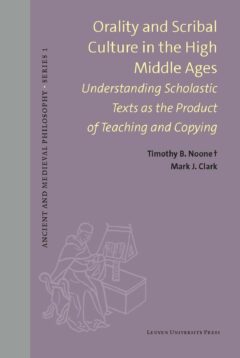 Orality and Scribal Culture in the High Middle Ages
Timothy B. Noone (Author), Mark J. Clark (Author),
November 2026
 Summa (Quaestiones ordinariae) art. LXXIII – LXXV
Henry of Ghent (Author), Gordon Wilson (Editor), Juan Carlos Flores (Editor),
September 2026
 The Medieval Aristotle
Nena Bobovnik (Editor), Clelia V. Crialesi (Editor), Lisa Devriese (Editor),
August 2026

 Thomas Aquinas and Hervaeus Natalis on Concepts and Intentional Objects
Fabrizio Amerini (Author),
February 2026
 Epicureanism and Scientific Debates. Epicurean Tradition and its Ancient Reception
Francesca Masi (Editor), Pierre-Marie Morel (Editor), Francesco Verde (Editor),
January 2025

 Quaestiones de divinis praedicamentis XXVIII-XXXII
James of Viterbo (Author), Mark D. Gossiaux (Editor), Christopher D. Schabel (Editor),
June 2024
 Summa (Quaestiones ordinariae) art. LXIII-LXVII
Henry of Ghent (Author), Gordon Wilson (Editor), Girard Etzkorn (Editor), Bernd Goehring (Editor), Linda N. Etzkorn (Assisted by),
February 2024
 Epicureanism and Scientific Debates. Antiquity and Late Reception
Francesca Masi (Editor), Pierre-Marie Morel (Editor), Francesco Verde (Editor),
August 2023
 Questiones super I-VII libros Politicorum
Peter of Auvergne (Author), Marco Toste (Editor),
December 2022