

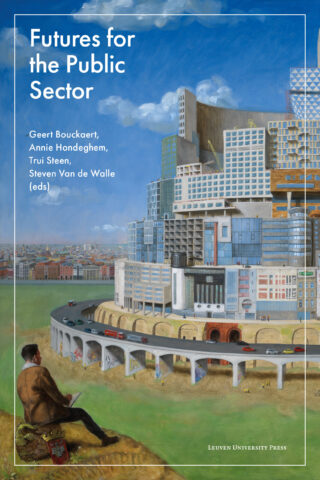

Futures for the Public Sector
Geert Bouckaert (Editor), Annie Hondeghem (Editor), Trui Steen (Editor), Steven Van de Walle (Editor),

Category: Policy, Governance and Public Administration
Language: English
ISBN: 9789462704503
Publication date: March 14, 2025
€38.00 (including 6% VAT)
Buy NowNumber of pages: 428
Size: 234 x 156 x 21 mm

Funded by: KU Leuven Fund for Fair Open Access
Stock item: 164837
Standard delivery time for print books:
For Belgium: 5 to 8 working days
For EU: 2 to 3 weeks
For other countries: 4 to 5 weeks
Category: Policy, Governance and Public Administration
Language: English
ISBN: 9789461666277
Publication date: March 5, 2025
Download Free EpubNumber of pages: 428
Funded by: KU Leuven Fund for Fair Open Access
Category: Policy, Governance and Public Administration
Language: English
ISBN: 9789461666246
Publication date: March 5, 2025
Download Free PDFNumber of pages: 428
Funded by: KU Leuven Fund for Fair Open Access
Thought-provoking analysis of how illiberalism, major crises and digital transformation are changing our politico-administrative systems
What does the future hold for the public sector? A convergence of illiberalism, major crises, system quakes and digital transformations are reshaping current politico-administrative systems. How will this challenge the way states and public administrations can and should be managed, and what will be the impact on citizen–administrative relations and our models of democracy? In this book, leading public administration scholars reflect on major trends in the public sector and their implications. They offer visions of how the academic field of public administration can respond to or anticipate possible futures. Ideal for policymakers, academics, and anyone interested in the future of governance, this compelling work reflects on how the forces transforming our world will impact the public sector.
Preface
by Annie Hondeghem and Trui Steen
INTRODUCTION
Looking at futures for the public sector
by Geert Bouckaert
PART 1: FUTURES OF THE POLITICOADMINISTRATIVE SYSTEM
Strategies for democratic public administration in an era of populism
by Michael W. Bauer
The trend towards fragility in the 21st century
by Alasdair Roberts
Undermining the administrative state: The case of the United States
by Donald Moynihan
Shifting power structures in the US : The rolling back of Diversity, Equity, and Inclusion policies
by Norma M. Riccucci
PART 2: FUTURES OF CONTAINING CRISES AND DISRUPTION
Are poly-crises the new normal? Challenges for public administration in liberal-democratic states
by Brian W. Head
The rise of hybridity in the new ‘normalcy’ of crises
by Tiina Randma-Liiv and Steven Nõmmik
The future role of government in cybersecurity
by Greta Nasi
The dawn of disruptive technology-driven future government
by M. Jae Moon, Seulgi Lee, Seungkyu Park, and Ire Park
The digital transformation as a double governance challenge
by Albert Meijer
PART 3: FUTURES OF CITIZEN-STATE INTERACTIONS
The rise of sceptical citizens about public administration communication
by María José Canel
Politicisation and populism: The future of the frontline of public services
by Gabriela Lotta
PART 4: FUTURES OF ADMINISTRATING THE STATE
The transformation of the regulatory state?
by Martin Lodge
Why we need more public value
by Sandra Van Thiel
Ecosystems: the word that would be king?
by Adina Dudau
PART 5: FUTURES OF MANAGING THE CIVIL SERVICE
Shifting dynamics of advice : Non-state experts and private sector consultancies in public policy
by Rosie Collington
Flexibilisation of work and the future of public sector employment
by Adrian Ritz, Guillem Ripoll, and Lorenza Micacchi
The future of bureaucratic merit
by Marina Nistotskaya
The functional politicisation of the merit civil service : From responsive to subservient bureaucracy?
by Tobias Bach
The disappearance of lower-grade bureaucrats
by Steven Van de Walle
PART 6: FUTURES OF STUDYING PUBLIC ADMINISTRATION
Using Public Administration research to strengthen ‘futures thinking’ in the public sector
by Jeroen Maesschalck
The future of a scattered field: Challenges and opportunities
by Asmus Leth Olsen
The rise of open science and public access : Implications for Public Administration research
by Mary K. Feeney
CONCLUSION
Which futures for the public sector?
by Geert Bouckaert
List of contributors
Geert Bouckaert
Geert Bouckaert is professor emeritus at the KU Leuven Public Governance Institute. He is past-president of the European Group for Public Administration, and of the International Institute of Administrative Sciences.
Geert Bouckaert is professor at KU Leuven and Chair of the Committee for Contemporary Art.
Annie Hondeghem
Annie Hondeghem is professor and former director of the KU Leuven Public Governance Institute. She co-ordinates the Policy Research Centre on Governance Innovation, commissioned by the Flemish government.
Trui Steen
Trui Steen is professor in public governance and co-production of public services and director of the KU Leuven Public Governance Institute. She publishes on public sector innovation and co-creation of public services.
Steven Van de Walle
Steven Van de Walle is professor in public management at the KU Leuven Public Governance Institute. Prior to joining KU Leuven, he held the chair of Public Management at Erasmus University Rotterdam.
Tobias Bach
Michael W. Bauer
María José Canel
María José Canel is Professor of political and public sector communication at the Complutense University of Madrid, specialising in trust, legitimacy and communication in public institutions.
Rosie Collington
Adina Dudau
Mary K. Feeney
Brian W. Head
Seulki Lee
Martin Lodge
Gabriela Lotta
Jeroen Maesschalck
Jeroen Maesschalck is Professor of Criminology and Police Studies at KU Leuven.
Albert Meijer
Lorenza Micacchi
Jae M. Moon
Donald Moynihan
Greta Nasi
Marina Nistotskaya
Steven Nõmmik
Asmus Leth Olsen
Park Ire
Seungkyu Park
Tiina Randma-Livv
Norma M. Riccucci
Guillem Ripoll
Adrian Ritz
Alasdair Roberts
Sandra Van Thiel
Geert Bouckaert
Annie Hondeghem
Trui Steen
Steven Van de Walle
Summing up, this is a very rich volume addressing the fundamental normative question within Public Administration on how governance can be organized with or without democracy, and with or without a rule-of- law- based constitutional framework. We agree on the need for rediscovering bureaucracy and the role of public administration in protecting the values of liberal democracy and the rule-of- law and merit-based bureaucracy. This happens in a period characterized by democratic backsliding. The book gives new knowledge about how “living” public administration organizations work in practice in unsettled and turbulent situations and their relations to other institutional settings. - Christensen, T. and Lægreid, P. (2025), Public Admin Rev, 85: 1918-1920. https://doi.org/10.1111/puar.70054
The book is a brilliant and forward-thinking examination of public sector evolution. The editors bring together a range of expert voices to thoughtfully argue how complex socio-political, technological, and economic shifts necessitate innovative transformations within the public sector. The book not only synthesizes current knowledge but also advances new avenues for future research, making it an indispensable reference for anyone dedicated to understanding and improving the public sector's role in society. - Sabine Kuhlmann, Universität Potsdam
For public administration scholars, however, the book is an essential one for the shelf (real or virtual). The section at the end of each chapter in the six parts dedicated to outlining possible future research agendas for public administration is of particular benefit to scholars, suggesting a wealth of topics and themes worthy of examination. Overall, a very fitting tribute to Bouckaeret’s career and his contribution to public administration research and the improvement of the public sector. - Richard Boyle, Administration, vol. 73, no. 4, The Institute of Public Administration of Ireland, 2025, pp. 99-103. https://doi.org/10.2478/admin-2025-0028
Frequently Asked Questions
What is "Futures for the Public Sector" about?
Thought-provoking analysis of how illiberalism, major crises and digital transformation are changing our politico-administrative systems
What does the future hold for the public sector? A convergence of illiberalism, major crises, system quakes and digital transformations are reshaping current politico-administrative systems. How will this challenge the way states and public administrations can and should be managed, and what will be the impact on citizen–administrative relations and our models of democracy? In this book, leading public administration scholars reflect on major trends in the public sector and their implications. They offer visions of how the academic field of public administration can respond to or anticipate possible futures. Ideal for policymakers, academics, and anyone interested in the future of governance, this compelling work reflects on how the forces transforming our world will impact the public sector.
Who wrote "Futures for the Public Sector"?
"Futures for the Public Sector" was written by Tobias Bach, Michael W. Bauer, María José Canel, Rosie Collington, Adina Dudau, Mary K. Feeney, Brian W. Head, Seulki Lee, Martin Lodge, Gabriela Lotta, Jeroen Maesschalck, Albert Meijer, Lorenza Micacchi, Jae M. Moon, Donald Moynihan, Greta Nasi, Marina Nistotskaya, Steven Nõmmik, Asmus Leth Olsen, Park Ire, Seungkyu Park, Tiina Randma-Livv, Norma M. Riccucci, Guillem Ripoll, Adrian Ritz, Alasdair Roberts and Sandra Van Thiel.
María José Canel is Professor of political and public sector communication at the Complutense University of Madrid, specialising in trust, legitimacy and communication in public institutions.
Jeroen Maesschalck is Professor of Criminology and Police Studies at KU Leuven.
Who edited "Futures for the Public Sector"?
"Futures for the Public Sector" was edited by Geert Bouckaert, Annie Hondeghem, Trui Steen and Steven Van de Walle.
Geert Bouckaert is professor emeritus at the KU Leuven Public Governance Institute. He is past-president of the European Group for Public Administration, and of the International Institute of Administrative Sciences.
Geert Bouckaert is professor at KU Leuven and Chair of the Committee for Contemporary Art.
Annie Hondeghem is professor and former director of the KU Leuven Public Governance Institute. She co-ordinates the Policy Research Centre on Governance Innovation, commissioned by the Flemish government.
Trui Steen is professor in public governance and co-production of public services and director of the KU Leuven Public Governance Institute. She publishes on public sector innovation and co-creation of public services.
Steven Van de Walle is professor in public management at the KU Leuven Public Governance Institute. Prior to joining KU Leuven, he held the chair of Public Management at Erasmus University Rotterdam.
Is "Futures for the Public Sector" available Open Access?
Yes, "Futures for the Public Sector" is published Open Access. It is available under a BY-NC-ND license.
Who funded the publication of "Futures for the Public Sector"?
Publication of "Futures for the Public Sector" was funded by KU Leuven Fund for Fair Open Access
.
What is the Table of Contents for "Futures for the Public Sector"?
Preface
by Annie Hondeghem and Trui Steen
INTRODUCTION
Looking at futures for the public sector
by Geert Bouckaert
PART 1: FUTURES OF THE POLITICOADMINISTRATIVE SYSTEM
Strategies for democratic public administration in an era of populism
by Michael W. Bauer
The trend towards fragility in the 21st century
by Alasdair Roberts
Undermining the administrative state: The case of the United States
by Donald Moynihan
Shifting power structures in the US : The rolling back of Diversity, Equity, and Inclusion policies
by Norma M. Riccucci
PART 2: FUTURES OF CONTAINING CRISES AND DISRUPTION
Are poly-crises the new normal? Challenges for public administration in liberal-democratic states
by Brian W. Head
The rise of hybridity in the new ‘normalcy’ of crises
by Tiina Randma-Liiv and Steven Nõmmik
The future role of government in cybersecurity
by Greta Nasi
The dawn of disruptive technology-driven future government
by M. Jae Moon, Seulgi Lee, Seungkyu Park, and Ire Park
The digital transformation as a double governance challenge
by Albert Meijer
PART 3: FUTURES OF CITIZEN-STATE INTERACTIONS
The rise of sceptical citizens about public administration communication
by María José Canel
Politicisation and populism: The future of the frontline of public services
by Gabriela Lotta
PART 4: FUTURES OF ADMINISTRATING THE STATE
The transformation of the regulatory state?
by Martin Lodge
Why we need more public value
by Sandra Van Thiel
Ecosystems: the word that would be king?
by Adina Dudau
PART 5: FUTURES OF MANAGING THE CIVIL SERVICE
Shifting dynamics of advice : Non-state experts and private sector consultancies in public policy
by Rosie Collington
Flexibilisation of work and the future of public sector employment
by Adrian Ritz, Guillem Ripoll, and Lorenza Micacchi
The future of bureaucratic merit
by Marina Nistotskaya
The functional politicisation of the merit civil service : From responsive to subservient bureaucracy?
by Tobias Bach
The disappearance of lower-grade bureaucrats
by Steven Van de Walle
PART 6: FUTURES OF STUDYING PUBLIC ADMINISTRATION
Using Public Administration research to strengthen ‘futures thinking’ in the public sector
by Jeroen Maesschalck
The future of a scattered field: Challenges and opportunities
by Asmus Leth Olsen
The rise of open science and public access : Implications for Public Administration research
by Mary K. Feeney
CONCLUSION
Which futures for the public sector?
by Geert Bouckaert
List of contributors
What is the DOI for "Futures for the Public Sector"?
The Digital Object Identifier (DOI) for "Futures for the Public Sector" is 10.11116/9789461666246.
Related titles
 Digital Citizenship
Peter van Baalen (Editor), Selin Gerlek (Editor), Jakko Kemper (Editor), Halil Can Kurban (Editor), Marina Tulin (Editor),
October 2026
 Brusselse plaatsnamen
Iadine Degryse (Editor), Benjamin Wayens (Editor), Chantal Kesteloot (Editor), Dennis De Vriese (Editor), Matthijs Degraeve (Editor),
April 2026
 Brussel in een België met vier gewesten?
Dirk Moors (Editor), Anneloes Vandenbroucke (Editor), Iadine Degryse (Editor), Simon Boone (Editor),
February 2025
 Building Collaborative Governance in Times of Uncertainty
Xabier Barandiaran (Editor), María José Canel (Editor), Geert Bouckaert (Editor),
March 2023
 Handbook for Ethiopian Public Administration Program Accreditation
Bacha Kebede Debela (Editor), Geert Bouckaert (Editor), Berhanu Temesgen Eshetu (Editor), Chala Deyessa Fita (Editor), Hailu Megersa Tola (Editor), Kiflie Worku Angaw (Editor), Shumey Berhie Teshome (Editor), Solomon Gebreyohans Gebru (Editor),
June 2022
 International Development Cooperation Today
Patrick Develtere (Author), Huib Huyse (Author), Jan Van Ongevalle (Author),
April 2021
 Public Administration in Ethiopia
Bacha Kebede Debela (Editor), Geert Bouckaert (Editor), Meheret Ayenew Warota (Editor), Dereje Terefe Gemechu (Editor),
January 2021
 European Perspectives for Public Administration
Geert Bouckaert (Editor), Werner Jann (Editor),
January 2020
 Oil Wealth and Development in Uganda and Beyond
Arnim Langer (Editor), Ukoha Ukiwo (Editor), Pamela Mbabazi (Editor),
January 2020
 Financing Quality Education for All
Kristof De Witte (Author), Vitezslav Titl (Author), Oliver Holz (Author), Mike Smet (Author),
September 2019