Blog
Annelies Moors | Doing Ethnography
9th March, 2026 in Author’s corner
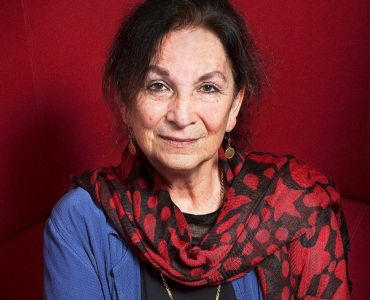
Annelies Moors is an anthropologist and Professor Emerita at the University of Amsterdam. Most recently she was the principal investigator of the ERC advanced grant ‘Muslim Marriages’ and held the NIAS fellowship ‘The Struggle for the Future of Ethnography’.
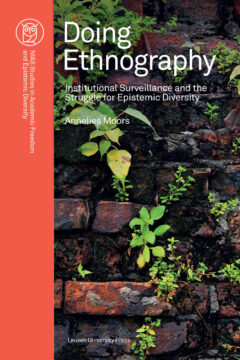
In this episode of the NIAS podcast Room to Explore, anthropologist Annelies Moors discusses her book Doing Ethnography: Institutional Surveillance and the Struggle for Epistemic Diversity in conversation with Markus Balkenhol.
Ethnography has long been valued for its immersive and relational approach to understanding social worlds. Yet, as Moors explains in this conversation, the conditions under which ethnographic research is conducted have changed significantly. In recent decades, academic research has become increasingly shaped by ethics review procedures, open science mandates, and research integrity frameworks. While these measures aim to ensure transparency and accountability, they often reflect assumptions drawn from quantitative research traditions and may sit uneasily with ethnographic practice.
In the podcast, Moors reflects on how these institutional forms of oversight affect the daily realities of fieldwork. Ethnography relies on long-term relationships, evolving research questions, and context-specific ethical decisions. As a result, universal and bureaucratic ethical standards can sometimes conflict with the interpretive and intersubjective nature of ethnographic knowledge production.
Her book argues for a more situated and context-sensitive approach to research ethics—one that acknowledges the complexity of ethnographic engagement and the responsibility researchers have toward the people they work with. Rather than applying one-size-fits-all procedures, Moors advocates an ethics of care that takes seriously the relational character of fieldwork.
The discussion also raises a broader question: how can academia maintain epistemic diversity—the coexistence of different ways of producing knowledge—at a time when research practices are increasingly standardized?
🎧 Listen to the full conversation in the Room to Explore podcast