Blog
Wout Saelens | Fossil Consumerism
14th January, 2026 in Author’s corner
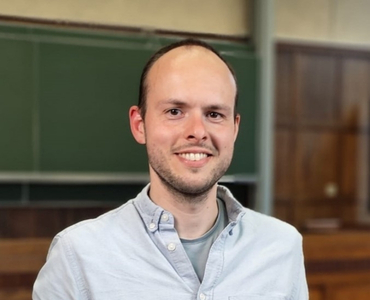
Wout Saelens is a postdoctoral researcher at the Centre for Urban History of the University of Antwerp and the Social History of Capitalism research group of the Vrije Universiteit Brussel.
The roots of climate change lie in the living room.
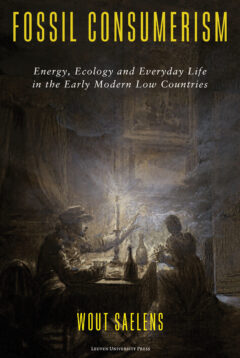
In his book Fossil Consumerism, author Wout Saelens offers a reinterpretation of the historical roots of global warming, finding these not in the industrial mill, but in the intimate, overlooked spaces of the home. As he explains, “By the end of the eighteenth century, fossil energy had become an intrinsic part of everyday life, as people increasingly prioritised their own cosy comfort over the health of their surroundings.”
Briefly and concisely explain in plain language what the book is about.
My book reframes the history of fossil fuels through the lens of the home, arguing that the roots of climate change lie in the living room. We often imagine global warming as a phenomenon that happens ‘outdoors’. Similarly, historians tend to trace its origins to factory smokestacks, the industrial revolution and the steam engine. This book, however, looks further back in time and explores the early history of our modern energy economy, as it unfolded inside the early modern household.
Focusing on the Low Countries – one of the first regions in the world to shift from wood and charcoal to fossil fuels such as peat and coal – it offers an ‘indoor’ history of energy and environment. It shows that, before industries and machinery transformed production, ordinary consumers already embraced fossil fuels to make their homes warmer and more comfortable. In doing so, they normalised energy sources that, because of their polluting nature, were once viewed with deep suspicion. By the end of the eighteenth century, fossil energy had become an intrinsic part of everyday life, as people increasingly prioritised their own cosy comfort over the health of their surroundings.
What or who inspired you to choose this topic?
This book builds on my PhD research that I conducted at the University of Antwerp and the Vrije Universiteit Brussel between 2016 and 2021, under the supervision of Bruno Blondé and Wouter Ryckbosch, who originally drew up the project. Having graduated earlier as a medieval historian with a focus on craft guilds, both the topic of energy and the early modern period were initially new to me. But the project immediately resonated with me , not least because of its topical relevance and novelty, and it set the course for my subsequent research.
In my current postdoctoral project, I continue to further uncover the historical triggers of global warming, now from a more explicitly environmental perspective. While turning the dissertation into a book I revised my earlier findings in light of these new insights, integrating more fully questions of smoke pollution, popular ecological awareness and environmental inequalities.
What social impact do you think the book can have, or would you like it to have?
I hope the book will encourage readers to rethink our relationship with energy, which today is often taken for granted. Little thought is given to where the energy for keeping us warm and comfortable comes from and what it truly costs. The environment and its resources are often commodified and reduced to consumable products: fuel for heating, driving cars or charging our phones. We are well aware that burning (fossil) energy harms the planet, yet everyday life largely continues as if nothing is wrong.
History can help put phenomena that seem very recent – such as global warming – into a larger perspective. It not only deepens our understanding of how certain problems have come into being, but also opens space for imagining different futures. By historicising habits that today appear ever so natural and self-evident – something as banal as turning the heat on – the past can reveal a more complex and open-ended story. In the case of energy, fossil fuels were not an inevitable outcome of progress simply because they were ‘better’ or more ‘efficient’. They became dominant through a long process in which people learned to accept a type of fuel – dirty, smelly and unhealthy like coal and peat – that they would earlier never have welcomed into their homes.
In what way do you think your book can shape future research in your research field?
I think my book can push environmental and energy historians in directions they have rarely taken so far. Their histories are usually about spaces of production such as workshops, factories and mines; about workers, entrepreneurs and inventors – most often men; about machines and other industrial technology; about markets and economic dynamics; about the outside environment. By contrast, this book invites all kinds of other places, practices, actors and objects onto the stage: homes and kitchens, cooking and heating, housewives and maidservants, fireplaces and stoves, and so on.
What would you like readers to remember about your book?
That all the precious comforts that our modern consumer society provides often come with huge environmental costs – costs that, for most consumers, remain largely invisible. The batteries in our electronic devices, the petrol at the pump, even the exhaust of ‘clean’ gas burners all appear rather neat and harmless, but in reality they are not. As consumers, we mostly encounter energy through a bill: the cheaper, the better. And all that matters is the comfort and domesticity associated with warmth.
History shows that this was once different. Excessive consumption – too much warmth, too much energy – was long regarded as dangerous. Fire offered comfort and protection, but it could also reduce a house to ashes, smoke could suffocate and poor ventilation could lead to carbon monoxide poisoning. For centuries, people often preferred a cold but smokefree home to one that was warm but polluted, preserving bodily heat by wrapping themselves in thick, woollen clothing rather than light cottons.
My message is not meant as a moral attack on individuals – that we should look at our own personal responsibility, or that we should ‘degrow’ and consume less. No, consumer society fuels inequality, as it benefits the wealthy most. And while it may provide many with smartphones, televisions and streaming services, it still fails to deliver affordable, let alone clean, energy for all. My point is that the choice for fossil fuels is a collective one, continually remade through everyday practices. I believe that we will have to question the consumer society itself in order to rethink our energy future.
If you could travel through time, where would you want to go to talk about your research/book?
If possible, I would pay a visit to Alida Schaecht in her house on the Delftsche Vliet in Leiden on 28 June 1779, when a probate inventory of all her household possessions was being drawn up, one week after the death of her husband. Alida belonged to the upper middle class and stood at the forefront of a broader historical change. By burning more fuel than previous generations – she owned two fireplaces and two stoves, rather than the single cooking hearth typical of most households before – she altered the indoor climate of her home, making it warmer and less dependent on the natural elements.
Crucially, she did so by relying on coal instead of traditional firewood. Alida’s household thus experienced a quiet revolution towards a lifestyle that was more comfortable, but also more energy-demanding, carbon-emitting and environmentally destructive. Ordinary as it may have seemed at the time, Alida would almost certainly have been unaware of the far-reaching transformations to which her changing domestic life contributed – transformations for which we continue to pay the price today.
If I could travel back in time, I would like to ask Alida to teach me how to kindle and tend a good fire.