Blog
Yolanda Aixelà-Cabré | African Women’s Histories in European Narratives
20th May, 2025 in Author’s corner
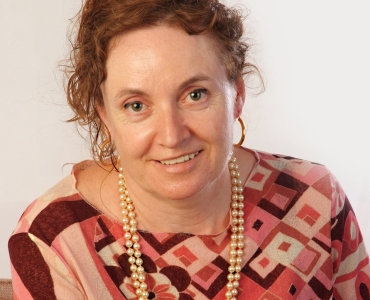
Yolanda Aixelà-Cabré is Senior Researcher in Anthropology at the IMF center of the Spanish Council for Scientific Research-CSIC, where she co-coordinates the Inclusive Societies Program and leads the R&D Project “Black Spain”.
Nobody imagined that in the 19th century African people lived in Europe as free and rich people without being diplomats.
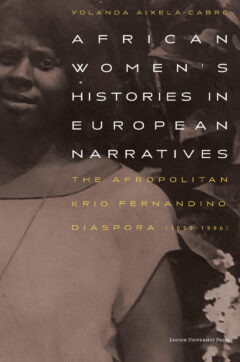
African Women’s Histories in European Narratives explains how the Krio Fernandino, and particularly their women, transcended the barriers of race and gender in colonial Africa and in Spain. Author Yolanda Aixelà-Cabré highlights a fascinating journey across cultures and continents, unearthing a compelling narrative of African women’s empowerment in their home continent and in Catalonia. “In my opinion it was urgent to have a female Krio Fernandino storyline that explained the challenges and achievements of these women, as well as their capacity for mobilisation, organisation and association”, she points out.
Briefly and concisely explain in plain language what the book is about.
The book offers a history of women, providing an historical ethnography of the Krio Fernandino community, through one of its most notable figures: Amelia Barleycorn de Vivour (1860?-1920) who born in Santa Isabel (Spanish Guinea) and died in Barcelona (Spain).
What or who inspired you to choose this topic?
I was doing research in different colonial journals reading different sections. Then I found in La Guinea Española the announcement of the death in Barcelona of “the aristocratic Amelia Barleycorn de Vivour” in February 1920. I was amazed! I thought that she would be a black African Krio Fernandina but I was really surprised that she was very rich and she died in Catalonia, far from Africa. This was the starting point of a long research journey across cultures and continents, exemplifying those African communities that stand out for being transcontinental, multi-sited and Afropolitan, as it unearths a passionate story of African female empowerment in their home continent and in their new home in Europe.
Did the book turn out the way you imagined it? In what way(s) did it or did it not?
The content of the book really surprised myself! I never imagined that Amelia Barleycorn de Vivour would be the precedent of the first documented African diaspora in Europe that settled from the last quarter of the 19th until today.
What social impact do you think the book can have, or would you like it to have?
I think that the book’s social impact can be high if afro-descent communities use the case study to trace the African contemporary past in Europe given that Krio Fernandino escaped from slavery becoming a rich African bourgeoisie.
The research constitutes a herstory that will ring true on a regional, national and transcontinental scale; a genuine Euro African and Afro European legacy to be preserved for future generations.
In what way do you think your book can shape future research in your research field?
This work has been the first that labelled the African Fernandino people as a multilocal, transnational, transcontinental and Afropolitan community that lived between Africa and Europe. I think that the approach allows us to see African presence from different points of view, enriching the meaning of being African in Europe and subverting the stereotype of poor and marginalized people. On the other hand, the history of Africans in Europe never was built from women, something that is really urgent to put into circulation other views and experiences from a gender perspective. Last but not least, nobody imagined that in the 19th century African people lived in Europe as free and rich people without being diplomats.
What is your favourite part of the book and why?
The last chapter, “Decolonising the African past from a gender perspective”. My aim was to recognise the Krio Fernandino socio-cultural influence of women presenting them as dynamic and active subjects who enjoyed different levels of authority and power. In my opinion, it was urgent to have a female Krio Fernandino storyline that explained the challenges and achievements of these women, as well as their capacity for mobilisation, organisation and association.
How did the writing process for this book go? Did you experience anything surprising, amusing or striking?
Yes, it was really exciting trying to explain who Krio Fernandino were. It was very difficult to resist the fascination with knowing how they lived and who they were and at the same time avoid the temptation to reduce them only to black colonizers, as some have done. On the other hand, it was surprising who my work could go in parallel to the novel by the African writer Juan Tomás Ávila Laurel, Dientes blancos, piel negra (Edicions Bellaterra 2022) which told exactly the same story, but for a general audience. This was an extraordinary experience thanks to his generosity and the support of my R&D Project Afro-Iberia.
What was the most challenging step in the entire creation process of your book?
Well, I have to say that to write the whole book was a challenge itself. After choosing my subject of study, the most difficult part was to trace how to write an ethnography from the 19th century based on African women living between Africa and Europe! I understood that the research had to combine different methodologies, some related to cultural anthropology and oral history, and others based on historical anthropology and history. My priority was to find Krio Fernandino data in the colonial archives and to localize the descendants of Amelia Barleycorn, as I did. The results impress me each time that I look at the book.
What would have been good advice before you started this book project?
I am not sure. In fact, I firmly believe that if I was able to do a very difficult research like this, it was because I am a very expert in combining anthropology and history. I feel that I had spent my whole life preparing myself to undertake a challenge like this.
What would you like readers to remember about your book?
For me, the most important is that they remember that there were African women who came to Europe at the end of the 19th century, that they were wealthy, elegantly dressed women with the finest of tastes who spoke several languages. This Krio Fernandino showed that there were African women who transcended the barriers of race and gender in colonial Africa and Europe.
If you could travel through time, where would you want to go to to talk about your research/book?
Everywhere! One of the most important things for me was being able to speak about the book in Equatorial Guinea—fulfilling my duty as a researcher to give back to society. I was very lucky to do that thanks to the efforts done by Centro Cultural Español de Bata en Guinea Ecuatorial and to her Director, Nadia Valentín, who also included in my visit my exhibition about African women in Europe co-coordinated with the African writer Juan Tomás Ávila Laurel and my colleague Mar García from Universitat Autònoma de Barcelona.
Your book will be made open access from 2028 onwards. What makes open access so attractive for you/your book?
For any researcher it is very important to share their books in open access. It was very easy thanks to the support of my editor, Mirjam Truwant, and all her editorial team. I am very grateful to them and Leuven University Press.
Do you have any plans yet for another publication? What will it be about?
Yes, I am preparing a special issue about Black Spain in a very known journal, an edited book about Black Europe in a top British editorial, and a new ethnography approaching the different periods and works that African people came to Spain during the 20th century. I hope that in the next two years all of these publications could be successfully finished and published.