

Blog
Jelle Haemers, Andrea Bardyn, Chanelle Delameillieure | Urban Women
12th May, 2025 in Author’s corner
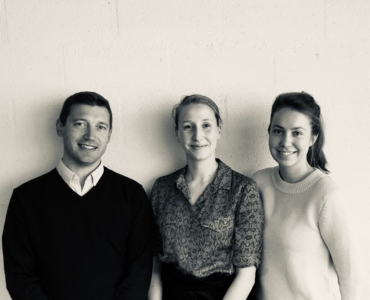
Jelle Haemers is professor of Medieval History at KU Leuven. His research focuses on the social history of the Middle Ages and the urban history of the Low Countries. Andrea Bardyn (PhD) studies inequalities between men and women in the medieval economy and marital power relations. Chanelle Delameillieure is lecturer in Medieval History at KU Leuven-KULAK. Her expertise and research focus are on the social and cultural history of the late medieval Low Countries.
History reveals many ups and downs, offering a warning: in times of crisis or economic hardship, the rights of women and other marginalized groups are often among the first to be threatened or rolled back.
The Middle Ages—a time often cast as a dark period when violence reigned and men dominated society. Women, as the deeply rooted cliché would have it, played scarcely any part. In Urban Women Jelle Haemers, Andrea Bardyn, and Chanelle Delameillieure tell a different story, one in which women step forward as the main characters.
Briefly and concisely explain in plain language what the book is about.
The book explores the lives of women in medieval cities of the Low Countries. It reveals how they lived, worked, built networks, and navigated power structures within urban society. By examining documents from everyday life, it sheds light on women’s daily experiences and challenges the notion that medieval women were confined to the private sphere. In doing so, the book gives voice to the many businesswomen, laborers, religious figures, criminals, and sex workers who helped shape medieval towns.
What or who inspired you to choose this topic?
We were inspired by the many traces of urban women we found in medieval archives—often overlooked, yet revealing rich and complex lives. We wanted to tell their stories and share them with a wider audience. Viewing medieval society through the lens of women’s lives reveals an entirely different picture—one that challenges established narratives and offers a more layered, dynamic, and inclusive understanding of the past.
What social impact do you think the book can have, or would you like it to have?
We hope it encourages readers to question assumptions about the Middle Ages and about women in history. Importantly, the book uproots the common view of the Middle Ages as a backward or stagnant era, showing instead how many foundations of our modern society—urban economies, household structures, and social institutions—were forged during this period. Crucially, it also shows that gender equality is not a linear path of steady progress. History reveals many ups and downs, offering a warning: in times of crisis or economic hardship, the rights of women and other marginalized groups are often among the first to be threatened or rolled back.
If you could travel through time, where would you want to go to talk about your research/book?
That’s an impossible question for a historian! But if we could, we’d travel to a late medieval city like Bruges, Antwerp, or Ghent and speak directly with the women whose lives we studied. For example, we’d love to meet Janne Schuts, who appears in the third chapter. She was a remarkable woman who, as a single mother, built a business as a fish seller, later joined the beguinage and established herself as a prominent moneylender in Antwerp.
Related Publications
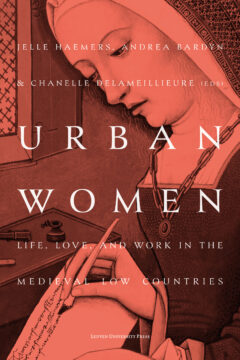 Urban Women
Jelle Haemers (Editor), Andrea Bardyn (Editor), Chanelle Delameillieure (Editor),
April 2025