Blog
Raphael Chijioke Njoku | Queen Elizabeth II and the Africans
7th August, 2024 in Author’s corner

Raphael Chijioke Njoku, PhD, is an African history and global studies professor at Idaho State University.
Her Majesty was a loving, peaceful, and caring Queen. Whithall centered her in a controversial position in the politics of empire devolution.
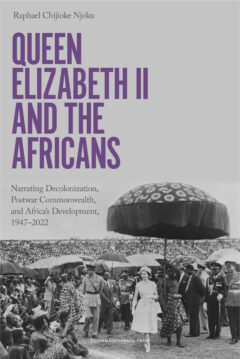
In his book Queen Elizabeth II and the Africans author Raphael Chijioke Njoku examines Queen Elizabeth II’s role in the African decolonization trajectories and the postcolonial state’s quest for genuine political and economic liberation since 1947. “Her commitment to Africa was evident in her dedication to the Commonwealth cause”, explains Njoku.
Briefly and concisely explain in plain language what the book is about.
This book concerns the relationship between H.M. Queen Elizabeth and the African people over 75 years. The dictates of the British politicians marked the dynamism and changing phases of this relationship. By the terms of her office, Elizabeth was first and foremost bonded by the interests of the British people. As a brand, her actions and inactions were defined and monitored by the government and the Church of England. As a result, she could not have been a forceful advocate of African political and socioeconomic progress without ensuring the ire of the people to whom she was answerable. Nevertheless, her commitment to Africa was evident in her dedication to the Commonwealth cause despite the attempt of the succeeding British governments to sabotage the Commonwealth movement. But in the end, she built an inclusive and unified organization where the Africans could play a vital role and appropriate political and economic autarky.
What or who inspired you to choose this topic?
Her Majesty, Queen Elizabeth II, was the primary inspiration for this book. The manner with which her extraordinary life influenced people around me is difficult to ignore. Everyone within my kinship is hooked to her persona and the British monarchical pomp and elegance. Yet, I have never seen a figure in her position who lead a life of humility and peace.
Do you have any reading suggestions to share (books, blogs, journals, …) for anyone who wants to know more about the subject?
There are many books and resources out there for anyone to peruse.
Balmer, John M.T. “A Resource-Based View of the British Monarch as a Corporate Brand.” International Studies of Management and Organization 37, no. 4 (2007): 20-44.
Cannadine David. “Churchill and the British Monarchy.” Transactions of the Royal Historical Society 11 (2001): 249-272.
Davies, Nicholas. Elizabeth: Behind Palace Doors. Edinburgh: Mainstream Publishing Projects, 2000.
Marr, Andrew. The Real Elizabeth: An Intimate Portrait of Queen Elizabeth II. New York: St. Martin’s Griffin, 2013.
How did the writing process for this book go? Did you experience anything surprising, amusing or strange?
One of the most amusing aspects of writing this book was exploring the encounters between H.M. Queen Elizabeth and her ‘Dear Amin’. These interactions, filled with unexpected twists and turns, provided a unique insight into the Queen’s personality and the challenges she faced. The very surprising thing for me was the quietude with which the Queen bore the sins of colonialism and the excesses of colonial servants. The degree of control politicians held over the Queen is outstanding.
What would you like readers to remember about your book?
I would like everyone who reads this book to remember that Her Majesty was a loving, peaceful, and caring Queen. Whithall centered her in a controversial position in the politics of empire devolution.
Do you have any plans yet for another publication? What will it be about?
My next book project investigates the political history of Nigeria from theoretical and comparative perspectives. It will explore the country’s journey towards independence and the challenges it faced in the post-colonial era.