Blog
Mario Trinidad | Missionaries and Resistance in Guatemala
14th August, 2024 in Author’s corner

Mario Trinidad was a member of the Congregation of the Immaculate Heart of Mary and served in Guatemala in the 1970s. He now resides in Australia and is a retired social worker and university lecturer.
Contrary to the accusations of landowners and the military, these missionaries were not “godless communists” but Christians who gave their lives so that others might have life in abundance.
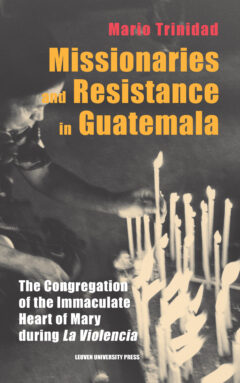
In Guatemala, the 36-year armed conflict from 1960 to 1996 claimed 200,000 lives, over two per cent of the population, and displaced a million more. In the 1970s and the 1980s the widespread and violent repression of social movements fighting for justice and human rights reached unimaginable proportions, involving assassinations, disappearances, and exile. Even parts of the Church were not spared this fate. In his book Missionaries and Resistance in Guatemala, Mario Trinidad chronicles the involvement of certain Catholic missionaries and narrates their gradual shift from conservative theological and pastoral practices to radical positions.
Briefly and concisely explain in plain language what the book is about.
The book documents the transformation of a group of missionaries (Belgian, Dutch and Filipino) of the Congregation of the Immaculate Heart of Mary (Scheut) during Guatemala’s most turbulent years (1980-1982), the most violent since the Spanish conquest. Their contact with and involvement in the lives of poor farmers and agricultural workers explains the fundamental shift of these missionaries from traditionalist and conservative stances to progressive and radical ones. Central to their pastoral strategy was the formation of comunidades de base (base communities) that questioned, with the aid of liberation theology and the social sciences, the prevailing poverty and oppression. The missionaries and many members of these communities eventually joined popular movements demanding basic rights and also linked with guerrilla groups seeking to overthrow the government. The missionaries viewed their fate — martyrdom for some and exile for many – as a consequence of their decision to be with the landless farmers, workers and Mayan communities.
What or who inspired you to choose this topic?
The life stories of the missionaries themselves and of the hundreds of lay women and men who worked with them – many of whom were killed or forcibly disappeared – were an inspiration. I think it is important that they are not forgotten or relegated to the margins of history!
Do you have any reading suggestions to share (books, blogs, journals, …) for anyone who wants to know more about the subject?
Comisión para el Esclarecimiento Histórico (CEH), Guatemala: memoria del silencio Tz’inil Na’tab’al. Guatemala: CEH, 1999)
ODHAG [Human Rights Office of the Archdiocese of Guatemala], Guatemala: Never Again! (Maryknoll, NY: Orbis Press, 1999.
How did the writing process for this book go? Did you experience anything surprising, amusing or strange?
The writing of my PhD dissertation (La Trobe University, Victoria, Australia), on which this book is based, took more than four years – the usual allotted time at Australian universities – because I had to juggle it with full-time work as a senior manager in the social welfare field. It also required considerable travel (and funding) to document the
stories of missionaries in Guatemala, Belgium, the United States of America, and the Philippines. More importantly, because I was writing about people and events that were close to me, many of whom were killed or forcibly disappeared, there were times I had to stop my writing and grieve.
What would you like readers to remember about your book?
I would like readers to acknowledge – and be grateful for the fact – that these missionaries and their lay partners did what they did out of a faithful following of Jesus of Nazareth. Contrary to what landowners and the military accused them of, they were not “godless communists” but Christians who gave their lives so that others might have life in abundance!
Do you have any plans yet for another publication? What will it be about?
I have no concrete plans at the moment. I have had very preliminary conversations with former Filipino members of Scheut to document their separation from the Congregation at the beginning of this millennium. But, nothing definite has come out of these conversations.