Blog
Maja Babić & Tino Mager | Contentious Spaces
30th March, 2026 in Author’s corner
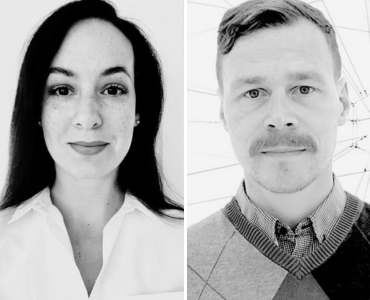
Maja Babić is an architectural historian. She is Assistant Professor of History and Theory of Architecture and Urbanism at the University of Groningen. Tino Mager is Associate Professor of History and Theory of Architecture and Urbanism at the University of Groningen and President of ICOMOS Germany.
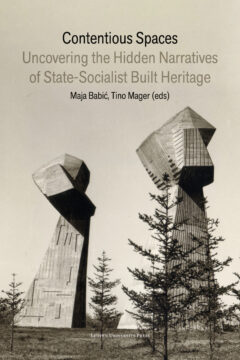
Contentious Spaces expands the discourse on the heritage of spaces tucked behind the long-gone Iron Curtain that doesn’t really seem to be as gone ideologically as it is physically.
In this Q&A, the editors of Contentious Spaces reflect on the architectural heritage of socialist modernism and its conservation in former Eastern Bloc countries, discussing the book’s key themes, development, and scholarly contribution.
Briefly and concisely explain in plain language what the book is about.
MB: Our edited volume examines the so-called “contentious spaces” of the former communist bloc countries and Yugoslavia, their heritage, and their users in the process of heritagisation and in opposition from within and outside.
TM: The book explores the architecture of former socialist countries, investigating the heritage aspects of these structures. Various chapters provide detailed considerations on contemporary views of housing, memorials, public buildings, and more from the socialist period. The book covers a wide geographical area, including the former Yugoslavia, Romania, and Moldova.
What or who inspired you to choose this topic?
MB: The extraordinary works of architectural heritage that have been deemed “alien,” “foreign,” or “not belonging.” We took that personally 🙂
TM: The spectacular buildings of this bygone era provide a fantastic reminder of the diversity of 20th-century history and its many different worlds. Their survival testifies to a different past, challenging our approach to dealing with it.
Did the book turn out the way you imagined it? In what way(s) did it or did it not?
MB: All our expectations were met!
TM: It turned out just as we had imagined.
What social impact do you think the book can have, or would you like it to have?
MB: Contentious Spaces is here to expand the discourse on the heritage of spaces tucked behind the long-gone Iron Curtain that doesn’t really seem to be as gone ideologically as it is physically.
TM: The book broadens our understanding of state-socialist architecture by examining it from a heritage perspective and presenting case studies that have not yet been researched. It will improve our understanding of the buildings in question and help us find appropriate ways to incorporate this heritage into our collective memory. Furthermore, it may stimulate wider interest in the built heritage of this period and region.
In what way do you think your book can shape future research in your research field?
MB: Our book is a first step! We hope it serves as an inspiration for the examination of other “less-known” case studies and for the push to dismantle the canon, or at least take a crack at it.
TM: The book provides a wide range of case studies and perspectives on evaluating the architectural value of the buildings in question. It also offers new insights into strategies for incorporating buildings into memory discourse and into future society.
What is your favourite part of the book and why?
MB: The passionate involvement of its authors. The writers and researchers we worked with were invested both personally and professionally in their projects—it was exciting to see the outcome of their work.
TM: Its diversity. In fact, the book as a whole achieves a solution by bringing together several diverse perspectives in pursuit of one overarching aim. The diversity of its chapters fosters an understanding of the complexity of buildings and structures, as well as of our understanding of these structures as valuable heritage.
How did the writing process for this book go? Did you experience anything surprising, amusing, or striking?
MB: It was smooth sailing overall!
What was the most challenging step in the entire creation process of your book?
MB: The practical details of funding!
TM: Setting up the table of contents and selecting the authors for this clearly defined selection of articles.
What would have been good advice before you started this book project?
MB: How to keep it together in the final stages of editing.
What would you like readers to remember about your book?
MB: That architectural history is not only the canon, but that users of architecture have a say.
TM: The realisation that history is diverse and that accounts of a different world provide valuable evidence that there is not just one valid path through the ages.
If you could travel through time, where would you want to go to talk about your research/book?
MB: In the years of communist rule, when these buildings were constructed. I think we’d probably get arrested for sharing their fates.
TM: To 3000 CE.
Your book is published open access. How did the open access publication process go? What makes open access so attractive for you/your book?
MB: It took a bit to deal with the funding, but the audience has grown exponentially.
TM: It will have a larger audience, but the financial aspects make an OA publication challenging.
Do you have any plans yet for another publication? What will it be about?
MB: Of course! It will deal with how we teach architecture and its history: who, where, and how.
TM: Oh yes, on architecture and its meaning for society.