

Blog
Fabrizio Amerini | Thomas Aquinas and Hervaeus Natalis on Concepts and Intentional Objects
13th February, 2026 in Author’s corner
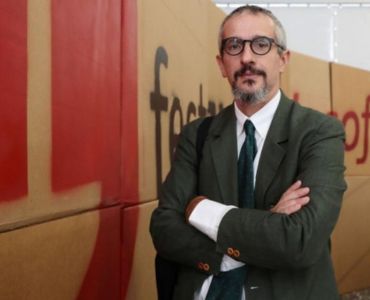
Fabrizio Amerini is Professor of History of Medieval Philosophy at the University of Parma. He has conducted extensive research on late-medieval logic, metaphysics, and philosophy of mind.
Late-medieval thinkers demonstrated a capacity for theorizing comparable to that of modern authors.
In Thomas Aquinas and Hervaeus Natalis on Concepts and Intentional Objects, author Fabrizio Amerini explores the views on mental acts, concepts, and objects of the mind of two of the most eminent Dominican authors of the late Middle Ages: Thomas Aquinas and Hervaeus Natalis, one of his closest followers. By putting Aquinas and Hervaeus Natalis directly in conversation with each other, Amerini proposes a new interpretative framework for understanding their philosophy of mind and traces the origins of modern accounts of the intentionality of the mind.
Briefly and concisely explain in plain language what the book is about.
The book brings together three studies devoted to the theory of concepts, mental representations, and intentionality of two of the most eminent and influential Dominican philosophers and theologians of the late Middle Ages: Thomas Aquinas and the French thinker Hervaeus Natalis. The volume offers an innovative reconstruction of Hervaeus’s philosophy of mind and a critical reassessment of Thomas Aquinas’s position and of the existing secondary literature.
What or who inspired you to choose this topic?
In the age of AI, I am deeply fascinated by the exploration of the nature of the human mind. As a historian, what strikes me most is the novelty and modernity of late-medieval thinkers, particularly their speculations on what the mind is and how it functions. Many modern philosophers (for example, Franz Brentano) look to late-medieval authors as sources of inspiration. The book is the result of long-term research on these authors and topics.
Did the book turn out the way you imagined it? In what way(s) did it or did it not?
The book was intended to revive an older scholarly format, namely that of a collection of studies devoted to a specific theme or author. I have written the book in such a way that the individual studies can be read independently, which I find satisfying since I believe they can appeal to different audiences. I also believe that the interaction between the two authors, the adoption of a multidisciplinary perspective—encompassing metaphysics, philosophy of mind, and philosophy of language—and the gradual development of the core argument through the three studies is what makes the book stand out.
What social impact do you think the book can have, or would you like it to have?
I find it difficult to assess the social impact of the book. I hope that it will spark the interest of scholars as well as students who wish to understand how pioneering and forward-looking late-medieval thought was with respect to philosophically sensitive issues, such as the relationship between mind and world, the phenomenon of human knowledge, and the mechanisms of our cognitive and intentional orientation toward external reality.
In what way do you think your book can shape future research in your research field?
The book brings to the attention of scholars new texts and themes in the works of Thomas Aquinas and offers an original interpretation of the writings of a follower of Aquinas who remains relatively little known: Hervaeus Natalis, the inventor of the word intentionality. Even if I am not so presumptuous as to think that my book could become a definitive point of reference, I am confident that it will serve as a valuable stimulus for broadening our understanding of late-medieval philosophical doctrines and of the extent to which they anticipated key concerns of modern debates.
What is your favourite part of the book and why?
This is a difficult question. In fact, I am satisfied with all three studies, as each has distinct characteristics. The third is perhaps the least ambitious, since it revisits—while further developing—a paper I had previously devoted to the topic. The second is the most innovative, as it addresses an important issue that has never been treated in the existing literature: the philosophical dialogue between Hervaeus and his confrere Durand of St. Pourçain, two authors who stand on opposite sides of the river. The first is the most challenging and ambitious, since it is no easy task to say something new about Thomas Aquinas, given the vast body of scholarship devoted to him. I hope I have succeeded in doing so!
How did the writing process for this book go? Did you experience anything surprising, amusing or striking?
The process was laborious. The initial idea and first draft took shape many years ago. Over time, the book underwent several revisions and updates until it eventually reached its final and most mature form. This long gestation—unprecedented for me—was particularly striking, as it made me realize how quickly our scholarly outputs become dated and how prolific and fast-moving the secondary literature is. Studies on Hervaeus are steadily increasing; I myself have created a website dedicated to him (The Hervaeus Natalis Homepage), not to mention the vast and ever-growing body of scholarship on Thomas Aquinas. I hope to have brought this work to completion at the right moment and in a successful form!
What was the most challenging step in the entire creation process of your book?
The most challenging step was undoubtedly updating the book as articles on the topic I wanted to address were published—articles that often criticized some of my interpretations. For this reason, the book had a long gestation.
What would have been good advice before you started this book project?
A good piece of advice would have been to reach a definite position on the main issues regardless of the scholarly publications that would come out. However, in hindsight, I must say that waiting turned out to be greatly beneficial. Many aspects of the book were improved indeed, and some points were updated in response to the positions of colleagues. Writing this book was an experience of dialogue not only with others but also with myself.
What would you like readers to remember about your book?
After reading my book, I hope that students—and also scholars—reflect on a couple of things: historically, on how our theoretical elaborations about an author essentially depend on a careful and correct understanding of his texts; philosophically, on how late-medieval thinkers demonstrated a capacity for theorizing comparable to that of modern authors.
If you could travel through time, where would you want to go to talk about your research/book?
A difficult question. I am not sure whether I would choose to go to the future or to the past. In fact, the book speaks to the present: it is addressed to students and scholars of Thomas Aquinas who wish to gain a deeper understanding of his philosophy of mind and of the influence he had on later thinkers. Perhaps I would like to be back in Parma, among my students, one hundred years from now, to see whether what I wrote has been followed and whether it would still be worth saying again. I would be curious to know when our expertise becomes obsolete.
Your book is published open access. How did the open access publication process go? What makes open access so attractive for you/your book?
Like all things, open access has advantages and drawbacks. The publication process in this format is smooth and intellectually stimulating; it makes the book immediately accessible to a broad and diverse audience, allows for lexical searches, and encourages discussion and critical engagement well beyond a narrowly defined academic readership. Nevertheless, I am very happy that in addition to the open-access ebook my monograph is available in hardback edition too, for those readers who prefer paper or digital formats.
Do you have any plans yet for another publication? What will it be about?
I like the format of an essay collection. I am thinking about a book devoted to a range of aspects of Thomas Aquinas’s thought that are often considered secondary, such as his position on issues that are particularly sensitive for us today—e.g. vegetarianism, questions of gender, feminism, the philosophy of care, the philosophy of experience.
Related Publications
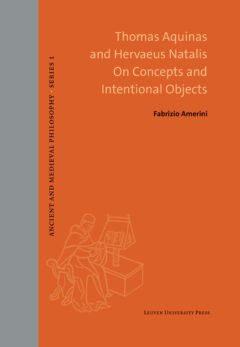 Thomas Aquinas and Hervaeus Natalis on Concepts and Intentional Objects
Fabrizio Amerini (Author),
February 2026
