Blog
Daniel Harkett and Katie Hornstein | Animal Modernities
12th August, 2025 in Author’s corner
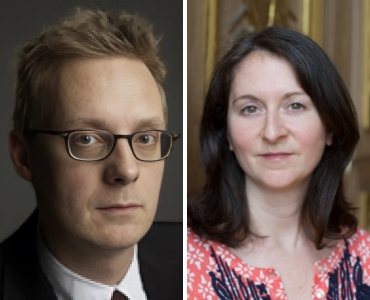
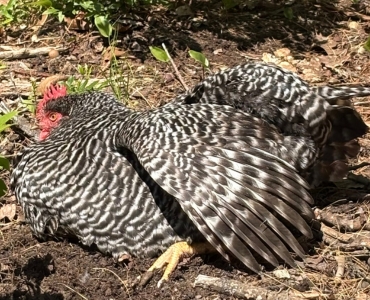
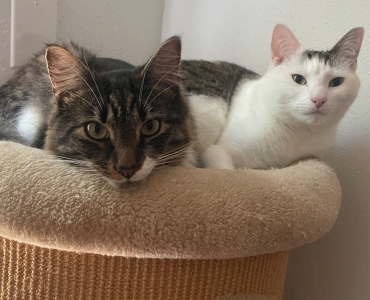
Daniel Harkett is associate professor in the Department of Art at Colby College. He has a soft spot for his chicken, Zigzag. Katie Hornstein is professor in the Department of Art History at Dartmouth College. She adores her cuddly cats Leo-Mary and Larry.
The essays in the collection offer historical lenses for better understanding the series of ecological crises we are currently experiencing, including habitat loss and mass extinction.
Animal Modernities challenges the traditional human-centered focus of art history and explores how modern art, visual culture, and modernity itself emerge from relationships between humans and animals. It points to the importance of thinking about animal–human relations for addressing today’s ecological challenges. “We hope that Animal Modernities inspires future work at the intersection of art history and animal studies.”, express editors Daniel Harkett and Katie Hornstein.
Briefly and concisely explain in plain language what the book is about.
This book is a collection of fourteen essays that put the animal first in art history and use art history to tell new stories about how humans and non-human animals find each other in the world. It challenges our discipline’s deeply ingrained humanism by exploring instances when animals played an important role in how art was produced and understood; it examines the possibilities for and limits of animal agency in modernity; and it advocates for paying attention to the history of human/animal encounters in order to better understand the roots of current ecological crises.
What or who inspired you to choose this topic?
We both come to this topic through our own circuitous interests in nineteenth-century art history.
Katie Hornstein: I was nearing the completion of my book on lions (Myth and Menagerie: Seeing Lions in the Nineteenth Century, Yale UP, 2024) and had come to understand that the “animal problem” in art history was bigger than I could have ever imagined. I was interested in the ways that thinking about animals opened up onto larger questions of value in art history in terms of challenging the anthropocentrism of what we do. Art is made by humans for humans, or so I had thought. By opening up art history to the participation of lions and thinking about encounters between lions and artists in the nineteenth century, I found that I had started to rethink the making and viewing of art as a more expansive field of investigation beyond the narrow confines of artistic intention.
Daniel Harkett: Several years ago I wrote about the dizzying public interest in a live giraffe displayed in Paris in the early nineteenth century and subsequently I became fascinated by other moments of staged interaction between humans and non-human animals, such as elephants and whales. Reading into the scholarly literature on the history of human/animal encounters revealed to me what an exciting interdisciplinary field it is, one that has helped me ask new questions about who looks at whom and about how our concept of artistic agency might be rethought. I feel the essays in the book embody the spirit of curiosity and the willingness to rethink old categories that characterizes the work of animal studies scholars in general.
Did the book turn out the way you imagined it? In what way(s) did it or did it not?
Yes, we are thrilled! The essays are as creative, lively and thought-provoking as we had hoped.
What social impact do you think the book can have, or would you like it to have?
We hope that Animal Modernities inspires future work at the intersection of art history and animal studies. Many of the essays in the collection offer historical lenses for better understanding the series of ecological crises we are currently experiencing, including habitat loss and mass extinction. If we let these crises go unexamined, there is no hope.
In what way do you think your book can shape future research in your research field?
Art history is late to animal studies, perhaps owing to the way that artmaking in the West at least has consistently been imagined as one of the things that ‘makes us human.’ Scholars of contemporary art have been faster to think with the critical tools of animal studies, but in more historical fields, it’s been a slower process. Our book offers a set of tools and approaches for locating animals in art’s histories that are deeper in the past and therefore subject to erasure and forgetting. We hope we inspire our colleagues and future students of art history to think with animals and artists who lived long ago.
What is your favorite part of the book and why?
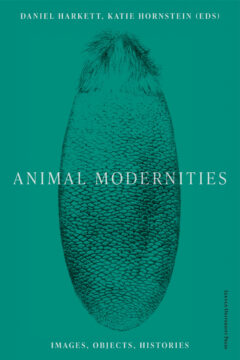
We love, love, love the cover, even if it’s depressing from the point of view of the beaver whose tail it is.
How did the writing process for this book go? Did you experience anything surprising, amusing or striking?
We had a blast collaborating on what is our second edited volume together. We also worked hard to ensure that our contributors were involved in the whole project, not just focused on their individual essays. To that end, we convened two study days at different stages of the process, which allowed our contributors to meet and share feedback on each other’s work. We also used these sessions to identify and discuss threads that ran through the book. When it came time to write the introduction, we drew heavily on those conversations. We think the final text reflects the collaborative nature of our project and we are grateful for the work our contributors undertook and the deepened intellectual friendships that emerged from it. If we were to develop another edited volume, we would want to do it this way.
What was the most challenging step in the entire creation process of your book?
Image permissions and making sure that everyone’s images were in good shape. It’s a bit like–appropriately enough–herding cats, but this is to be expected when you edit an art history book.
What would have been good advice before you started this book project?
Embrace the weird.
What would you like readers to remember about your book?
We hope our readers will be surprised, delighted and also at times shocked and appalled by the material they encounter in our book. We would like them to leave with new questions about how relations between humans and non-human animals are activated and mediated by images and objects and new motivation to answer them.
If you could travel through time, where would you want to go to talk about your research/book?
To Victorian England to ask Darwin about the aesthetic interests of birds.
To the Muséum of Natural History in Paris to see the barbary lions and watch people watching them.
Your book will be made open access within three years of publication thanks to Path to Open. How did the publication process go? What makes open access so attractive for you/your book?
The process was very easy. Quite simply, we want to get these essays to as many readers as possible, and we think publishing the book open access will help us do that.
Do you have any plans yet for another publication? What will it be about?
Katie is currently working on a slim tome about the heroic deeds of carrier pigeons who lived in the eighteenth, nineteenth and early-twentieth centuries.
Daniel is thinking about birds barely seen in the skies of paintings and prints, and what might happen in a whale skeleton.