

Blog
Cristián Moreno Pakarati & Diego Muñoz | German–Rapanui Entanglements
29th July, 2026 in Author’s corner
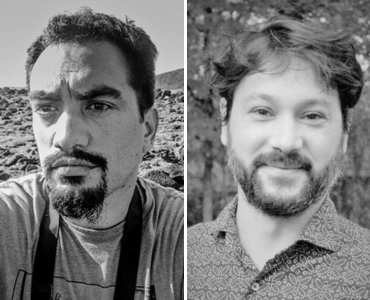
Cristián Moreno Pakarati is a historian, independent researcher and founder of Rapanui Pioneers Society in Hanga Roa, Rapa Nui. Diego Muñoz is a social anthropologist and affiliated researcher at the Centre de Recherche et de Documentation sur l’Océanie (CREDO-UMR 7308, AMU-CNRS-EHESS), France.
The connections with the Germanic world proved to be fundamental to understanding various aspects of contemporary Rapanui society, starting with historical ethnography, but also the influence of German missionaries on the Island.
German–Rapanui Entanglements traces interactions between the Germanic world and Rapanui society from past to present through encounters between scholars, missionaries, institutions and Indigenous actors, and through the material and visual traces—objects, photographs, and texts—that continue to shape knowledge and memory of Rapa Nui (Easter Island). It highlights how Rapanui people have actively engaged with German and German-speaking individuals and institutions to (re)shape different practices and discourses of ‘Rapanuiness’. A Q&A with editors Cristián Moreno Pakarati (CMP) & Diego Muñoz (DM).
Briefly and concisely explain in plain language what the book is about.
CMP/DM: This book explores the interactions between the Germanic and Rapanui worlds. Acknowledging the asymmetry in available materials, and lacking a structured Rapanui response in these connections, it uses mostly published and unpublished sources that shed light on the Germanic interest in Rapa Nui and its ways to research it. Drawing on anthropological, historical, and archaeological studies, the chapters explore topics such as the relationship between Rapanui individuals and a team of German archaeologists, and the controversial legacy of the missionary priest Sebastian Englert, who collected and published cultural and linguistic materials. The book also examines the role of the German intelligentsia in Chile, exploring how they sought to understand the Rapanui world by collecting cultural materials of all kinds. It also considers how their works have been received and interpreted by the contemporary Rapanui community.
What or who inspired you to choose this topic?
CMP: The book’s idea was roughly defined in a meeting between all three co-editors a few years ago on Rapa Nui, in what could be described as a German–Rapanui entanglement. There was a long, important and mostly unwritten story about previous German–Rapanui connections, so the idea of gathering Germanic, Rapanui and other scholars to cover, each from their own angle, this topic was very attractive.
DM: My interest in the entanglements between the Germanic world and Rapa Nui arose during my postdoctoral research in the IndiGen project (www.indigen.eu) at LMU Munich, Germany. Until then, I had studied similar topics focusing on the entanglements between Rapa Nui and French Polynesia, and, of course, with Chile, the country that annexed the Island in the late 19th century. The connections with the Germanic world appeared to be a topic that had not yet been explored in depth and proved to be fundamental to understanding various aspects of contemporary Rapanui society, starting with historical ethnography, but also the influence of German missionaries on the Island or the way in which the Germanic world has been appropriated by many Rapanui persons as an aspect of their own identity. For example, one of the first settlers to have children with a Rapanui woman was a German speaker who lived on the Island in the 1870s. His descendants today claim their German ancestry!
Did the book turn out the way you imagined it? In what way(s) did it or did it not?
CMP: Working on the book was an important learning experience for me. All co-editors come from quite different backgrounds, lived experiences and schools, and have covered until recently diverse topics. The chapters by the authors show a remarkable diversity of approach while retaining high quality research and writing. I expected this richness, and even some of the answers to the questions that led the chapters. It was unexpected to see how much Chile became an intermediary in most German–Rapanui entanglements. I probably would have liked to have a bit more of the Rapanui perspective, but the quality of the chapters completely makes up for it.
DM: The book is the result of a collaborative effort between the editors and the invited authors. It was hard work, but a very rewarding experience. Collaboration between all of us was essential to achieving the result presented here. There was constant dialogue and an exchange of material between the editors and the authors, which informed individual and collective reflections. This book serves as an example of a working method and a means of building knowledge. I believe that, as a result of this process, each author has learnt more about the work of the others, making this book a starting point for future collaborations.
What social impact do you think the book can have, or would you like it to have?
CMP: As with most research on Rapa Nui, it will be interesting to see how the local community recycles what is revealed in the book; and how much of a part it will play in future German–Rapanui entanglements.
DM: This book rescues a fundamental part of Rapa Nui’s history from oblivion. It explores how the Germanic and Rapanui worlds interacted, giving rise to unprecedented social structures, and presenting interpretations of these interactions. This is a rich story that needed to be told. Although the book is written in English, despite Rapa Nui being a Spanish- and Polynesian-speaking territory, it will undoubtedly contribute to the debates on colonial heritage in the fields of religion, science, and other yet unexpected areas.
In what way do you think your book can shape future research in your research field?
CMP: First of all, there is plenty of material on other German–Rapanui entanglements that could not be covered in this book, but this is a magnificent starting point. For my research field, I believe it contributes in two ways: on the one hand in its inspiring collaborative method applied to Rapanui history with one chronologically broad topic but from multiple angles gathering a multinational team. On the other hand, the feasibility of doing works with similar approaches for other cultural encounters on Rapa Nui, be it in specific historical episodes or over the course of prolonged connections.
What is your favourite part of the book and why?
DM: I really appreciate the effort that has gone into creating a dialogue between the texts and the archival images. The book can be read in different ways: focusing on the texts, or on the visual archive. The condition of these materials – which are not always in the best state of preservation – is another factor to bear in mind. The German–Rapanui entanglements were so well hidden away in archives and collective memory that a great deal of dust had to be shaken off them!
What was the most challenging step in the entire creation process of your book?
CMP: A collaborative work between editors and authors across different continents, islands, time zones, sometimes tackling multiple additional projects, is rewarding but at the same time it creates very challenging conditions to push forward. A work of this magnitude requires drafting, refining, correcting, fact-checking, revising, and all of that piles up quickly.
What would have been good advice before you started this book project?
CMP: As most communication between editors, authors, reviewers and the press was through email, keeping an organized calendar, inbox and draft folder with clear file numbering would have made things easier for me from the beginning.
What would you like readers to remember about your book?
CMP: How a book about such a specific cultural connection over the centuries tells a very human and universal story.
DM: The unexpected stories of German–Rapanui entanglement between people, memories and archival material.
If you could travel through time, where would you want to go to talk about your research/book?
CMP: Maybe a hundred years in the future, if there are people interested in how we did things back then, before the AI craze.
DM: I would very much like to have been there when ethnographic materials were collected on Rapa Nui – for example, in 1774 with James Cook, in 1882 with the German ship Hyäne, in 1911 with Walther Knoche, in 1914 with Katherine Routledge, and with Alfred Métraux in 1934… so that I could do what they didn’t do! To see the Rapanui people’s present-day world, and not just ask about the past.
Your book is published open access. How did the open access publication process go? What makes open access so attractive for you/your book?
CMP/DM: Our research has been funded by the European Research Council, meaning that everything we publish must be made available via open access. This is essential to us in any case, as we want our work to travel freely, so that audiences across the Pacific, as on Rapa Nui, can engage with our work.
Do you have any plans yet for another publication? What will it be about?
CMP: I’m currently finishing a chapter for a book about the Chilean Pacific “sphere” in the 19th Century. In addition, we are starting a project to translate to Spanish/English the full corpus of Rapanui traditional stories that Juan Tepano told to Alfred Métraux in the 1930s. After finishing that, I have large amounts of source material and ideas, some of which we have talked about with Diego, but nothing clearly structured yet.
DM: Yes, of course. I am currently working on a project concerning misunderstandings surrounding the concept of ‘transfer of sovereignty’ in colonial protectorate and annexation treaties in the Pacific. Rapa Nui is a unique case here, because the annexation of the Island did not involve an empire, such as France in Tahiti or the United Kingdom in New Zealand, but rather a South American republic: Chile.
Read more on the project website: www.indigen.eu
This research project is led by Philipp Schorch, co-editor of the book and Professor of Museum Anthropology at LMU Munich as well as an Honorary Senior Research Associate at the Museum of Archaeology and Anthropology, University of Cambridge.
Related Publications
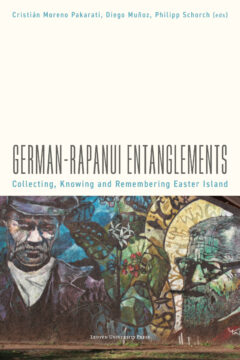 German–Rapanui Entanglements
Cristián Moreno Pakarati (Editor), Diego Muñoz (Editor), Philipp Schorch (Editor),
August 2026
